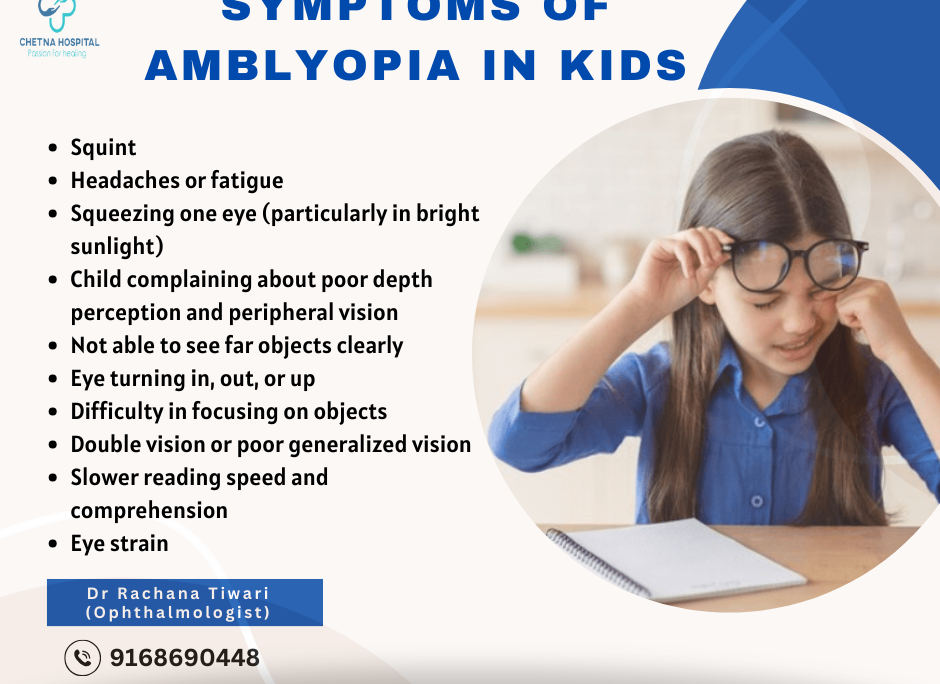
Amblyopia, commonly known as ‘lazy eye,’ is a condition that affects the vision development in children. It occurs when one eye has significantly better focus and clarity than the other, so the brain favours the stronger eye and ignores signals from the weaker one. This can result in reduced visual acuity in the weaker eye if left untreated.
Causes and Risk Factors: Amblyopia can have various causes and risk factors, including refractive errors such as nearsightedness, farsightedness, or astigmatism in one eye, strabismus (misalignment of the eyes), or other eye conditions that prevent clear vision in one eye during early childhood.
Importance of Early Detection: Early detection and intervention are crucial in treating amblyopia. Children should have regular eye exams starting in infancy to detect any vision issues early on. Treatment works better when it starts early, ideally before the age of 7 or 8, while the visual system is still developing.
Signs and Symptoms: Amblyopia often causes no obvious symptoms, and many children do not notice anything wrong with their vision, so it is often first found at an eye test. Signs parents may notice include:
- Persistent squinting or closing one eye
- Tilting the head to see better
- Poor depth perception
- Difficulty focusing
- Eyes that do not appear to work together
Diagnosis and Treatment: Diagnosing amblyopia typically involves a comprehensive eye examination by an ophthalmologist or optometrist. Treatment options may include:
- Corrective lenses: If refractive errors are causing amblyopia, prescription glasses may be prescribed to help improve vision in the weaker eye.
- Eye patching: Patching the stronger eye to encourage the weaker eye to work harder and improve visual acuity.
- Binocular treatment: For some children aged 4 to 7, special games watched through a headset may be used to help the weaker eye. Amblyopia is a problem with how the brain uses the eye, not weak eye muscles.
- Blurring eye drops: Prescribed eye drops can blur the vision in the stronger eye, similar to patching, without the need for wearing an eye patch.
The Importance of Compliance and Follow-Up: Successful treatment of amblyopia requires consistent compliance with the prescribed treatment plan. Parents play a vital role in ensuring their child wears glasses, patches the eye as directed, or uses eye drops as directed. Improvement is gradual and usually takes several months. Regular follow-up appointments with the eye care provider are also essential to monitor progress and make any necessary adjustments to the treatment plan.
Empowering Children for a Brighter Future: By finding amblyopia early and following the treatment plan, children have a better chance of developing good vision in the weaker eye. It’s never too early to look after your child’s eye health.
General health information, not a diagnosis. Reviewed and updated by Chetna Hospital’s content team, November 2026.