A milk tooth cavity in Chinchwad still needs a dentist’s check, even though the tooth will fall out one day. Small decay is usually cleaned and filled. A large hole or a weak back tooth may need a steel cap. If the decay has reached the nerve, the dentist decides between nerve treatment and removal. Ask for a check-up when you first notice a dark spot, pain or swelling.
Dental department: NextGen Dental and Cosmetic Clinic, Chetna Hospital, Chinchwad
Call 91686 92087
Get Directions
WhatsApp
Room No 4, First Floor, Chetna Hospital, Sambhaji Nagar, Near HP Petrol Pump, Nigdi Bhosari Highway, Chinchwad 411019
Key takeaways
- Milk teeth hold space for the adult teeth, so decay in them still matters.
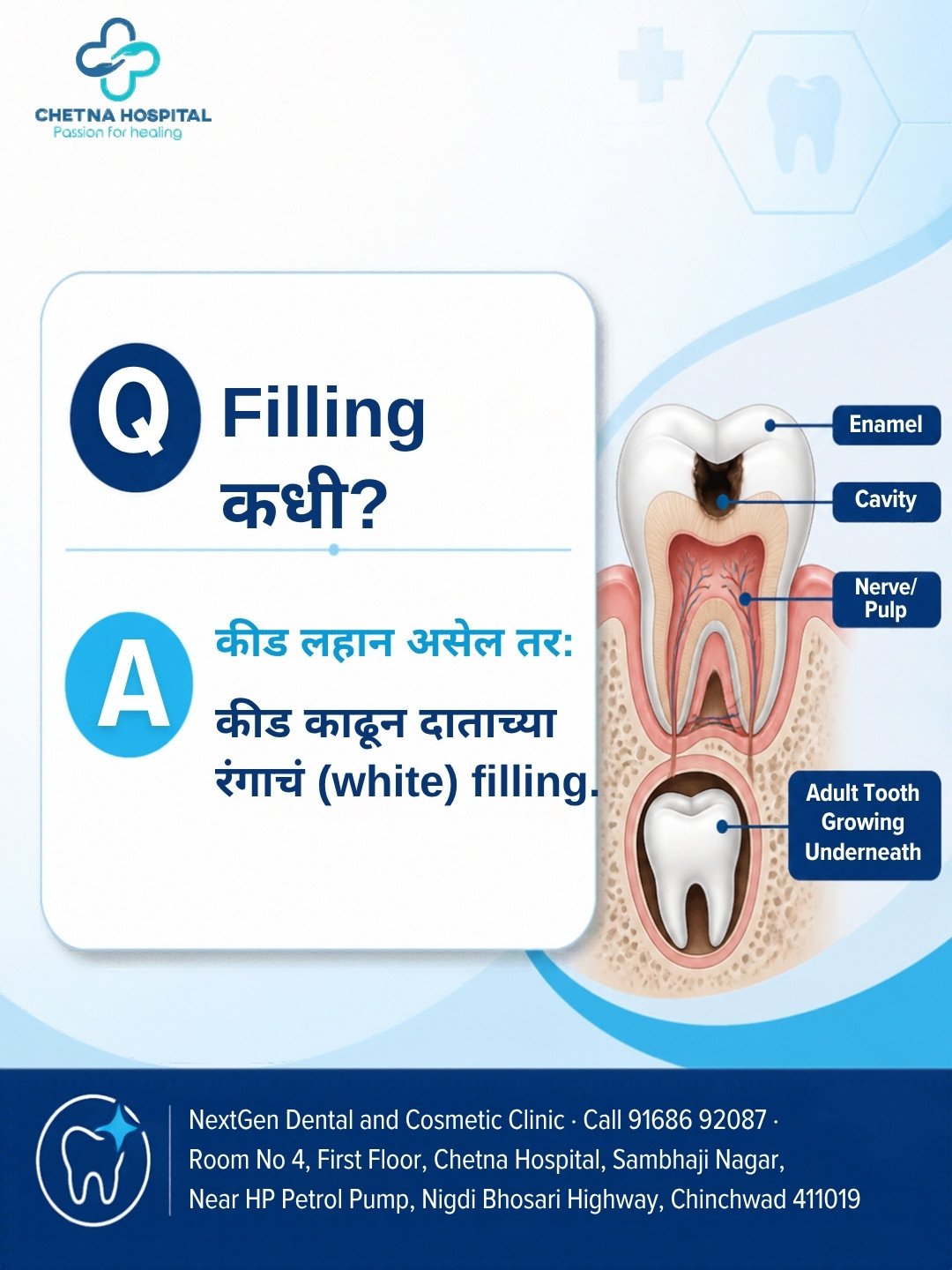
- Small decay is usually cleaned and filled with a tooth-coloured filling.
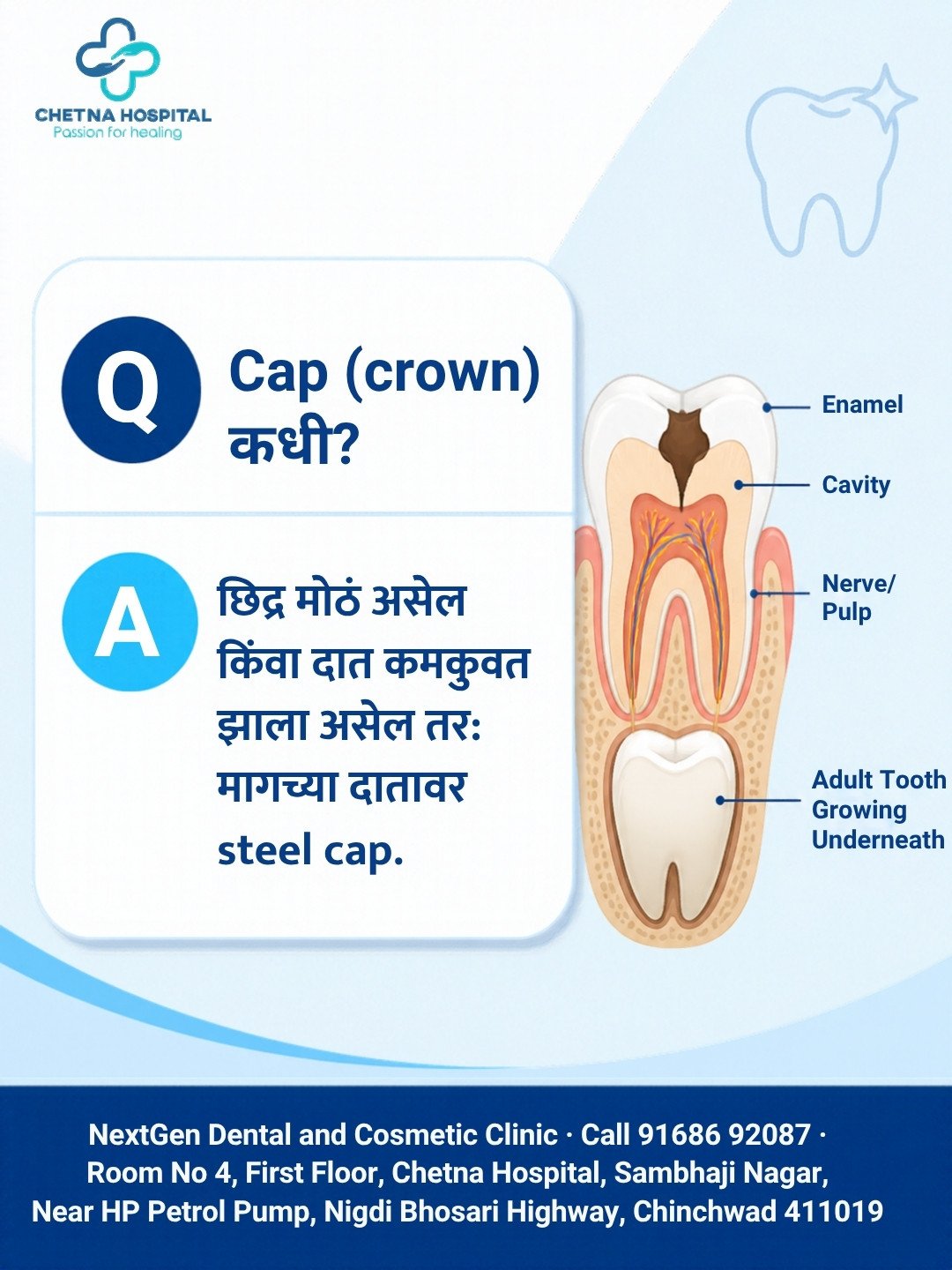
- A large hole in a back milk tooth may need a steel cap instead.
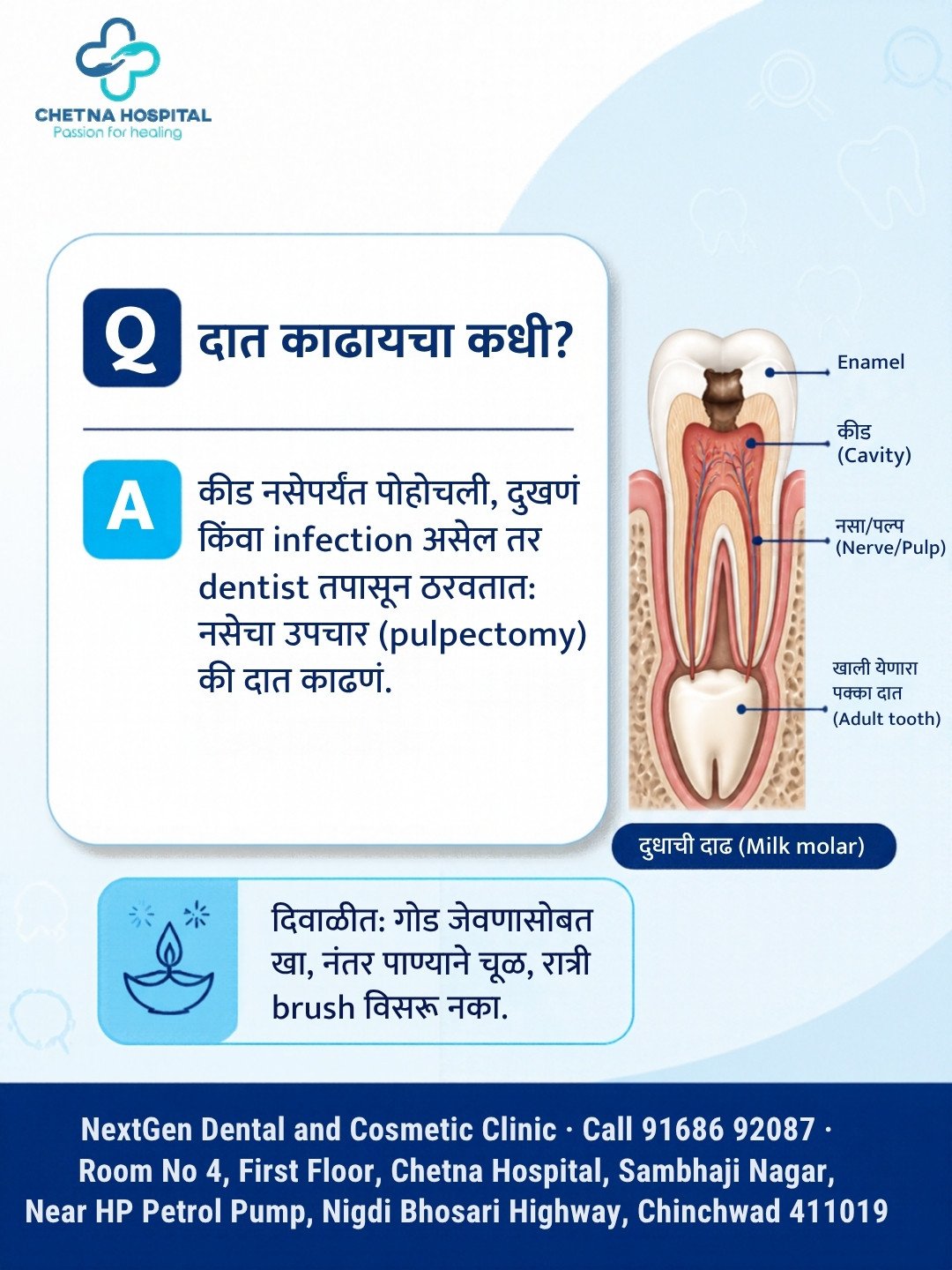
- When decay reaches the nerve, the dentist chooses nerve treatment or removal.
- Also, swelling of the face or fever with toothache needs a same-day visit.
In this article
- Why treat a milk tooth cavity if the tooth will fall out?
- What does a milk tooth cavity look like at home?
- When is a filling enough?
- When does a milk tooth cavity need a steel cap?
- Does a decayed milk tooth ever need removal?
- What happens at the first visit for a milk tooth cavity?
- When should you see a dentist urgently?
- Frequently asked questions
Many parents ask the same thing when they see a dark spot on a child’s back tooth: why fix a tooth that will fall out anyway? So this guide explains, in plain steps, how a dentist decides between a filling, a cap and removal at NextGen Dental and Cosmetic Clinic, Chetna Hospital.
Diwali falls on 8 November this year, and for several days children’s plates fill up with sweets, chocolates and dry-fruit treats.
Why treat a milk tooth cavity if the tooth will fall out?
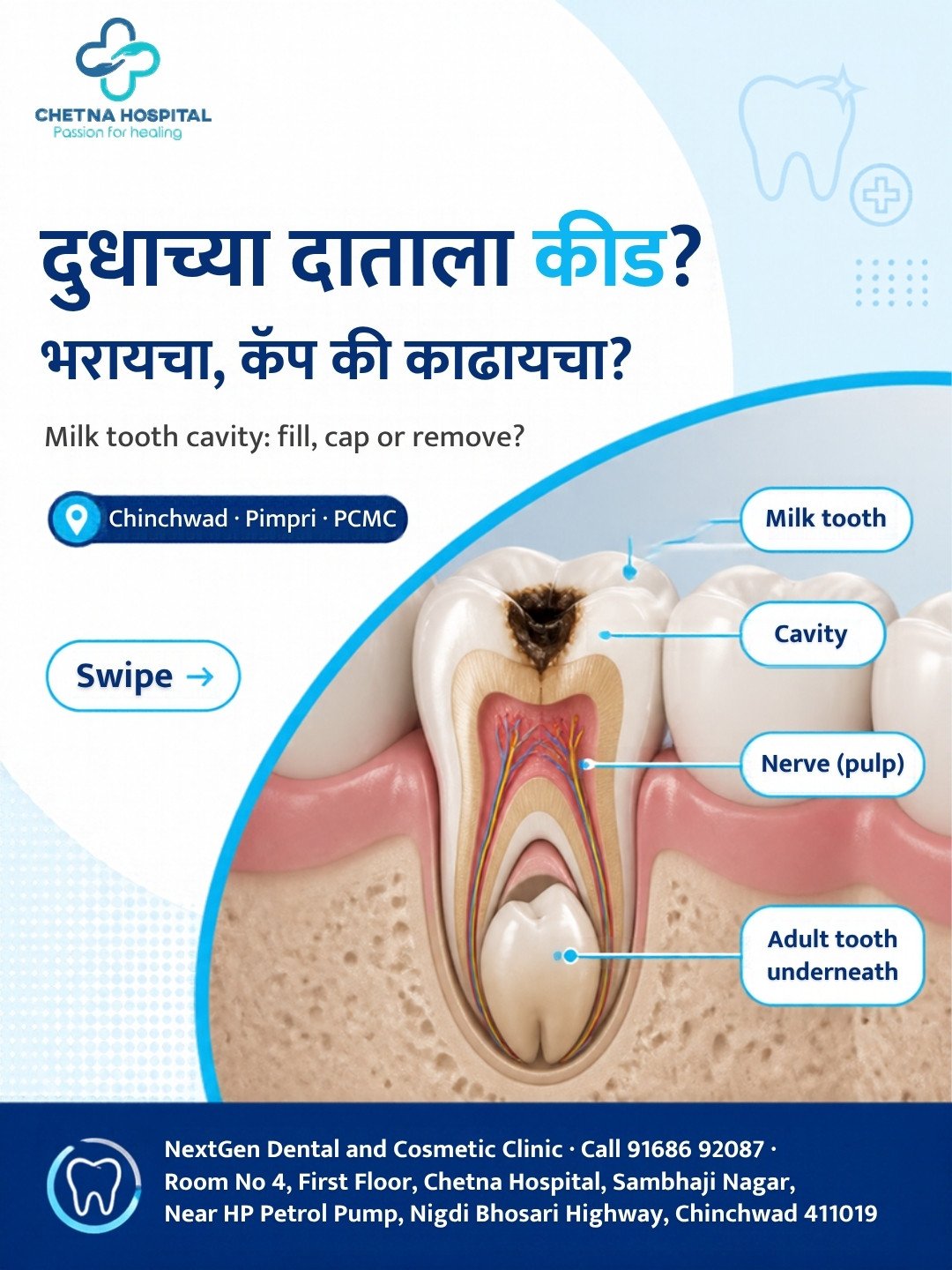
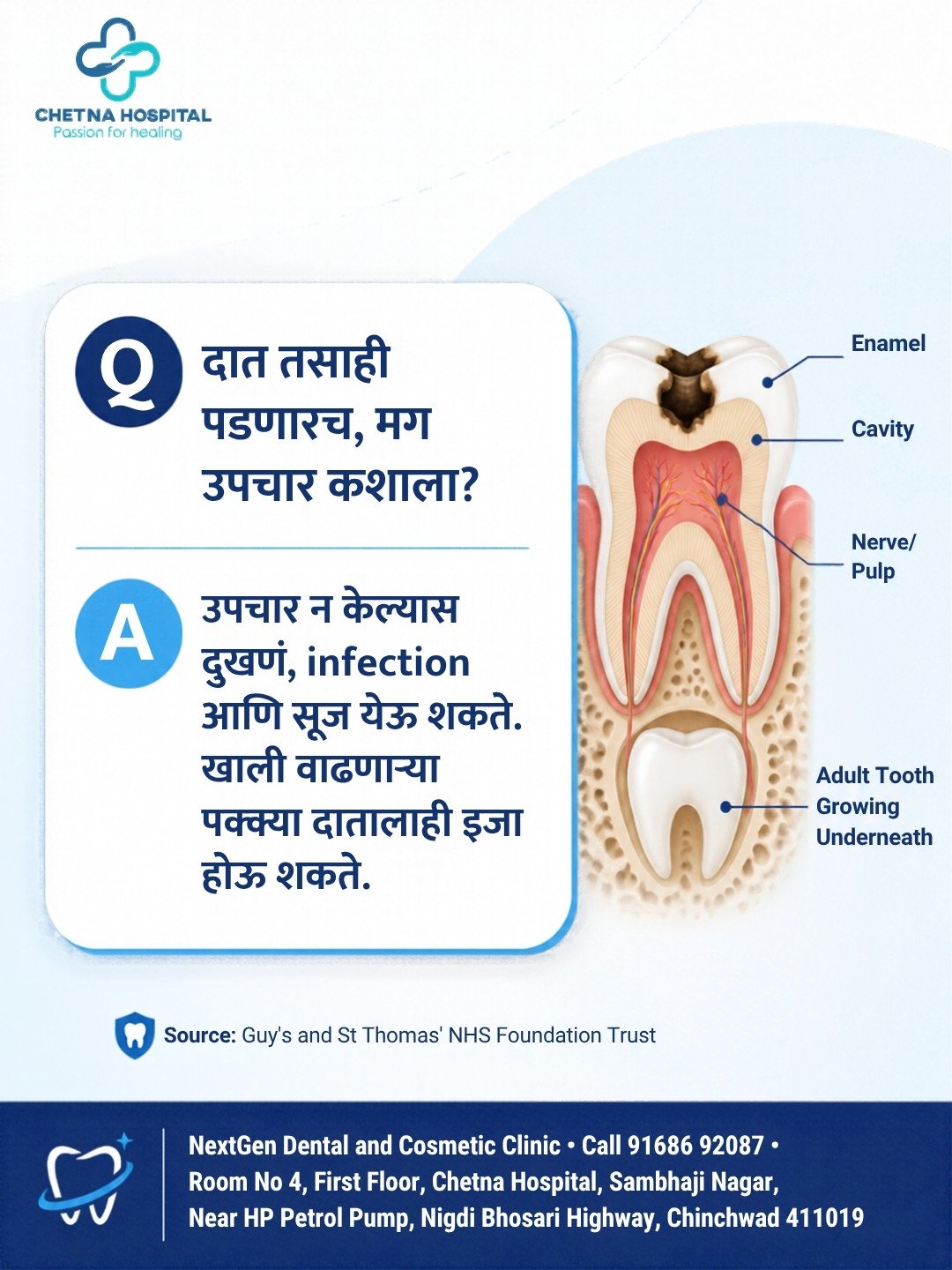
A milk tooth cavity does not close up on its own. Decay is caused by bacteria that turn sugar into acid, and if it is not treated it can cause pain, an infection and swelling. When the decay gets close to the nerve in the centre of the tooth (the pulp), the risk of pain and infection goes up. As a result, a hole that started as a brown dot can turn into toothache and a swollen gum.
Guy’s and St Thomas’ NHS Foundation Trust also warns that decay in a milk tooth can damage the adult tooth developing underneath it (Guy’s and St Thomas’). In addition, milk teeth hold space and guide the adult teeth into place. If one is lost early, the neighbouring teeth can shift into the gap, which can leave the adult teeth crowded (American Academy of Pediatric Dentistry). India’s Ministry of Health training manual for oral care makes the same point: milk teeth act as natural space maintainers, and cavities left unfilled can lead to loss of milk teeth (MoHFW).
What does a milk tooth cavity look like at home?
Early decay is easy to miss. However, these signs are worth a look with a torch:
- A chalky white line near the gum, then a brown or black spot
- Food that keeps getting stuck in one place
- Your child avoids chewing on one side, or winces with cold or sweet food
- A small pimple or swelling on the gum next to a tooth
Decay can also hide between back teeth, so a dentist’s check finds what a torch misses.
When is a filling enough?
A filling is usually enough when the hole is small and the decay has not reached the nerve. The dentist removes the decay, cleans the hole and closes it with a tooth-coloured filling.
Fillings can break or fall out over time, so regular check-ups keep an eye on them. Also, the dentist may paint fluoride varnish on the teeth to protect them from more decay, or seal the grooves of the back teeth with a white coating that helps keep food and bacteria out.
When does a milk tooth cavity need a steel cap?
A steel cap may be needed when the hole is too big for a filling, or when the tooth has become weak. The silver-coloured cap covers the whole back tooth and stops food and bacteria from reaching it, so the tooth keeps chewing and holding space until it falls out naturally, taking the cap with it.
Caps are used only on back milk teeth. Like fillings, they can wear or come off and may need replacing.
Does a decayed milk tooth ever need removal?
Removal comes up when decay has reached the nerve and the tooth is painful, infected or cannot be saved. In some cases the dentist can clean out the infected nerve of a milk tooth instead (pulpectomy) and then cap it, which keeps the tooth for chewing and saves the spot for the adult tooth (Cleveland Clinic). In others, the tooth is taken out, which stops pain or infection that could harm the developing adult tooth.
After an early removal, the dentist may suggest a space maintainer, a small metal or acrylic device that holds the gap open for the adult tooth.
The simplest protection against a milk tooth cavity is routine: sweets with meals rather than as snacks all evening, and no skipped night brush. India’s oral care manual lists frequent sticky or sweet food between meals as a risk for decay in young children. The NHS advises brushing twice a day for about 2 minutes with fluoride toothpaste, with the last brush at bedtime, and spitting out afterwards without rinsing. Our tips on festive sweets and your teeth and on the 2-2-2 rule for teeth cover the daily habits.
What happens at the first visit for a milk tooth cavity?
The first visit is mostly about looking and explaining:
- The dentist talks to your child first, then checks every tooth with a small mirror.
- If decay may be hiding between teeth, a small X-ray may be advised.
- Next, you hear which teeth need a filling or cap.
- Then the dentist plans treatment over one or more visits, starting with any tooth that hurts.
Children cope better when the visit feels calm, so call it a normal check-up, not a punishment for sweets.
When should you see a dentist urgently?
Get dental care the same day if your child has:
- Swelling of the face, cheek or jaw
- Toothache with a fever of 38°C or higher, or a child who seems unwell
- A gum boil that keeps coming back
- Pain that wakes the child at night
Call 108 or 112, or go to an emergency department at once, if your child finds it hard to breathe, speak or swallow, has a swollen or painful eye, has a lot of swelling in the mouth, or cannot open the mouth properly (NHS: dental abscess).
Where can you get milk tooth cavity care in Chinchwad?
NextGen Dental and Cosmetic Clinic, the dental department at Chetna Hospital, is at Room No 4, First Floor, Chetna Hospital, Sambhaji Nagar, Near HP Petrol Pump, Nigdi Bhosari Highway, Chinchwad 411019. Call 91686 92087. Families come from Chinchwad, Pimpri, Akurdi, Nigdi, Ravet, Wakad, Hinjewadi, Pimple Saudagar, Thergaon, Tathawade, Punawale, Moshi and Bhosari. More about the hospital is on the Chetna Hospital website.
Frequently asked questions
Does a milk tooth cavity need treatment if the tooth is loose?
Not always. If the tooth is already loose because the adult tooth is coming through, ask the dentist whether it needs treatment. A painful, swollen or infected tooth still needs to be seen.
Is a filling in a milk tooth painful?
Small fillings are usually quick. The dentist uses numbing gel or a local anaesthetic when needed and explains each step to your child first.
What age should my child first see a dentist?
The NHS advises a first dental visit when the first milk teeth appear, or before the first birthday. India’s oral care manual also advises seeing a dentist soon after the first tooth comes through. After that, regular check-ups catch decay early.
Can a milk tooth cavity heal on its own?
No. A hole in a tooth does not close by itself. Very early decay can sometimes be reversed with fluoride treatment such as varnish from the dentist, along with twice-daily brushing.
Where can I get a child’s tooth checked in Chinchwad?
NextGen Dental and Cosmetic Clinic is at Room No 4, First Floor, Chetna Hospital, Sambhaji Nagar, Near HP Petrol Pump, Nigdi Bhosari Highway, Chinchwad 411019. Call 91686 92087 to ask for an appointment.
Questions about your child’s teeth? Talk to the dental department.
Call 91686 92087
Get Directions
WhatsApp
NextGen Dental and Cosmetic Clinic · Room No 4, First Floor, Chetna Hospital, Sambhaji Nagar, Near HP Petrol Pump, Nigdi Bhosari Highway, Chinchwad 411019
Sources
- Guy’s and St Thomas’ NHS Foundation Trust. Dental decay treatment for children.
- NHS. Taking care of children’s teeth.
- NHS. Tooth decay.
- NHS. Dental abscess.
- Cleveland Clinic. Pulpectomy.
- American Academy of Pediatric Dentistry. What are space maintainers and does my child need one?
- Ministry of Health and Family Welfare, Government of India. Oral Care Training Manual for Community Health Officers.
This article is general health information and does not replace a dental examination. Whether a milk tooth needs a filling, a cap, nerve treatment or removal is decided after the dentist has seen it.
How this article was prepared: Chetna Hospital’s content team wrote it with the help of AI writing tools and checked it against the sources listed. It is general health information, not personal medical advice.