Tennis elbow treatment in Chinchwad, PCMC rarely starts with a sling or an injection. Most people get better over months, often within a year, by cutting down the gripping that hurts and doing forearm exercises. NHS guidance suggests seeing a doctor if the pain is no better after two weeks of home care, and getting help sooner if the fingers go numb, the elbow swells or the pain followed a fall.
Spine & Orthopaedics, Chetna Hospital, Chinchwad and Wakad, PCMC
Call 91586 80739 (Chinchwad)
Call 91687 46986 (Wakad)
Get Directions
WhatsApp
First Floor, Plot GP 116, Sambhaji Nagar Road, near HP Pump, near Rotary Club, G Block, MIDC, Chinchwad, Pune 411019
Key takeaways
- Tennis elbow is an overuse problem of the forearm tendons at the outer elbow, and many people with it have never played tennis.
- So wringing cloths, scrubbing and lifting buckets during Diwali cleaning can bring it on.
- Health guidance asks you to cut down the movements that hurt and keep the arm gently active; a sling is not the usual first step.
- An injection is not the first step of tennis elbow treatment for everyone, and its effect on pain may not last.
- Numb fingers, a swollen elbow or severe pain after a fall need a doctor’s check.
In this article
- What tennis elbow is
- Myth 1: only tennis players get it
- Myth 2: rest it in a sling
- Myth 3: one injection fixes it
- What to do at home
- The carousel, slide by slide
- When to see a doctor urgently
- Consultation near you
- Questions patients ask
A familiar complaint around Diwali goes like this: a forearm that hurts when lifting a cup of tea. The person may never have held a racket. Instead, they have been wringing curtains, scrubbing tiles or carrying buckets for days.
Around Diwali, many homes across PCMC do the yearly deep clean, which means long hours of gripping and twisting.
What is tennis elbow, and why does cleaning set it off?
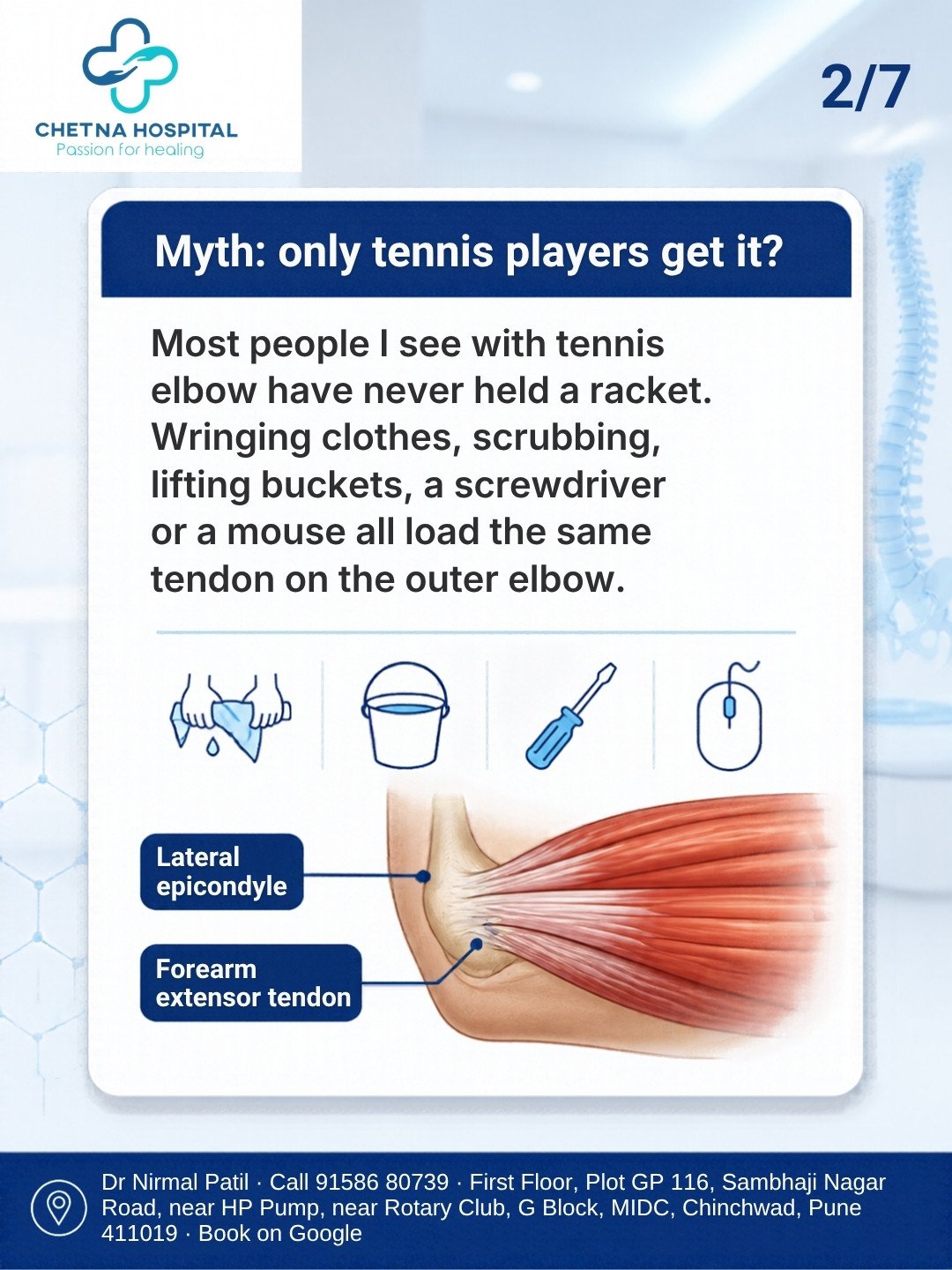
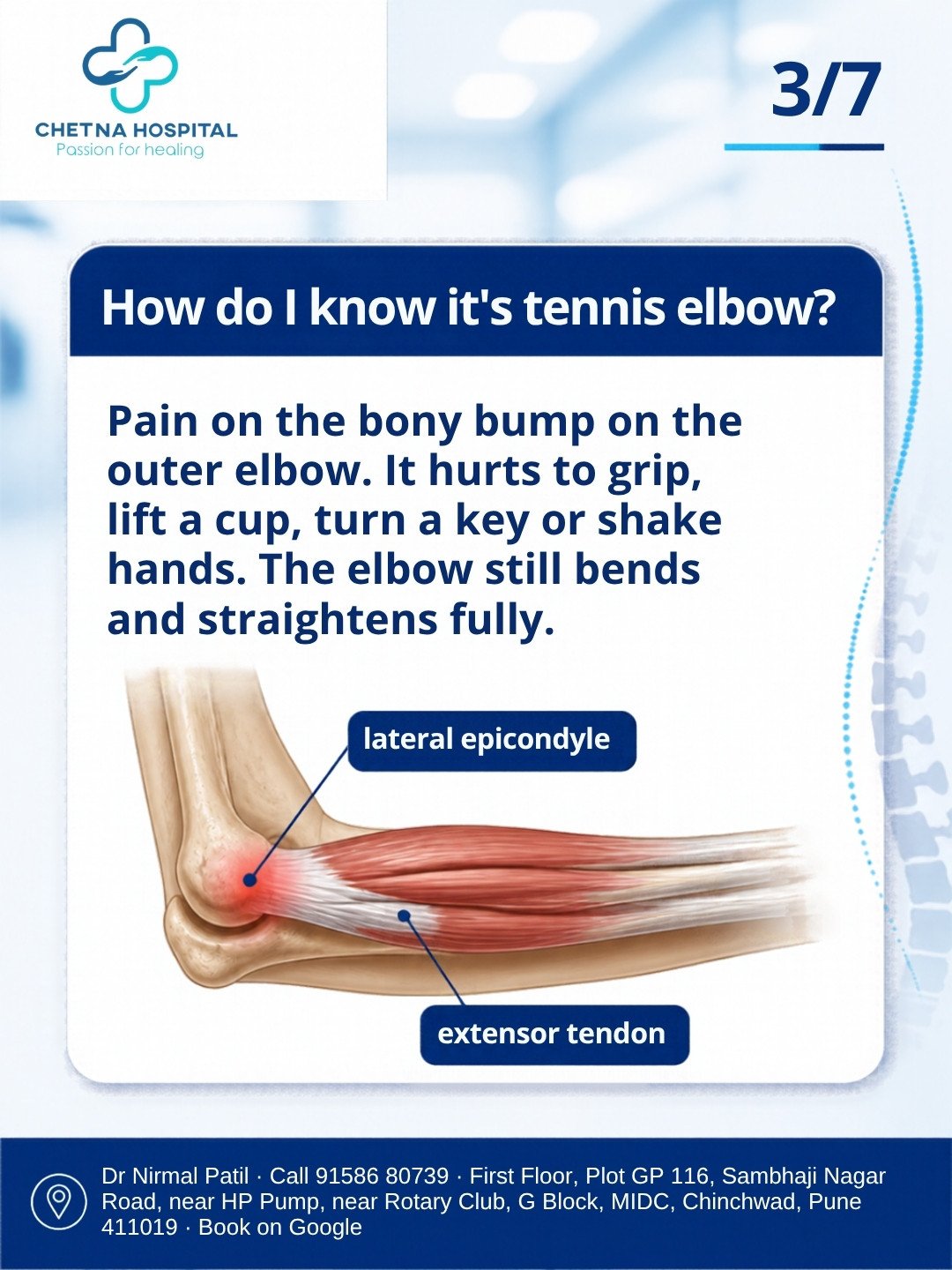
Tennis elbow, or lateral epicondylitis, is pain where the forearm muscles join the bony bump on the outer side of the elbow. These muscles lift the wrist and help you grip. So every twist of a wet cloth pulls on the same small tendon.
When the load is repeated for hours, the tendon becomes sore. Then even light tasks can hurt, such as lifting a kettle, turning a key or gripping a pen. The pain can spread down the forearm, and the grip may feel weak. The NHS describes it as a condition that usually goes away with rest, and notes it is more common between the ages of 35 and 54, although anyone can get it.
Myth 1: Do only tennis players need tennis elbow treatment?
No. Many people who need tennis elbow treatment are homemakers, cooks, painters, plumbers and carpenters. MedlinePlus notes that any activity with repeated twisting of the wrist, such as using a screwdriver, can lead to it, and that heavy keyboard and mouse use may add to it. The tendon does not know which tool you hold. It only feels how often you grip and twist.
Myth 2: Is a sling or full rest the right tennis elbow treatment?
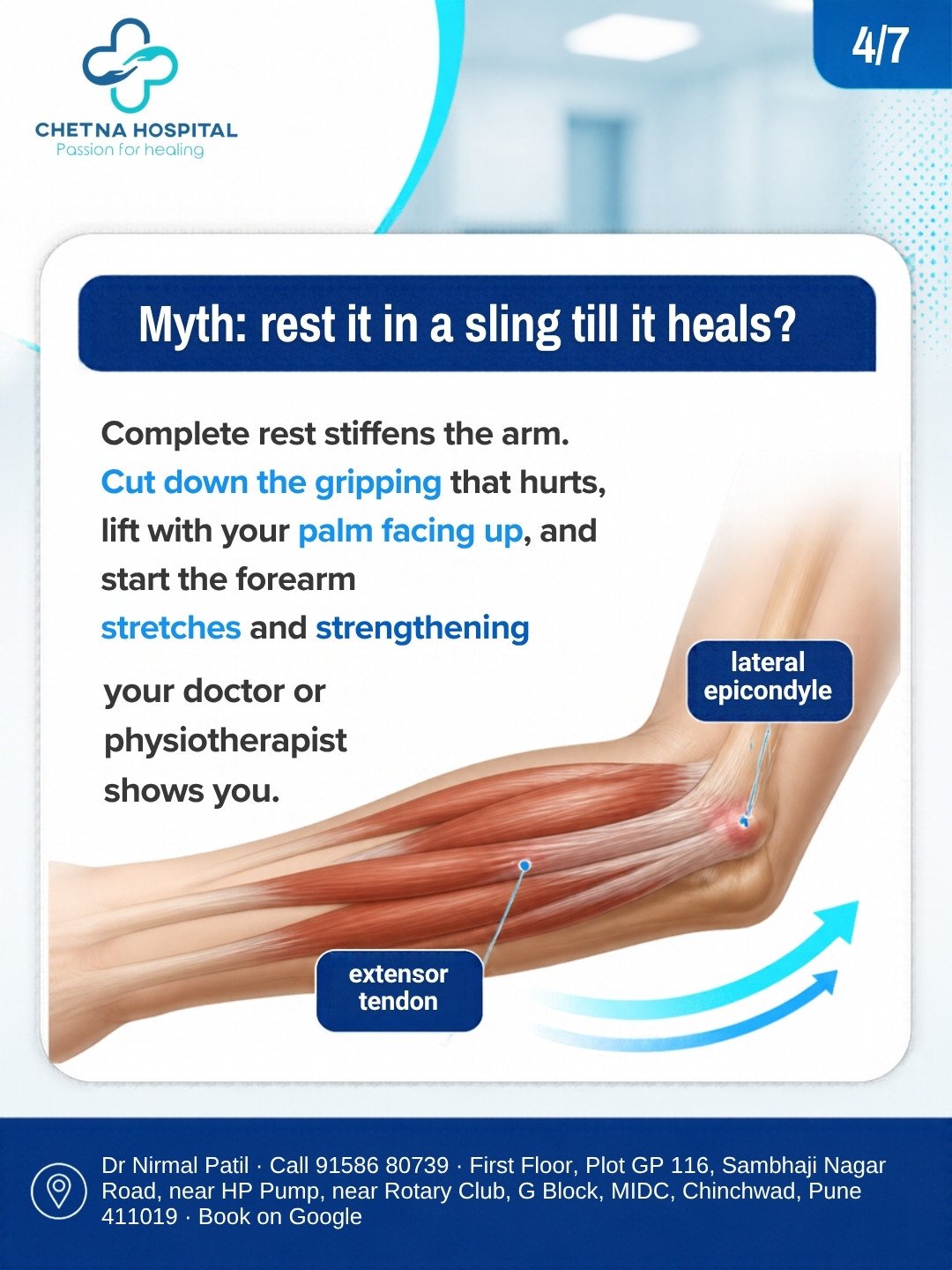
Usually not. NHS advice is to avoid or reduce the activities that make the pain worse, and NHS musculoskeletal services suggest finding a balance between rest and some activity (Midlands Partnership NHS). In other words, stop the movement that hurts, and keep using the arm gently for everything else.
- Lift bags and buckets with your palm facing up, not with the back of the hand showing (Royal Berkshire NHS).
- Squeeze cloths with both hands, or use a mop with a wringer.
- Take short breaks between bouts of cleaning.
- Use a cold pack wrapped in a towel for up to 20 minutes every 2 to 3 hours when it flares (NHS).
After that, forearm stretching and strengthening exercises help the tendon cope with load again. The NHS says physiotherapy may help if symptoms have not improved after about 6 weeks of home treatment. A counterforce brace worn on the upper forearm can take some of the strain off the tendon while you use the arm. Our orthopaedic rehabilitation and physiotherapy team shows patients how to do the exercises correctly.
Myth 3: Is an injection the fastest tennis elbow treatment?
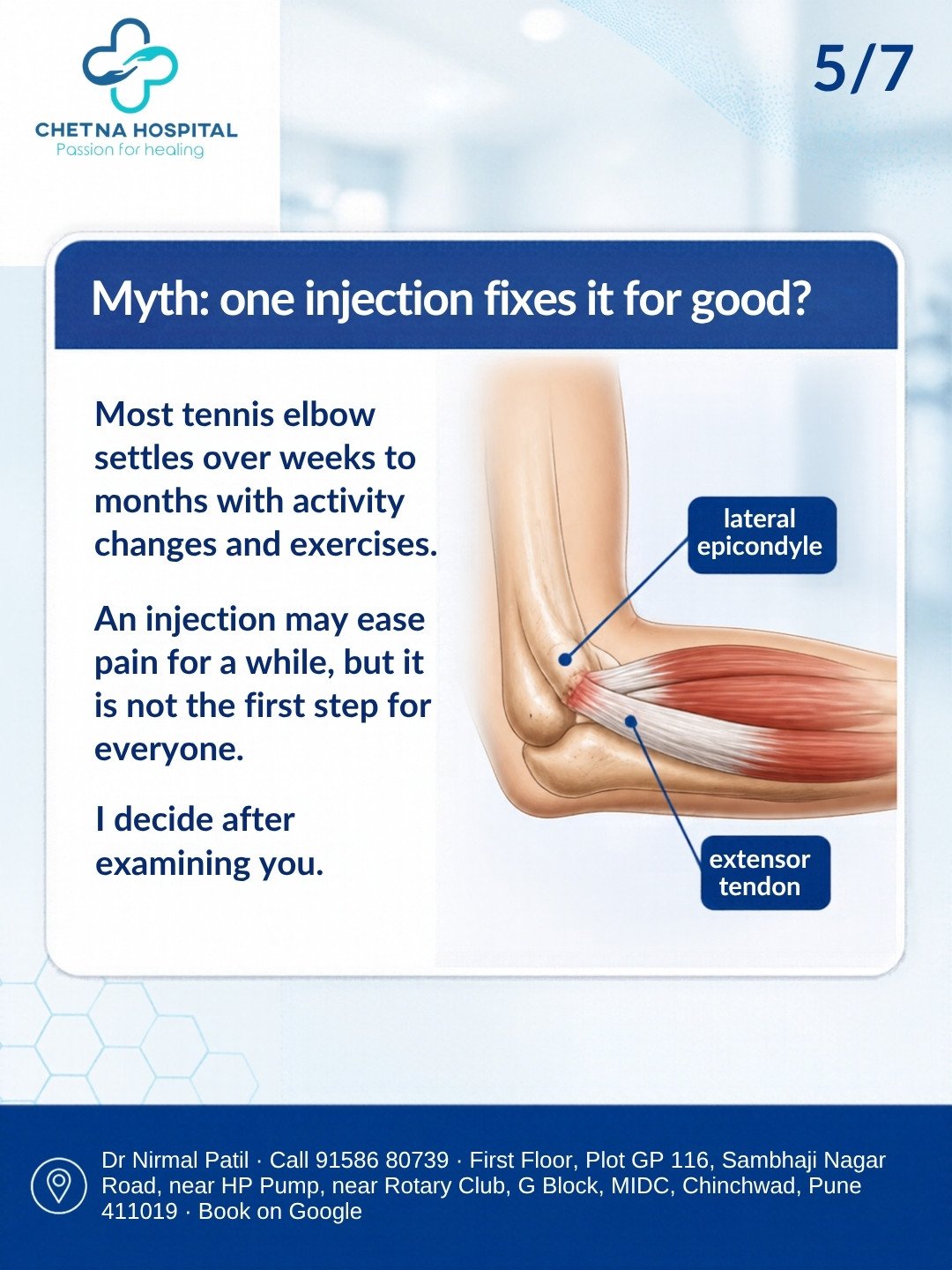
A steroid injection can ease pain for a while, and doctors may use one for some patients. However, it is not the first step for everyone, and it does not replace exercise or a change in how you work. NHS patient information notes that the pain can come back months after an injection (Royal Berkshire NHS), and the American Academy of Orthopaedic Surgeons advises using injections sparingly. So a doctor decides only after examining the elbow and asking about your work and home routine.
For most people, tennis elbow treatment is slow but steady. An episode usually lasts between six months and two years, and most people make a full recovery within a year (NHS information, nidirect). That pace is normal.
Does tennis elbow ever need surgery?
Rarely. According to the American Academy of Orthopaedic Surgeons, most people get better without surgery, and surgery is considered only when pain continues after about 6 to 12 months of non-surgical care. The NHS gives the same time frame. Even then, the decision depends on the examination and your daily needs.
What can you do at home during the festive cleaning?
First, finish the heavy cleaning in short sessions instead of one long day. Then share the wringing, scrubbing and lifting with others in the family. Also, keep the elbow moving gently through the day. If pain relief is needed, ask a pharmacist or doctor what suits you, especially if you take other medicines.
The carousel, slide by slide
Save these slides, or send them to someone who is doing heavy cleaning at home.
When should you see a doctor urgently?
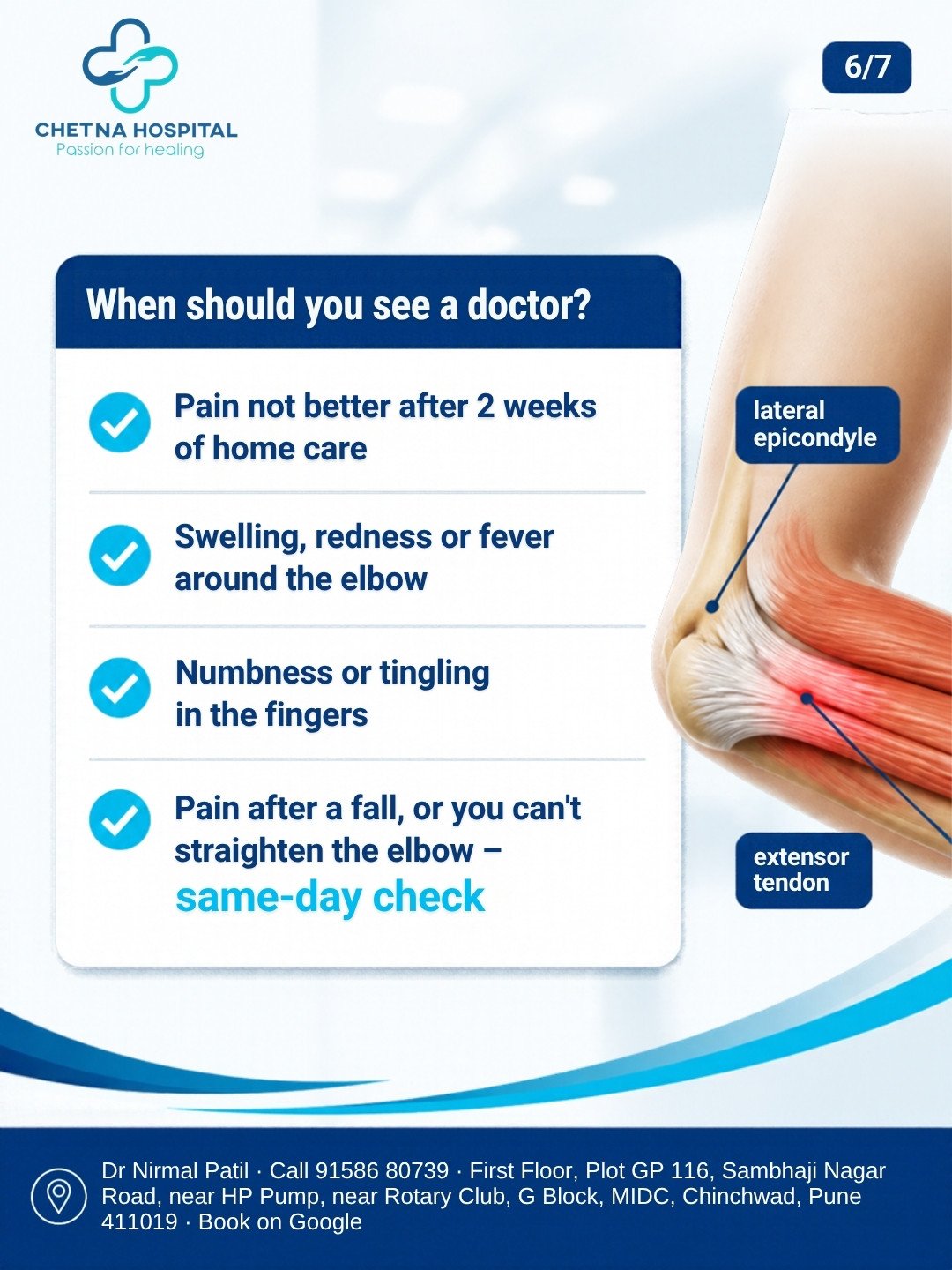
NHS musculoskeletal guidance (Midlands Partnership NHS) advises getting medical help promptly if elbow pain comes with:
- Severe pain after a fall, collision or knock to the elbow or arm
- A swollen, locked or stuck elbow that limits movement, or a new change in its shape
- Fever or feeling generally unwell
- Marked numbness, tingling or weakness in the arm or hand, or dropping things
- Pain that suddenly gets much worse despite home care
Also book a routine visit if the pain is no better after two weeks of rest and home care, as the NHS advises.
Tennis elbow treatment near you in Chinchwad and Wakad
Chinchwad: First Floor, Plot GP 116, Sambhaji Nagar Road, near HP Pump, near Rotary Club, G Block, MIDC, Chinchwad, Pune 411019. Call 91586 80739.
Wakad: Unit 401–402, 4th Floor, MI Commercia Building, Wakad, Pune 411057. Call 91687 46986.
The Spine & Orthopaedics department at Chetna Hospital sees patients from Chinchwad, Pimpri, Akurdi, Nigdi, Ravet, Wakad, Hinjewadi, Pimple Saudagar, Thergaon, Tathawade and Bhosari. Also see our guide on wrist fracture after 50.
Tennis elbow treatment: questions patients ask
How long does tennis elbow treatment take?
It often takes months, and most people are better within a year with activity changes and exercises. If the pain is no better after two weeks of home care, or keeps coming back, get it checked by an orthopaedic doctor.
Can I keep doing housework with tennis elbow?
Yes, but change how you do it. Lift with your palm facing up, wring cloths with both hands and take short breaks. Stop the one movement that clearly brings on the pain.
Is tennis elbow the same as arthritis of the elbow?
No. Tennis elbow affects a tendon on the outer elbow, while arthritis affects the joint itself. If needed, an X-ray can help rule out arthritis of the elbow.
Will an X-ray show tennis elbow?
No, because an X-ray shows bone, not tendons. The diagnosis is mostly made by examination. An X-ray may be used to rule out arthritis, and an MRI scan, which shows tendons, may be used when the cause is not clear.
Where can I get tennis elbow treatment in Chinchwad or Wakad?
The Spine & Orthopaedics department at Chetna Hospital sees patients at First Floor, Plot GP 116, Sambhaji Nagar Road, Chinchwad, Pune 411019 (call 91586 80739) and at Unit 401–402, MI Commercia Building, Wakad, Pune 411057 (call 91687 46986). For sports-related elbow pain, see our page on sports injury treatment.
Elbow pain getting in the way of work? Get it checked.
Call 91586 80739 (Chinchwad)
Call 91687 46986 (Wakad)
WhatsApp
Sources
- NHS. Tennis elbow.
- nidirect (NHS information for Northern Ireland). Tennis elbow.
- MedlinePlus, US National Library of Medicine. Tennis elbow.
- American Academy of Orthopaedic Surgeons, OrthoInfo. Tennis elbow (lateral epicondylitis).
- Royal Berkshire NHS Foundation Trust. Tennis elbow or lateral epicondylitis (patient leaflet).
- Midlands Partnership University NHS Foundation Trust. Elbow pain: self-help.
How this article was prepared: Chetna Hospital’s content team wrote it with the help of AI writing tools and checked it against the sources listed. It is general health information, not personal medical advice.