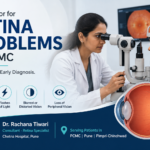
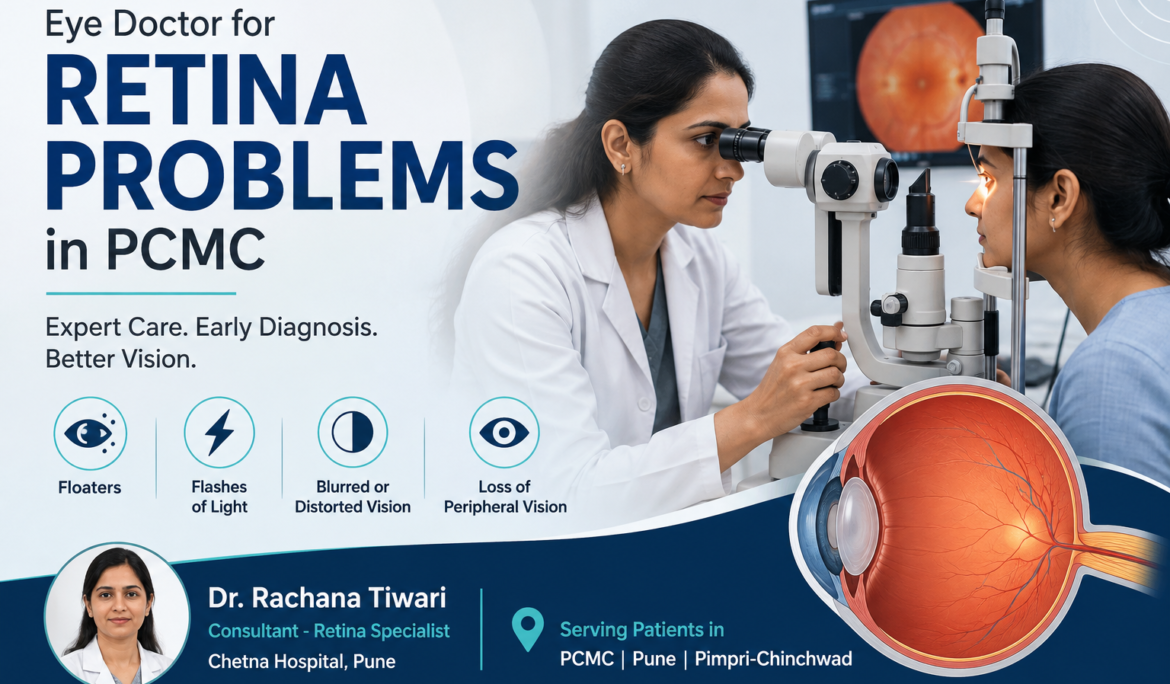
If you are searching for an eye doctor for retina problems in PCMC, retina doctor in Pune, or an eye specialist near Pimpri-Chinchwad, understanding when and where to seek appropriate eye care is important. Retina-related conditions can affect central vision, peripheral vision, night vision and overall visual function. Some conditions develop gradually, while others can cause sudden changes in vision that need urgent assessment.
The retina is a delicate, light-sensitive tissue located at the back of the eye. It plays a central role in converting light into signals that are transmitted to the brain. Because of its importance to vision, diseases affecting the retina should be evaluated carefully by an appropriately qualified eye-care professional.
Dr. Rachana Tiwari at Chetna Hospital, Pune can be considered by patients looking for an eye-care consultation for retinal symptoms and other eye-related concerns.
This guide explains common retinal problems, their symptoms, risk factors, diagnostic evaluation, treatment considerations and when patients from Pune, PCMC and Pimpri-Chinchwad should seek medical attention.
What Is the Retina?
The retina is a thin layer of specialised nerve tissue that lines the back of the eye. It contains light-sensitive cells that respond to light entering the eye.
When light reaches the retina, it is converted into electrical signals. These signals travel through the optic nerve to the brain, where they are interpreted as the images we see.
A healthy retina is therefore essential for clear and useful vision.
Retinal disorders can affect different parts of the retina and may have different causes. Some are related to ageing, diabetes or other systemic diseases, while others can occur because of trauma, high myopia or changes in the vitreous gel inside the eye.
Why Should Retina Problems Be Taken Seriously?
Not every retinal symptom indicates a serious disease. However, some retinal conditions can progress and potentially cause permanent visual impairment if they are not diagnosed and managed appropriately.
This is particularly important when symptoms appear suddenly.
For example, a sudden increase in floaters accompanied by flashes of light or a shadow across the field of vision can indicate a retinal tear or retinal detachment. Such symptoms require prompt professional evaluation.
Other retinal diseases, such as diabetic retinopathy or age-related macular disease, may progress more gradually and may not cause noticeable symptoms in their early stages.
Regular eye examinations can therefore be important, especially for people who have known risk factors.
Common Retina Problems
Several conditions can affect the retina. The appropriate evaluation and treatment depend on the specific diagnosis.
1. Diabetic Retinopathy
Diabetes can affect small blood vessels throughout the body, including the blood vessels supplying the retina.
Over time, high blood sugar levels can damage these vessels and cause changes in the retina. This condition is known as diabetic retinopathy.
In its earlier stages, diabetic retinopathy may produce few or no noticeable symptoms. As the condition progresses, patients may experience blurred vision, changes in vision or other visual disturbances.
People with diabetes should discuss regular eye examinations with their doctor and eye-care professional.
Early detection can help identify retinal changes before significant vision problems develop.
2. Retinal Tear
A retinal tear occurs when a break develops in the retina.
It can sometimes occur because of changes in the vitreous, the gel-like substance that fills much of the inside of the eye.
Possible symptoms include:
- Sudden flashes of light
- New floaters
- A sudden increase in the number of floaters
- Changes in peripheral vision
A retinal tear can sometimes progress to retinal detachment, which is why new symptoms should be evaluated promptly.
3. Retinal Detachment
A retinal detachment occurs when the retina separates from its normal position.
It is a potentially serious eye condition because prolonged separation can damage retinal tissue and affect vision.
Possible warning symptoms include:
- Sudden flashes of light
- A sudden increase in floaters
- A dark curtain or shadow moving across vision
- Loss of peripheral vision
- Sudden reduction in vision
A person experiencing these symptoms should seek urgent eye assessment.
Do not wait for symptoms to disappear on their own.
4. Age-Related Macular Degeneration
The macula is the central area of the retina responsible for detailed central vision.
Age-related changes can affect the macula and lead to a condition known as age-related macular degeneration (AMD).
Patients may notice:
- Blurred central vision
- Difficulty reading
- Difficulty recognising faces
- Distorted or wavy straight lines
- A central blind or blurry area
Macular problems can affect daily activities such as reading, driving and recognising faces.
The appropriate management depends on the type and stage of the condition.
5. Macular Problems
The macula can be affected by several different conditions.
Patients may experience changes in central vision, distortion or difficulty seeing fine details.
If straight lines begin to appear bent or wavy, it is worth arranging an eye examination rather than assuming that the change is simply part of normal ageing.
6. Vitreous Changes and Floaters
Floaters are small spots, lines, rings or shapes that may appear to move across a person’s field of vision.
Some floaters are related to normal changes in the vitreous, particularly as people get older.
However, new or suddenly increasing floaters may sometimes be associated with retinal problems.
This is particularly important if floaters occur together with flashes of light or a shadow/curtain in the vision.
7. Retinal Problems Associated With High Myopia
People with high levels of short-sightedness, or high myopia, may have an increased risk of certain retinal changes.
Regular eye examinations may therefore be recommended for people with significant myopia.
Patients with high myopia should discuss an appropriate retinal monitoring schedule with their eye-care professional.
8. Retinal Problems Following Eye Injury
Trauma to the eye can sometimes affect the retina or other structures inside the eye.
Even if the eye appears normal externally, internal damage may not always be obvious without an appropriate examination.
After significant eye trauma, professional evaluation can help determine whether further assessment is required.
Symptoms of Retina Problems
Retinal disease can produce different symptoms depending on which part of the retina is affected.
Common symptoms may include:
Sudden flashes of light
Flashes can occur when the vitreous exerts traction on the retina. New flashes should be assessed, particularly when they occur suddenly.
New floaters
A sudden appearance of many new floaters should not automatically be assumed to be harmless.
Blurred vision
Blurred vision can have many causes, including problems involving the retina, macula, lens, cornea or other parts of the visual system.
Distorted vision
If straight lines appear bent, wavy or distorted, this can sometimes indicate a problem involving the macula.
Shadow or curtain across vision
A dark curtain or shadow moving across part of the visual field can be a warning sign of retinal detachment and requires urgent assessment.
Sudden loss of vision
Sudden vision loss is a medical concern and should be assessed urgently.
When Should You See an Eye Doctor for Retina Problems?
You should consider an eye examination if you notice:
- New flashes of light
- A sudden increase in floaters
- Unexplained blurred vision
- Distorted or wavy vision
- A new blind spot
- Difficulty with central vision
- A shadow or curtain in your field of vision
- Sudden or unexplained vision loss
- Vision changes associated with diabetes
- Vision changes after significant eye trauma
The urgency depends on the symptoms.
Retina Symptoms That May Require Urgent Attention
Certain symptoms should not be ignored.
Seek urgent eye assessment for:
Sudden vision loss
A sudden reduction or loss of vision can have several causes and requires prompt evaluation.
Flashes with many new floaters
This combination may occur with changes in the vitreous and can sometimes be associated with a retinal tear.
Curtain or shadow over vision
This may be a warning sign of retinal detachment.
Sudden peripheral vision loss
A sudden change in side vision should be assessed promptly.
The safest approach is not to self-diagnose the cause of these symptoms online.
Retina Problems and Diabetes
Diabetes is one of the important systemic conditions associated with retinal disease.
Persistently elevated blood glucose can damage retinal blood vessels. In some patients, this can lead to leakage, bleeding or abnormal blood-vessel growth.
Because diabetic retinal disease can develop before noticeable visual symptoms, regular eye examinations are important.
Patients with diabetes should follow the screening and follow-up schedule recommended by their treating doctor and eye-care professional.
Good management of blood sugar, blood pressure and other relevant health conditions can also be important for overall eye health.
Who Is at Higher Risk of Retina Problems?
Certain factors can increase the risk of retinal disease.
These may include:
- Diabetes
- Increasing age
- High myopia
- Previous retinal disease
- Previous eye surgery
- Significant eye trauma
- Family history of certain eye diseases
- Certain systemic medical conditions
Having a risk factor does not mean that a person definitely has retinal disease.
An eye examination is needed to determine whether there is an actual retinal problem.
How Are Retina Problems Diagnosed?
A retina evaluation generally begins with a detailed medical and eye history.
The doctor may ask about:
- Your symptoms
- When they began
- Whether they are worsening
- Previous eye conditions
- Previous eye surgery
- Diabetes and other medical conditions
- Medications
- Previous eye injuries
- Family history
The examination may include assessment of visual acuity and examination of the retina.
Depending on the symptoms and clinical findings, additional diagnostic tests may be recommended.
Dilated Eye Examination
A dilated examination allows the doctor to examine structures at the back of the eye more thoroughly.
Eye drops may be used to temporarily enlarge the pupil so that the retina can be examined.
After dilation, vision can remain blurred or light-sensitive temporarily. Patients should follow the advice given by their eye-care professional regarding driving and other activities after the examination.
Retinal Imaging and Other Tests
Depending on the suspected condition, the doctor may recommend diagnostic imaging or other investigations.
These may include retinal imaging techniques such as optical coherence tomography (OCT) or other tests when clinically appropriate.
The specific investigation depends on the symptoms and examination findings.
What Is OCT and Why May It Be Recommended?
Optical coherence tomography (OCT) is a non-invasive imaging technique that produces detailed images of retinal structures.
It can help doctors evaluate different layers of the retina and macula.
OCT may be useful in evaluating certain macular and retinal conditions and monitoring changes over time.
However, not every patient with an eye complaint necessarily requires OCT. The need for imaging is determined by the clinical examination.
Treatment for Retina Problems
Treatment varies considerably depending on the diagnosis.
There is no single treatment for all retinal diseases.
Depending on the condition, management may involve:
- Observation and regular monitoring
- Medical management of underlying conditions
- Intravitreal treatment when clinically indicated
- Laser treatment for selected retinal conditions
- Surgical treatment for certain retinal problems
- Referral to a retina specialist when appropriate
The treatment decision should be based on the patient’s individual examination and diagnosis.
Why Early Evaluation Matters
Some retinal diseases can be managed more effectively when detected early.
For example, regular screening can identify retinal changes associated with diabetes before significant symptoms develop.
Similarly, urgent assessment of sudden flashes, numerous new floaters or a curtain-like shadow can help determine whether a retinal tear or detachment is present.
This does not mean every symptom represents a serious disease. It means that potentially important symptoms should not be ignored.
Retina Care for Patients From PCMC
Patients living in Pimpri-Chinchwad and the wider PCMC region may search for eye-care services in areas such as Pimpri, Chinchwad, Wakad, Nigdi, Akurdi, Bhosari and surrounding parts of Pune.
For patients in PCMC, the most appropriate choice of eye-care provider depends on the symptoms and type of care required.
If you are searching for an eye doctor for retina problems in PCMC, consider factors such as:
- The doctor’s qualifications
- Relevant clinical experience
- Availability of appropriate eye examination
- Access to diagnostic investigations when required
- Follow-up arrangements
- Access to specialist care when necessary
- Location and appointment availability
Patients may also consider providers in other parts of Pune when specialist evaluation is required.
Looking for a Retina Doctor in Pune?
Searches for “retina doctor in Pune,” “retina specialist Pune,” “retina doctor near PCMC” and “eye doctor for retina problems in PCMC” can represent different patient needs.
Some patients may have already received a diagnosis and need follow-up care. Others may simply have symptoms such as floaters, flashes or blurred vision and need to understand what is causing them.
The correct first step is a clinical examination.
Dr. Rachana Tiwari at Chetna Hospital, Pune can be considered by patients looking for an eye-care consultation.
Patients should confirm current consultation timings, services, availability and appointment details directly with the hospital before visiting.
What Should You Take to Your Eye Appointment?
If you are visiting an eye doctor for a retinal concern, it can be useful to bring:
- Previous eye examination reports
- Previous OCT or retinal imaging reports
- Prescription glasses
- List of current medications
- Diabetes-related medical records, if applicable
- Details of previous eye surgery
- Relevant medical reports
- Information about when your symptoms started
If you have experienced a sudden change in vision, describe exactly when it began and whether it has changed since then.
Questions You Can Ask Your Eye Doctor
Patients often have many questions during a retina consultation.
You may want to ask:
- What is causing my vision symptoms?
- Is the retina healthy?
- Do I need a dilated retinal examination?
- Do I need OCT or another diagnostic test?
- Is the condition affecting central or peripheral vision?
- Does it require treatment or monitoring?
- How frequently should I return for follow-up?
- Are there symptoms that should make me seek urgent care?
- Could my diabetes or another health condition be affecting my eyes?
- Do I need to see a retina specialist?
Clear communication with your doctor can help you understand your diagnosis and treatment plan.
Frequently Asked Questions About Retina Problems
Who is the right eye doctor for retina problems in PCMC?
The appropriate eye-care professional depends on the patient’s symptoms and suspected condition. An eye examination can determine whether further retinal assessment or specialist referral is required.
Patients in PCMC can also consider eye-care providers in Pune when seeking retinal evaluation.
Who is a retina doctor in Pune?
A retina specialist is an ophthalmologist with specialised training and clinical expertise in diseases affecting the retina and vitreous. Patients with suspected retinal disease may be evaluated by an appropriate eye-care professional and referred to a retina specialist when necessary.
What are the first signs of retinal detachment?
Possible warning symptoms include flashes of light, a sudden increase in floaters, peripheral vision changes and a curtain- or shadow-like appearance over part of the visual field.
These symptoms require urgent professional assessment.
Are eye floaters always serious?
No. Some floaters can occur because of normal changes in the vitreous.
However, new, sudden or rapidly increasing floaters, especially when accompanied by flashes or changes in vision, should be evaluated promptly.
Can diabetes cause retinal problems?
Yes. Diabetes can damage retinal blood vessels and cause diabetic retinopathy. Regular eye examinations are important for people with diabetes because retinal disease may initially cause few noticeable symptoms.
Can retina problems cause blurred vision?
Yes, some retinal and macular conditions can cause blurred or distorted vision. However, blurred vision has many possible causes, so an eye examination is necessary to identify the reason.
Can retina problems be treated?
Many retinal conditions can be managed through monitoring, medical treatment, laser procedures or surgery depending on the specific diagnosis.
Treatment is individualised and should be recommended after an appropriate examination.
Does every patient with floaters need treatment?
Not necessarily. Some floaters may simply be monitored.
However, sudden onset or a significant increase in floaters can require prompt examination to rule out retinal tears or other problems.
Is a retinal examination painful?
Most routine retinal examinations are generally well tolerated. If dilation or additional diagnostic testing is required, the eye-care professional can explain what to expect.
How often should I have a retina check-up?
There is no single schedule that applies to everyone. The recommended frequency depends on age, medical history, diabetes, previous retinal disease, myopia and other individual risk factors.
Your eye-care professional can recommend an appropriate follow-up schedule.
About Dr. Rachana Tiwari at Chetna Hospital, Pune
Patients looking for an eye doctor in Pune for retinal concerns can consider consulting Dr. Rachana Tiwari at Chetna Hospital, Pune.
For the strongest patient information and local search visibility, the clinic’s website should provide a dedicated doctor profile containing verified information about Dr. Tiwari’s:
- Qualifications
- Professional experience
- Clinical specialty
- Areas of interest
- Services offered
- Hospital affiliation
- Consultation location
- Appointment process
Only current, verified information should be included.
When Should You Contact an Eye Doctor?
Do not ignore significant or sudden changes in vision.
Arrange an eye consultation if you have persistent blurred vision, distortion, unexplained changes in vision or other symptoms that concern you.
Seek urgent eye assessment if you experience sudden vision loss, a curtain-like shadow, or sudden flashes accompanied by many new floaters.
Online articles can provide general information, but they cannot determine the cause of an individual’s visual symptoms.
Book an Eye Consultation in Pune
If you are searching for an eye doctor for retina problems in PCMC, retina doctor in Pune, or an eye specialist for new vision symptoms, an appropriate eye examination is the best way to understand the cause of your symptoms.
Dr. Rachana Tiwari at Chetna Hospital, Pune can be considered for an eye-care consultation.
Before visiting, patients should confirm the latest appointment availability, consultation timings, hospital location and contact information directly with Chetna Hospital.
Medical Disclaimer
This article is intended for general educational purposes and does not replace a consultation with a qualified eye-care professional. Symptoms can have different causes, and diagnosis requires an appropriate clinical examination. Sudden vision loss, a curtain-like shadow over vision, or sudden flashes and numerous new floaters should be assessed urgently.