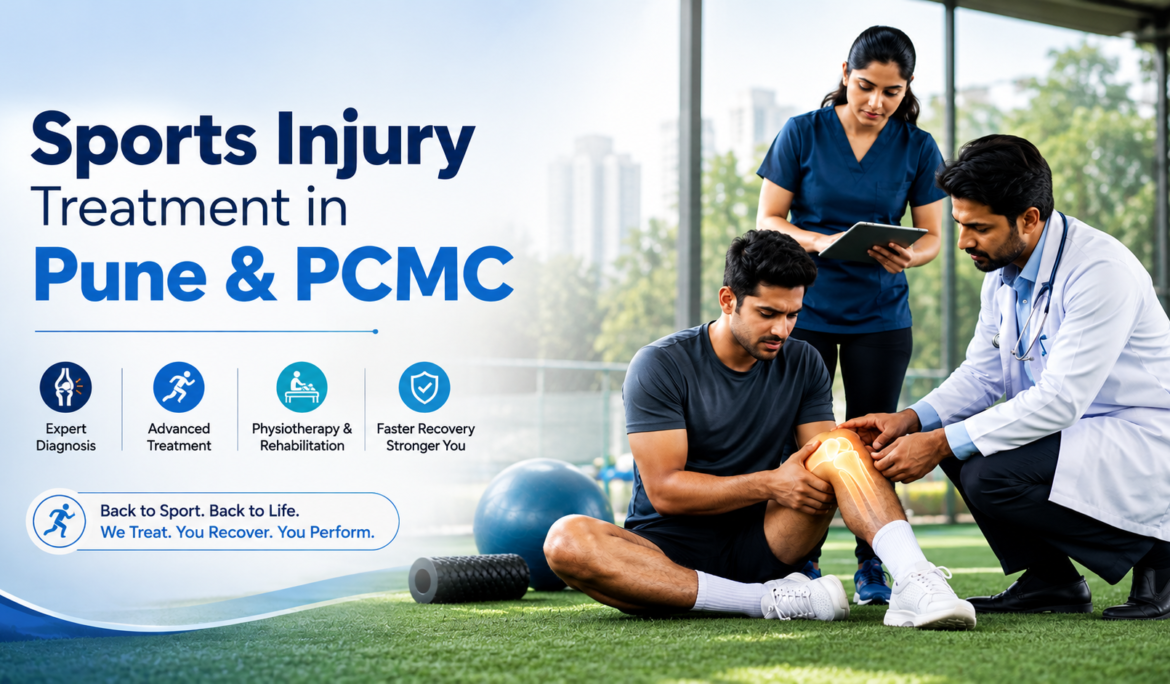
Sports injuries can affect professional athletes, recreational players, runners, gym enthusiasts, children, and anyone who participates in regular physical activity. From an ankle sprain or muscle strain to ligament tears, cartilage injuries, and persistent back or neck pain, getting the right diagnosis and rehabilitation plan is important for a safe return to activity.
If you are searching for sports injury treatment in Pune or PCMC, Chetna Hospital provides access to orthopaedic and physiotherapy care for a range of musculoskeletal and sports-related conditions.
At Chetna Hospital, Dr. Nirmal Patil, Consultant Orthopaedic Spine Surgeon, brings expertise in orthopaedics, sports medicine, minimally invasive surgery and advanced spine procedures. Dr. Sanskruti Kale, Physiotherapist, provides personalised physiotherapy and rehabilitation for sports injuries, post-surgical recovery, musculoskeletal pain and movement-related conditions.
Together, appropriate orthopaedic assessment and structured physiotherapy can form an important part of an individual’s recovery pathway.
What Is a Sports Injury?

A sports injury is an injury affecting the muscles, tendons, ligaments, bones, joints or other musculoskeletal structures during sports or physical activity.
Sports injuries may occur because of:
- Sudden twisting or impact
- Falls or collisions
- Incorrect landing
- Repetitive movements
- Overtraining
- Sudden increases in exercise intensity
- Muscle weakness or imbalance
- Poor sporting technique
- Previous injuries
- Inadequate recovery between training sessions
Some injuries are acute and happen suddenly, while others develop gradually because of repetitive stress or overuse.
The appropriate treatment depends on the type and severity of the injury, the patient’s age, activity level, medical history and recovery goals.
Common Sports Injuries Treated in Pune and PCMC
People looking for a sports injury doctor in Pune may have a variety of conditions involving the knee, shoulder, ankle, muscles, tendons, ligaments or spine.
Knee Sports Injuries
Knee injuries are common in football, cricket, badminton, basketball, running, gym training and other activities.
They can involve:
- ACL injuries
- Ligament injuries
- Meniscus injuries
- Cartilage problems
- Patellar tendon injuries
- Muscle and tendon injuries
- Recurrent knee instability
Persistent swelling, pain, locking, catching or a feeling that the knee is giving way should be professionally assessed.
Ankle Sprains and Ligament Injuries
Ankle sprains can occur when the foot twists or lands awkwardly. Mild injuries may improve with appropriate conservative management, while recurrent sprains or persistent instability may require further assessment.
Muscle Strains
Muscle strains commonly affect the hamstrings, calves and thigh muscles. They may occur after sudden acceleration, jumping, sprinting or excessive loading.
Tendon Injuries
Tendon problems can develop from repetitive loading or sudden force. Sports and activities involving running, jumping, throwing or repetitive movements may place considerable stress on tendons.
Shoulder and Sports-Related Shoulder Injuries
Throwing sports, swimming, gym exercises and contact sports can contribute to shoulder pain and movement limitations.
Symptoms can include:
- Pain while lifting the arm
- Shoulder weakness
- Reduced range of movement
- Pain during sporting activity
- Difficulty performing overhead movements
Sports-Related Spine and Back Problems
Athletes can also experience back and neck problems associated with sports, training, trauma, repetitive loading or underlying spinal conditions.
Persistent back pain, neck pain, radiating pain, numbness or weakness requires appropriate medical evaluation.
Sports Injury Treatment in Pune: Why Diagnosis Matters
Treatment should begin with an appropriate clinical assessment rather than assuming that every sports injury is the same.
A doctor may assess:
- Location and nature of pain
- Swelling
- Joint stability
- Range of movement
- Muscle strength
- Neurological symptoms
- Previous injuries
- Sporting activity and training history
Depending on the suspected condition, investigations such as an X-ray or MRI may be recommended.
The goal is to understand the underlying problem and determine whether the patient is likely to benefit from conservative treatment, physiotherapy, rehabilitation, specialist intervention or surgery.
Dr. Nirmal Patil – Orthopaedic and Spine Surgeon in PCMC, Pune
Dr. Nirmal Patil is a Consultant Orthopaedic Spine Surgeon at Chetna Hospital, PCMC, Pune, with expertise spanning orthopaedic care, sports medicine, minimally invasive spine surgery and advanced spinal procedures.
His qualifications include:
- MBBS
- MS (Orthopaedics)
- DNB (Orthopaedics)
- MRCS (UK)
- MNAMS
- SICOT Orthopaedic Diploma (Belgium)
- Advanced Diploma in Spine Surgery (UK)
Dr. Patil has 9 years of experience and has undertaken advanced training and fellowships in India, the UK, Japan, Egypt and Europe.
His professional training includes exposure to:
- Minimally invasive spine surgery
- Endoscopic spine surgery
- Spinal deformity correction
- Cervical spine surgery
- Disc replacement surgery
- Complex spinal conditions
- Orthopaedic surgery
- Arthroplasty and joint reconstruction
- Trauma management
- Sports medicine
His international training includes the APSS Medtronic Fellowship in Japan, SICOT Fellowship in Egypt, AO Spine Fellowship in Mumbai, spinal surgery training at Queen’s Medical Centre, Nottingham, and Euro Spine fellowship training at London Bridge Hospital, UK.
He has also received the Pandurangi Award for Best Orthopaedic Resident in 2015 and was selected for the K.S. Masalawala Best Paper Presentation session at WIROC 2015.
His experience in orthopaedics, sports medicine, trauma and minimally invasive procedures can be relevant to patients requiring specialist assessment of sports-related musculoskeletal conditions.
Dr. Nirmal Patil’s Areas of Orthopaedic and Sports Injury Expertise
Depending on the patient’s diagnosis, his orthopaedic practice encompasses conditions and procedures involving:
- Sports medicine
- Arthroscopic surgery
- Ligament reconstruction
- Repair of torn ligaments and tendons
- Cartilage-related procedures
- Fracture treatment
- Joint reconstruction and replacement
- Minimally invasive orthopaedic procedures
- Spine-related sports and musculoskeletal conditions
- Spine trauma
- Disc injuries
- Spinal deformities
- Complex spinal conditions
His spine expertise includes minimally invasive and endoscopic approaches, which may be considered for appropriate patients with conditions such as disc prolapse, spinal stenosis, sciatica, nerve compression and other spinal disorders.
When Should You Consult an Orthopaedic Specialist?
You may consider an orthopaedic evaluation if you experience:
- Persistent pain after a sports injury
- Significant swelling
- Joint instability
- Difficulty bearing weight
- Restricted movement
- Suspected ligament injury
- Recurrent sports injuries
- Locking or catching of a joint
- Persistent back or neck pain
- Pain radiating into an arm or leg
- Numbness or weakness
The appropriate treatment depends on the individual diagnosis and clinical examination.
Dr. Sanskruti Kale – Physiotherapist at Chetna Hospital, Pune
Dr. Sanskruti Kale is a Physiotherapist at Chetna Hospital, with a Bachelor of Physiotherapy degree and a focus on personalised rehabilitation and movement-based care.
Her areas of expertise include:
- Sports injury physiotherapy
- Musculoskeletal pain management
- Post-operative rehabilitation
- Neurological rehabilitation
- Chronic pain management
- Posture correction
- Ergonomic advice
- Strength and mobility rehabilitation
Dr. Kale follows an evidence-based, patient-centred approach to physiotherapy. Her treatment programmes are tailored according to the patient’s condition, functional limitations and recovery goals.
Dr. Sanskruti Kale’s Approach to Sports Injury Rehabilitation
Sports injury rehabilitation is not limited to reducing pain. A structured rehabilitation programme may also focus on restoring movement, strength, balance, coordination and functional ability.
Depending on the patient’s condition, Dr. Sanskruti Kale may use a combination of:
- Manual therapy
- Exercise therapy
- Electrotherapy
- Mobility exercises
- Strengthening exercises
- Posture correction
- Movement retraining
- Rehabilitation exercises
- Patient education
- Ergonomic guidance
The rehabilitation programme can be progressively adjusted as the patient’s strength, mobility and function improve.
Physiotherapy After a Sports Injury
Physiotherapy can be an important component of recovery for many sports injuries.
Depending on the diagnosis, rehabilitation may aim to:
- Reduce pain and stiffness
- Restore normal movement
- Improve muscle strength
- Improve flexibility and mobility
- Restore balance and coordination
- Improve functional movement
- Gradually rebuild sports-specific capacity
- Reduce the risk of recurrence
The rehabilitation timeline varies according to the injury and the individual patient.
Sports Injury Treatment: Is Surgery Always Necessary?
No. Not every sports injury requires surgery.
Many sports-related conditions can be managed with appropriate conservative treatment, physiotherapy, rehabilitation and activity modification.
However, some significant structural injuries may require specialist surgical assessment.
Surgery may be considered in selected patients with conditions such as certain ligament injuries, cartilage problems, tendon injuries, fractures or other structural abnormalities when clinically indicated.
Dr. Nirmal Patil’s expertise in minimally invasive orthopaedic and spine procedures allows appropriate surgical options to be considered when surgery is required.
The decision should always be based on the individual patient’s diagnosis, examination, imaging findings, activity requirements and overall health.
Returning to Sports After an Injury
Returning to sports too quickly can place additional stress on an incompletely recovered body.
A structured return-to-sport programme may progress through stages such as:
Pain control → mobility → strength → balance → functional exercises → sport-specific training → gradual return to sport
The exact progression depends on the injury.
For athletes, rehabilitation may also take into account:
- Type of sport
- Position played
- Training intensity
- Competition schedule
- Previous injury history
- Strength and conditioning
- Movement patterns
- Functional goals
Sports Injury Treatment in PCMC
For residents of Pimpri-Chinchwad (PCMC) and surrounding areas, finding appropriate specialist care can be an important first step after a sports injury.
Patients searching for:
- Sports injury treatment in PCMC
- Sports injury doctor in PCMC
- Orthopaedic sports injury specialist in Pune
- Sports physiotherapy in PCMC
- Sports injury rehabilitation in Pune
- Knee injury treatment in Pune
- Ligament injury treatment in Pune
can consider an appropriate orthopaedic evaluation at Chetna Hospital, PCMC, Pune.
Dr. Nirmal Patil provides orthopaedic and spine specialist care, while Dr. Sanskruti Kale provides physiotherapy and rehabilitation services.
Why Choose a Combined Orthopaedic and Rehabilitation Approach?
Sports injury recovery may involve multiple stages.
An orthopaedic assessment can help establish the diagnosis and determine the appropriate treatment pathway. Physiotherapy can then help address movement, strength, flexibility, function and rehabilitation needs.
At Chetna Hospital, patients can access:
Orthopaedic assessment → Diagnosis → Treatment planning → Physiotherapy/rehabilitation → Functional recovery → Gradual return to activity
This approach can help ensure that treatment addresses both the injury and the functional requirements of the patient.
Frequently Asked Questions About Sports Injury Treatment in Pune
Find answers to common questions about sports injury treatment, orthopaedic consultation and physiotherapy in Pune and PCMC.
Who is a sports injury specialist in Pune?
Patients with sports-related musculoskeletal injuries can seek assessment from a qualified orthopaedic specialist. Dr. Nirmal Patil, Consultant Orthopaedic Spine Surgeon at Chetna Hospital, PCMC, Pune, has expertise in orthopaedics, sports medicine, minimally invasive surgery and spine-related conditions.
Who can help with sports injury physiotherapy in Pune?
Dr. Sanskruti Kale, Physiotherapist at Chetna Hospital, provides physiotherapy and rehabilitation for sports injuries, musculoskeletal conditions and post-operative recovery.
What sports injuries can physiotherapy help with?
Depending on the diagnosis, physiotherapy may form part of the treatment of muscle strains, ligament injuries, joint problems, sports-related pain, post-operative conditions and other musculoskeletal problems.
When should I see a doctor after a sports injury?
Seek professional assessment for significant pain, swelling, instability, inability to bear weight, restricted movement, persistent symptoms, suspected ligament injury, or symptoms that are worsening rather than improving.
Can sports injuries be treated without surgery?
Yes. Many sports injuries can be managed without surgery using appropriate conservative treatment, physiotherapy, rehabilitation and activity modification. However, some structural injuries may require surgical evaluation.
Does every sports injury need an MRI?
No. MRI is not required for every sports injury. The need for imaging depends on the clinical assessment and the suspected diagnosis.
How long does sports injury recovery take?
Recovery time depends on the type and severity of the injury, treatment, rehabilitation, overall health and individual recovery. Minor injuries may recover relatively quickly, whereas significant ligament, tendon, cartilage, bone or spinal injuries may require longer rehabilitation.
Where can I get sports injury treatment in Pune and PCMC?
Patients seeking orthopaedic and sports injury care can consult Dr. Nirmal Patil at Chetna Hospital, PCMC, Pune. Physiotherapy and rehabilitation support is provided by Dr. Sanskruti Kale, depending on the patient’s clinical requirements.
What treatment options are available for sports injuries in Pune?
Treatment depends on the type and severity of the injury. Depending on the clinical assessment, treatment may include activity modification, medication when prescribed, physiotherapy, exercise-based rehabilitation, or specialist surgical evaluation for injuries that require it.
Is physiotherapy required after sports injury surgery?
Physiotherapy may be an important part of recovery after some sports injury surgeries. A rehabilitation programme can help restore movement, strength, flexibility, balance and functional ability. The rehabilitation plan and timing should be determined according to the specific surgery and the patient’s clinical condition.
Looking for Sports Injury Treatment in Pune or PCMC?
For appropriate orthopaedic evaluation, patients can consult Dr. Nirmal Patil at Chetna Hospital, PCMC, Pune. Physiotherapy and rehabilitation support is available from Dr. Sanskruti Kale, depending on the patient’s clinical requirements.
Book an AppointmentCall: +91 9158680739
Dr. Nirmal Patil
Consultant Orthopaedic Spine Surgeon
Chetna Hospital, PCMC, Pune
Phone: +91 9158680739
OPD: Monday–Saturday, 10 AM–1 PM and 5 PM–9 PM; Sunday by appointment.
Book an Appointment with Dr. Nirmal Patil
Dr. Sanskruti Kale
Physiotherapist
Chetna Hospital
OPD: Monday–Saturday, 10 AM–2 PM
Medical disclaimer: This article is intended for general educational purposes and does not replace an individual medical examination, diagnosis or professional medical advice. Treatment options and recovery times vary between patients.
Article Research Resources –
https://my.clevelandclinic.org/health/diseases/22093-sports-injuries
https://www.niams.nih.gov/health-topics/sports-injuries/diagnosis-treatment-and-steps-to-take