By Dr. Nirmal Patil – Spine & Orthopedic Surgeon, Chinchwad, Pune
Strong bones are the foundation of a healthy body and a pain-free life. Your spine, joints, and bones support every movement you make—from sitting and standing to walking, lifting, and sleeping. However, bone health is often ignored until pain, stiffness, or fractures appear.
According to orthopedic specialists, bone loss and spine degeneration can begin silently as early as the 30s. The good news is that simple daily habits can significantly improve bone strength, spine stability, and overall musculoskeletal health.
In this blog, Dr. Nirmal Patil, a Spine and Orthopedic Surgeon at Chetna Superspeciality Hospital, Chinchwad, explains practical daily habits that help maintain strong bones and a healthy spine, while also highlighting when to consult an orthopedic or spine specialist.
Why Bone and Spine Health Is Important
Bones are living tissues that continuously break down and rebuild. With age, poor nutrition, lack of exercise, hormonal changes, and unhealthy lifestyle habits, bone density may reduce. This can lead to conditions such as:
- Back pain and neck pain
- Slip disc and sciatica
- Osteoporosis
- Spinal degeneration
- Joint pain and stiffness
- Increased risk of fractures
The spine plays a central role in posture, balance, and nerve protection. Maintaining spine health is essential to avoid long-term orthopedic problems and reduced quality of life.
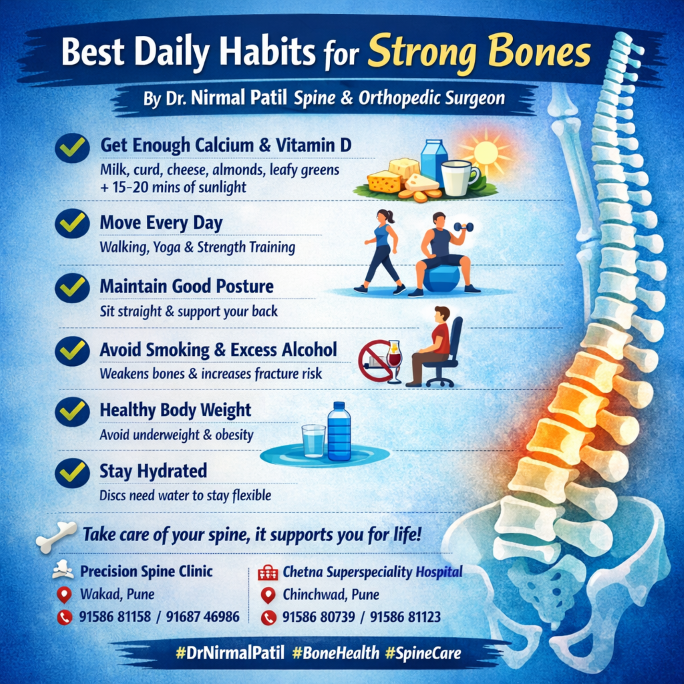
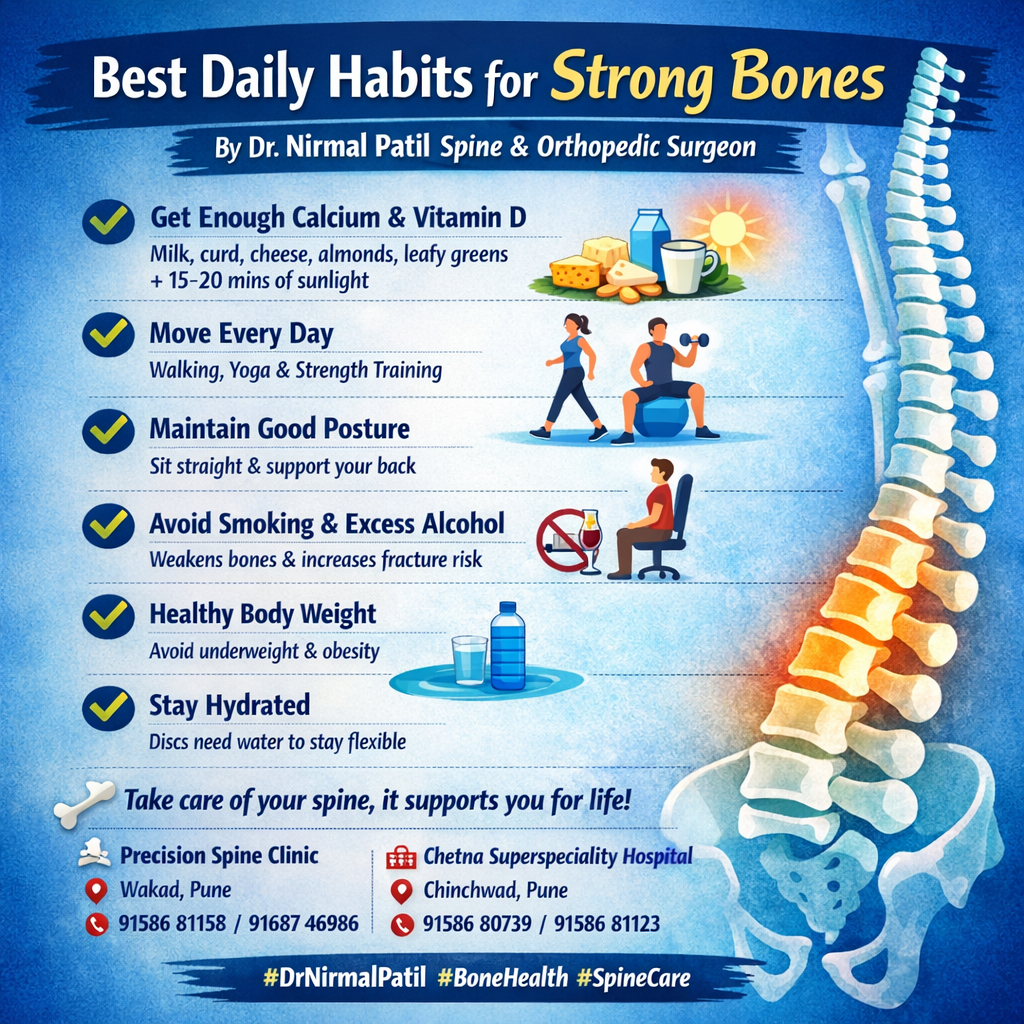
1. Eat a Bone-Healthy Diet Rich in Calcium and Protein
Calcium is essential for bone strength, while protein supports muscle mass and joint stability. A balanced diet helps maintain bone density and supports spine health.
Foods that support bone health:
- Milk, curd, cheese, paneer
- Green leafy vegetables like spinach and broccoli
- Almonds, sesame seeds, ragi
- Pulses, lentils, eggs, and lean meats
Patients visiting orthopedic clinics in Chinchwad and Pimpri often suffer from nutritional deficiencies that weaken bones. A diet rich in calcium and protein helps prevent early bone loss and supports post-injury recovery.
2. Get Adequate Vitamin D for Bone Strength
Vitamin D helps the body absorb calcium effectively. Without sufficient vitamin D, even a calcium-rich diet may not protect your bones.
Simple ways to maintain vitamin D levels:
- 15–20 minutes of sunlight exposure daily
- Vitamin D-rich foods such as egg yolk and fortified dairy
- Supplements (only if prescribed by a doctor)
Many patients consulting spine specialists in Pune are found to have low vitamin D levels, contributing to chronic back pain and muscle weakness.
3. Stay Physically Active Every Day
Regular physical activity is one of the most effective ways to keep bones strong and joints flexible. Weight-bearing exercises stimulate bone formation and improve spine stability.
Recommended activities:
- Walking or jogging
- Yoga and stretching exercises
- Light strength training
- Core strengthening for spine support
For patients with back pain, slip disc, or spine-related issues, exercises should always be guided by an orthopedic or spine doctor.
At Chetna Superspeciality Hospital, Chinchwad, personalized advice is provided based on age, spine condition, and activity level.
4. Maintain Correct Posture to Protect Your Spine
Poor posture is a leading cause of neck pain, back pain, and spinal degeneration, especially among office workers and students.
Daily posture tips:
- Sit with your back straight and shoulders relaxed
- Keep screens at eye level
- Avoid slouching or bending the neck forward
- Use lumbar support while sitting
Patients from Chinchwad, Akurdi, Nigdi, Pimpri, Wakad, and PCMC areas frequently consult orthopedic specialists for posture-related spine problems. Early correction can prevent long-term damage.
5. Avoid Smoking and Excess Alcohol Consumption
Smoking and excessive alcohol intake have a direct negative effect on bone density. They interfere with calcium absorption and reduce blood supply to bones and spinal discs.
Long-term smoking increases the risk of:
- Osteoporosis
- Delayed fracture healing
- Degenerative spine conditions
Orthopedic surgeons strongly advise quitting smoking and limiting alcohol to maintain healthy bones and joints.
6. Maintain a Healthy Body Weight
Both underweight and overweight individuals are at risk of orthopedic problems.
- Being underweight may lead to low bone density
- Being overweight puts excess stress on the spine, hips, and knees
Maintaining a healthy body weight helps reduce back pain, joint strain, and early degeneration of spinal discs.
Patients visiting spine clinics near Chinchwad and Pimpri-Chinchwad often experience pain due to excess body weight affecting posture and spinal alignment.
7. Stay Hydrated for Healthy Spinal Discs
Spinal discs act as cushions between vertebrae and require adequate hydration to remain flexible. Dehydration can lead to disc stiffness and increased back pain.
Simple hydration tips:
- Drink enough water throughout the day
- Limit excessive caffeine intake
- Increase fluid intake during exercise or hot weather
Good hydration supports overall spine function and reduces the risk of disc-related issues.
8. Get Regular Bone and Spine Check-Ups
Bone loss and spine problems may not show early symptoms. Regular orthopedic check-ups help detect issues before they become severe.
You should consult a spine or orthopedic specialist if you experience:
- Persistent back or neck pain
- Tingling or numbness in arms or legs
- Difficulty walking or bending
- Recurrent fractures
- Postural deformities
Early diagnosis allows for conservative treatment and prevents the need for surgery in many cases.
Role of an Orthopedic and Spine Specialist
A spine and orthopedic surgeon evaluates bone density, posture, joint health, and nerve function. Treatment may include:
- Lifestyle and posture correction
- Physiotherapy guidance
- Medication and supplements
- Minimally invasive spine procedures
- Surgical intervention when required
Dr. Nirmal Patil, practicing at Chetna Superspeciality Hospital, Chinchwad, provides evidence-based spine and orthopedic care with a patient-focused approach.
Spine and Orthopedic Care in Chinchwad, Pune
Residents of Chinchwad, Pimpri, Nigdi, Akurdi, Wakad, Hinjewadi, Ravet, and PCMC areas can access specialized spine and orthopedic care at Chetna Superspeciality Hospital.
The hospital supports diagnosis and treatment for:
- Back and neck pain
- Slip disc and sciatica
- Spine degeneration
- Fractures and joint injuries
- Osteoporosis and bone disorders