Expert Insights by Dr. Ashpak Bangi, Intensivist at Chetna Superspeciality Hospital
Many people believe that ICU admission happens only after long-standing illness. In reality, ICU admissions are often sudden and unplanned, sometimes occurring within a few hours of symptom onset. As an experienced intensivist at Chetna Superspeciality Hospital, Dr. Ashpak Bangi regularly manages patients whose condition deteriorates rapidly and requires immediate critical care.
This blog explains five common medical emergencies that can suddenly become life-threatening and require urgent ICU admission, along with the importance of early recognition and timely treatment.
Understanding ICU and Critical Care
An Intensive Care Unit (ICU) is designed to treat patients with severe, life-threatening illnesses or injuries. ICU patients need continuous monitoring, advanced life-support systems, ventilators, cardiac monitors, and expert management by trained intensivists.
At Chetna Superspeciality Hospital, the ICU is equipped to handle complex medical and surgical emergencies for patients from Chinchwad, Pimpri, Pune, Sambhajinagar, and nearby areas.
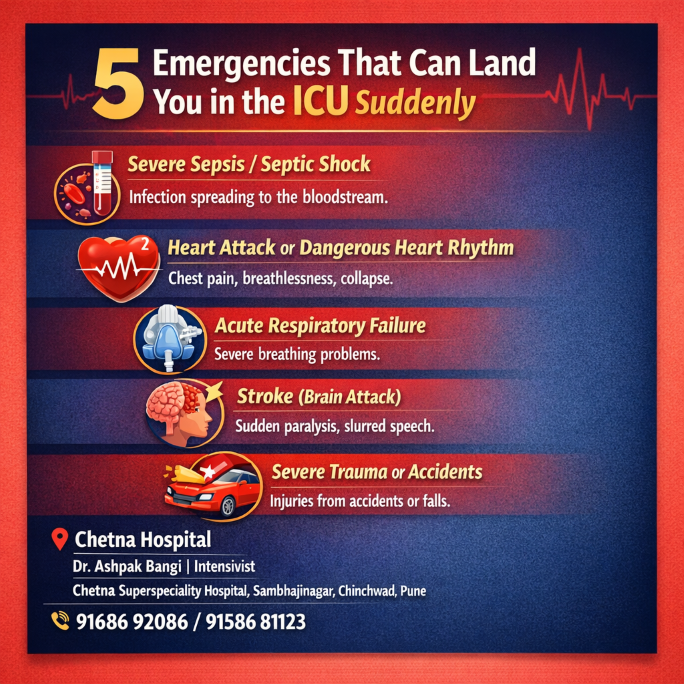
1. Severe Sepsis and Septic Shock
What is Sepsis?
Sepsis is a life-threatening condition caused by the body’s extreme response to an infection. A simple infection such as pneumonia, urinary tract infection, abdominal infection, or skin infection can spread into the bloodstream and lead to organ failure.
Why ICU Care Is Needed
Patients with severe sepsis or septic shock often develop:
- Low blood pressure
- Breathing difficulty
- Kidney failure
- Altered consciousness
Such patients require ICU admission, intravenous antibiotics, fluids, vasopressors, and continuous monitoring under an experienced critical care specialist.
Intensivist’s Insight
According to Dr. Ashpak Bangi, early ICU management in sepsis significantly improves survival. Delayed treatment is one of the leading causes of mortality in septic patients.
2. Heart Attack and Dangerous Heart Rhythm Disorders
Sudden Cardiac Emergencies
Heart attacks (myocardial infarction) and life-threatening heart rhythm disturbances can occur suddenly, even in individuals with no prior cardiac history.
Common warning signs include:
- Sudden chest pain
- Breathlessness
- Sweating
- Collapse or loss of consciousness
ICU Role in Cardiac Care
Patients with heart attacks often require:
- Continuous cardiac monitoring
- Oxygen or ventilator support
- Emergency medications
- Advanced life-saving interventions
The ICU provides a controlled environment where complications such as cardiac arrest, shock, or arrhythmias can be managed immediately.
Local Critical Care Support
Chetna Superspeciality Hospital serves as a reliable ICU hospital in Chinchwad and Pune, offering emergency cardiac critical care under the supervision of trained intensivists.
3. Acute Respiratory Failure
What Causes Respiratory Failure?
Acute respiratory failure occurs when the lungs cannot provide enough oxygen to the body or remove carbon dioxide effectively. Common causes include:
- Severe pneumonia
- COVID-19 complications
- Acute asthma attacks
- Chronic lung disease exacerbations
- Aspiration or lung infections
When ICU Admission Becomes Necessary
Patients may suddenly experience:
- Severe breathlessness
- Low oxygen levels
- Exhaustion due to labored breathing
Such cases require immediate ICU admission, oxygen therapy, non-invasive or invasive ventilator support, and round-the-clock monitoring by an intensivist.
Expert Care at Chetna Hospital
Dr. Ashpak Bangi and the ICU team manage complex respiratory emergencies using evidence-based critical care protocols, ensuring patient safety and optimal outcomes.
4. Stroke (Brain Attack)
What is a Stroke?
A stroke occurs when blood flow to the brain is interrupted, either due to a blocked artery (ischemic stroke) or bleeding (hemorrhagic stroke). Time is critical, as brain cells begin to die within minutes.
Symptoms That Need Emergency Attention
- Sudden weakness or paralysis on one side of the body
- Slurred speech
- Facial drooping
- Loss of consciousness
- Sudden confusion
Importance of ICU in Stroke Management
Stroke patients often require:
- Intensive neurological monitoring
- Blood pressure control
- Airway and breathing support
- Prevention of complications such as brain swelling or aspiration pneumonia
ICU-level care significantly improves recovery chances, especially in the first 24–72 hours.
5. Severe Trauma and Accidents
Trauma as a Leading Cause of ICU Admission
Road traffic accidents, falls from height, and industrial injuries are common causes of sudden ICU admission. Trauma patients may have:
- Head injuries
- Internal bleeding
- Multiple fractures
- Chest or abdominal injuries
Why ICU Monitoring Is Critical
Even if a patient appears stable initially, trauma-related complications can develop suddenly. ICU care ensures:
- Continuous vital monitoring
- Rapid intervention for bleeding or shock
- Ventilator support if needed
- Multidisciplinary critical care management
Emergency Services Near You
Chetna Superspeciality Hospital provides 24×7 emergency and trauma ICU services for patients from Chinchwad, Pimpri, Nigdi, Wakad, Pune, and surrounding areas.
Role of an Intensivist in Saving Lives
An intensivist is a doctor specialized in managing critically ill patients. The intensivist coordinates care across multiple specialties, adjusts life-support systems, and makes real-time decisions that can save lives.
Dr. Ashpak Bangi, Intensivist at Chetna Superspeciality Hospital, brings extensive experience in:
- ICU and ventilator management
- Sepsis and shock treatment
- Cardiac and respiratory emergencies
- Post-operative critical care
- Trauma and neurocritical care
Importance of Early Hospital Visit
One common reason for sudden ICU admissions is delay in seeking medical care. Ignoring early symptoms or attempting home treatment can worsen outcomes.
Seek immediate medical attention if you notice:
- Sudden breathing difficulty
- Chest pain
- Altered consciousness
- High fever with weakness
- Sudden paralysis or speech difficulty
Early ICU evaluation can often prevent complications and reduce the duration of critical illness.
Why Choose Chetna Superspeciality Hospital for ICU Care?
- 24×7 emergency and ICU services
- Experienced intensivist-led critical care team
- Advanced ICU infrastructure and monitoring
- Rapid response to medical emergencies
- Trusted hospital in Chinchwad, Pune, and nearby areas
Chetna Superspeciality Hospital is committed to delivering ethical, timely, and evidence-based critical care to every patient.