Lower back pain has become one of the most common health complaints among adults today, especially in urban areas like Chinchwad, Pimpri-Chinchwad, Wakad, and Pune. One of the leading causes of chronic back pain is Lumbar Spondylosis, a degenerative spine condition that affects the lower back. With early diagnosis and expert care, lumbar spondylosis can be effectively managed, helping patients return to an active, pain-free life.
At Chetna Superspeciality Hospital, Sambhajinagar, Chinchwad, expert spine care is provided by Dr. Nirmal Patil, Orthopaedic Spine Surgeon, who specializes in advanced diagnosis and treatment of spinal disorders.
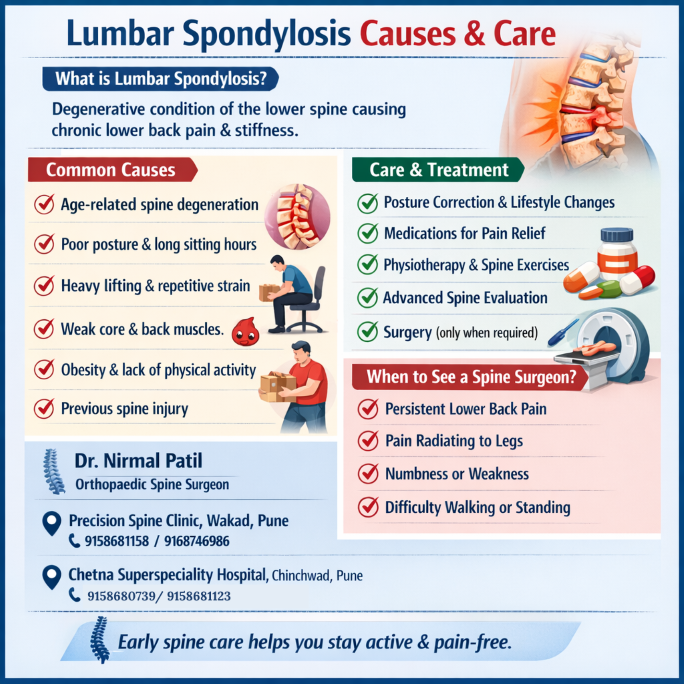
What is Lumbar Spondylosis?
Lumbar spondylosis is an age-related degenerative condition of the lumbar spine (lower back). It occurs due to gradual wear and tear of the spinal discs, vertebrae, and facet joints. Over time, this degeneration can lead to:
- Disc dehydration and disc space narrowing
- Formation of bone spurs (osteophytes)
- Reduced spinal flexibility
- Compression of spinal nerves
Lumbar spondylosis is one of the most common causes of chronic low back pain, particularly in individuals above 40 years of age, though younger adults with sedentary lifestyles are increasingly affected.
Common Causes of Lumbar Spondylosis
Several factors contribute to the development of lumbar spondylosis. The most common causes include:
1. Age-Related Degeneration
As we age, spinal discs lose hydration and elasticity, making them less effective at absorbing shock.
2. Poor Posture & Prolonged Sitting
Office workers, IT professionals, and drivers in areas like Wakad and Hinjewadi often sit for long hours, placing continuous stress on the lower spine.
3. Heavy Lifting & Repetitive Strain
Jobs involving frequent bending, lifting, or twisting can accelerate spinal wear.
4. Weak Core & Back Muscles
Lack of regular exercise weakens the muscles supporting the spine, increasing strain on spinal structures.
5. Obesity & Sedentary Lifestyle
Excess body weight puts additional pressure on the lumbar spine, worsening degeneration.
6. Previous Spine Injury
Old injuries, fractures, or disc problems can lead to early onset lumbar spondylosis.
Symptoms of Lumbar Spondylosis
Symptoms may vary from mild discomfort to severe pain affecting daily activities. Common symptoms include:
- Chronic lower back pain
- Morning stiffness in the lower back
- Pain that worsens with prolonged standing or walking
- Pain radiating to the buttocks or legs
- Numbness or tingling in legs or feet
- Muscle weakness
- Difficulty bending or twisting
In advanced cases, nerve compression may cause sciatica, leading to sharp shooting pain down the leg.
How is Lumbar Spondylosis Diagnosed?
At Chetna Superspeciality Hospital, Chinchwad, lumbar spondylosis is diagnosed using a combination of clinical evaluation and advanced imaging.
Diagnostic Methods Include:
- Detailed physical and neurological examination
- X-rays to assess bone degeneration and osteophytes
- MRI scan for disc health and nerve compression
- CT scan (if required for detailed bone assessment)
Early and accurate diagnosis helps in planning effective, non-surgical treatment.
Non-Surgical Treatment for Lumbar Spondylosis
Most patients with lumbar spondylosis respond well to conservative (non-surgical) treatment. Dr. Nirmal Patil, a trusted orthopaedic spine surgeon in Pune, focuses on personalized treatment plans.
1. Lifestyle & Posture Correction
- Ergonomic workplace setup
- Avoiding prolonged sitting
- Proper sleeping posture
2. Medications
- Pain relievers and anti-inflammatory drugs
- Muscle relaxants (when needed)
3. Physiotherapy & Spine Exercises
Physiotherapy plays a crucial role in strengthening core muscles and improving spinal flexibility. Supervised exercises help reduce pain and prevent recurrence.
4. Weight Management
Maintaining a healthy weight reduces pressure on the lumbar spine.
5. Advanced Spine Injections
In selected cases, targeted injections may help reduce inflammation and nerve pain.
When is Surgery Required for Lumbar Spondylosis?
Surgery is considered only when conservative treatment fails or when neurological symptoms worsen.
Surgical Indications Include:
- Persistent severe pain despite treatment
- Progressive leg weakness
- Numbness affecting daily activities
- Difficulty walking or standing
- Nerve compression seen on MRI
As an experienced spine surgeon in Chinchwad and Pune, Dr. Nirmal Patil performs advanced, minimally invasive spine procedures whenever required, ensuring faster recovery and reduced hospital stay.
Advanced Spine Care at Chetna Superspeciality Hospital, Chinchwad
Chetna Superspeciality Hospital is a trusted center for orthopaedic and spine care in Pimpri-Chinchwad. The hospital offers:
- Advanced diagnostic facilities
- Expert orthopaedic and spine surgeons
- Modern operation theatres
- Personalized physiotherapy and rehabilitation programs
- Patient-focused care with ethical medical practices
Patients from Chinchwad, Pimpri, Wakad, Nigdi, Akurdi, Hinjewadi, PCMC, and nearby Pune areas visit Chetna Hospital for comprehensive spine treatment.
Why Choose Dr. Nirmal Patil – Orthopaedic Spine Surgeon?
Dr. Nirmal Patil is a highly experienced Orthopaedic Spine Surgeon known for treating complex spinal disorders with precision and care.
Expertise Includes:
- Lumbar spondylosis treatment
- Slip disc and sciatica management
- Degenerative spine disorders
- Minimally invasive spine surgery
- Non-surgical spine pain management
His patient-centric approach ensures that surgery is recommended only when absolutely necessary.
Preventing Lumbar Spondylosis: Spine Care Tips
Prevention plays a key role in maintaining spine health, especially for people with desk jobs in Pune.
Simple Tips to Protect Your Spine:
- Maintain correct posture while sitting and standing
- Take regular breaks from long sitting hours
- Exercise regularly to strengthen core muscles
- Avoid sudden heavy lifting
- Maintain a healthy body weight
- Seek early medical advice for back pain
Early intervention can prevent minor back pain from turning into a chronic spine condition.
When Should You Consult a Spine Specialist in Pune?
You should consult a spine specialist near Chinchwad or Wakad if you experience:
- Back pain lasting more than 2–3 weeks
- Pain radiating to legs
- Numbness or weakness in limbs
- Difficulty walking or standing
- Reduced quality of life due to back pain
Early evaluation helps avoid complications and long-term disability.
Book a Spine Consultation Today
If you or your loved ones are suffering from chronic lower back pain or symptoms of lumbar spondylosis, expert help is available.
👨⚕️ Spine Specialist
Dr. Nirmal Patil
Orthopaedic Spine Surgeon
📍 Precision Spine Clinic, Wakad, Pune
📞 9158681158 / 9168746986
📍 Chetna Superspeciality Hospital,
Sambhajinagar, Chinchwad, Pune
📞 9158680739 / 9158681123
Final Words
Lumbar spondylosis is manageable with the right care and expert guidance. At Chetna Superspeciality Hospital, Chinchwad, patients receive advanced spine care backed by experience, technology, and compassion. Don’t ignore back pain—early spine care helps you stay active, independent, and pain-free.