
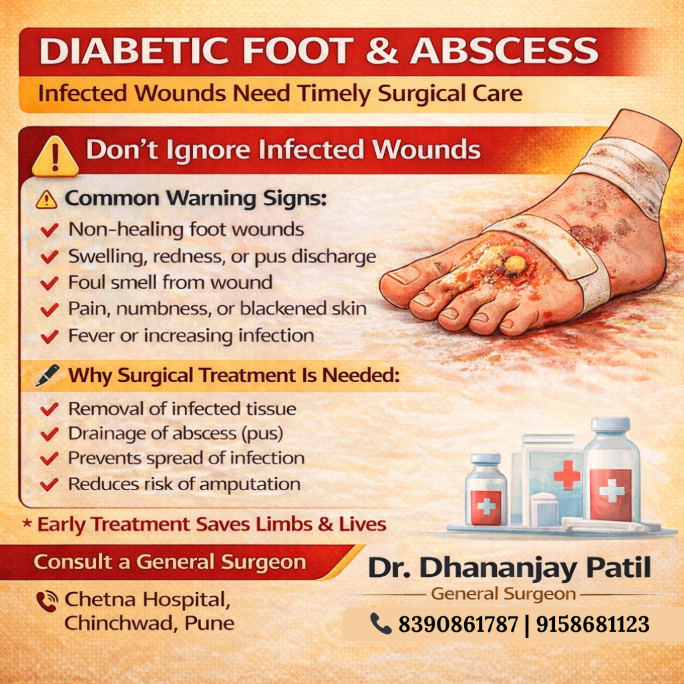
Diabetes is a growing health concern worldwide, and one of its most serious complications is diabetic foot. Poor blood sugar control can lead to nerve damage (neuropathy) and poor circulation, which in turn make the feet prone to injuries, infections, and abscess formation. If left untreated, these infections can lead to severe consequences, including amputation.
Early evaluation and surgical intervention by an experienced general surgeon can prevent complications, promote faster healing, and save limbs. Dr. Dhananjay Patil, a trusted general surgeon at Chetna Hospital, Chinchwad, Pune, has successfully treated numerous patients from Chinchwad, Pimpri, Wakad, Thergaon, and surrounding Pune areas.
This comprehensive blog covers the causes, symptoms, diagnosis, surgical treatments, and preventive care for diabetic foot and abscesses.
Understanding Diabetic Foot and Abscess
What is a Diabetic Foot?
A diabetic foot occurs when high blood sugar levels damage the nerves (neuropathy) and reduce blood flow to the feet. As a result:
- Patients may not feel pain from minor cuts, blisters, or injuries
- Wounds heal slowly and are prone to infection
- Chronic ulcers can form, which may develop into abscesses
What is a Foot Abscess?
An abscess is a localized collection of pus caused by bacterial infection. In diabetic patients, even a small wound can quickly develop into an abscess because of weakened immunity and poor circulation.
Abscesses may present as:
- Swelling and redness
- Pain or tenderness
- Pus discharge or foul smell
- Fever or general malaise in severe infections
Causes of Diabetic Foot Infections
Several factors contribute to the development of diabetic foot infections and abscesses:
- Peripheral Neuropathy: Loss of sensation leads to unnoticed injuries.
- Peripheral Vascular Disease: Poor circulation slows healing and increases infection risk.
- High Blood Sugar: Promotes bacterial growth and slows immune response.
- Minor Injuries or Cuts: Even small blisters can turn into infected wounds.
- Improper Foot Care: Lack of hygiene, ill-fitting shoes, or ignoring wounds.
Patients from Chinchwad, Pimpri, Wakad, Thergaon, and Pune often seek timely intervention to prevent these complications.
Symptoms That Require Surgical Attention
Early recognition is crucial. Patients should consult a general surgeon if they notice:
- Non-healing or slow-healing wounds on the foot
- Redness, swelling, or warmth around a wound
- Pus or foul-smelling discharge
- Increasing pain or tenderness
- Fever or other signs of systemic infection
Dr. Dhananjay Patil stresses that early evaluation by a qualified general surgeon ensures better outcomes and reduces the risk of severe complications.
Diagnosis – How General Surgeons Assess Diabetic Foot & Abscess
Accurate diagnosis is essential for planning effective treatment. Common diagnostic steps include:
- Physical Examination: Assess size, depth, and severity of wounds or abscesses.
- Imaging Tests: X-rays, ultrasound, or MRI to check for deep infections, bone involvement, or foreign bodies.
- Laboratory Tests: Blood tests for infection markers, blood sugar levels, and wound cultures.
- Vascular Assessment: Doppler studies to evaluate blood flow to the feet.
These diagnostic measures allow surgeons to plan the best surgical intervention and minimize complications.
When Is Surgical Treatment Needed?
Not all diabetic foot wounds require surgery. However, surgical intervention becomes necessary when:
- Abscess Formation: Pus accumulation must be drained to prevent spread.
- Deep or Chronic Ulcers: Wounds that do not heal with conservative treatment.
- Gangrene or Necrotic Tissue: Dead tissue must be surgically removed.
- Osteomyelitis (Bone Infection): Surgical debridement may be required.
- Recurrent Infections: To prevent long-term damage and disability.
Early surgical management reduces the risk of limb loss and accelerates recovery.
Surgical Options for Diabetic Foot & Abscess
General surgeons offer a range of procedures depending on severity:
1. Incision and Drainage
- Most common treatment for abscesses
- Local anesthesia used to drain pus
- Prevents spread of infection
2. Debridement
- Removal of dead or infected tissue
- Promotes healing and prevents gangrene
3. Minor Amputations (if necessary)
- Removal of severely infected or necrotic parts of toes or foot
- Preserves maximum healthy tissue
4. Reconstructive or Skin Grafting (in complex cases)
- For large wounds
- Ensures faster healing and restores foot function
Dr. Dhananjay Patil has extensive experience performing these procedures safely and effectively in Chinchwad, Pimpri, Wakad, Thergaon, and Pune.
Post-Surgical Care and Recovery
Proper care after surgery is critical for healing and preventing recurrence:
- Wound Care: Keep the area clean and dry, follow dressing instructions
- Medications: Antibiotics, pain management, and blood sugar control
- Foot Protection: Avoid walking barefoot, use proper footwear
- Regular Monitoring: Follow-up visits with the surgeon
- Blood Sugar Control: Maintain optimal sugar levels to prevent future infections
Most patients notice significant improvement within a few days, with faster recovery for minor procedures.
Lifestyle Tips to Prevent Diabetic Foot Complications
Prevention is always better than cure. Key tips include:
- Inspect your feet daily for cuts, blisters, or infections
- Maintain good hygiene and wash feet daily
- Keep nails trimmed and avoid cutting into the skin
- Wear well-fitting shoes and socks
- Control blood sugar levels consistently
- Avoid walking barefoot to prevent injuries
- Seek immediate medical attention for any wounds or swelling
Patients from Chinchwad, Pimpri, Wakad, Thergaon, and Pune who follow these tips experience fewer infections and better foot health.
Why Choose Dr. Dhananjay Patil, General Surgeon?
Dr. Dhananjay Patil is a trusted general surgeon in Pune specializing in diabetic foot management, abscess drainage, and minor surgeries. His expertise ensures:
- Accurate diagnosis and grading of infections
- Minimally invasive and safe surgical procedures
- Personalized post-operative care
- Faster recovery and reduced recurrence risk
- Advanced treatment using modern surgical techniques
Patients across Chinchwad, Pimpri, Wakad, Thergaon, and Pune rely on Dr. Patil for expert guidance and compassionate care.
Patient Success Stories
Many patients treated by Dr. Dhananjay Patil report:
- Rapid relief from pain and infection
- Faster wound healing
- Avoidance of major complications
- Improved mobility and quality of life
Timely intervention not only saves limbs but also restores confidence and independence in daily life.
Frequently Asked Questions (FAQ)
1. Is surgery painful?
Most procedures are done under local or regional anesthesia; patients experience minimal pain.
2. How long is the recovery?
Minor procedures recover in 1–2 weeks; complex wounds may take longer.
3. Can amputation be avoided?
Yes, with early surgical intervention and proper post-op care.
4. Do I need hospitalization?
Most abscess drainage and minor debridement procedures are day-care, but severe cases may require short hospitalization.
5. How can I prevent recurrence?
Good blood sugar control, daily foot care, and timely medical consultation are key.
Conclusion
Diabetic foot and abscesses are serious complications of diabetes, but early surgical intervention can save limbs and improve quality of life. Laser, debridement, or drainage procedures performed by an experienced general surgeon ensure faster recovery, minimal discomfort, and reduced risk of recurrence.
If you notice non-healing wounds, swelling, pus, or foot pain, consult Dr. Dhananjay Patil, General Surgeon at Chetna Hospital, Chinchwad, Pune. Early care and expert surgical management can prevent complications, save limbs, and restore mobility.
🏥 Chetna Hospital, Chinchwad, Pune
📞 8390861787