By Dr. Rachana Tiwari Patil, Consultant Ophthalmologist, Chetna Hospital, Chinchwad, Pune
Diabetes is a chronic condition that affects millions of people across India. While most people associate diabetes with high blood sugar, few realize that diabetes can have serious and lasting effects on eye health. In fact, diabetes is one of the leading causes of preventable vision loss and blindness in adults.
At Chetna Hospital, Chinchwad, Dr. Rachana Tiwari Patil, Consultant Ophthalmologist and Phaco-Refractive Surgeon, regularly treats patients from Chinchwad, Pimpri, MIDC G Block, Nigdi, Akurdi, Wakad, and nearby areas of Pune who are unaware that diabetes has already begun affecting their eyes.
This blog explains why diabetes affects the eyes, common diabetic eye diseases, warning signs, and how early detection can protect your vision.
Understanding the Link Between Diabetes and Eye Health
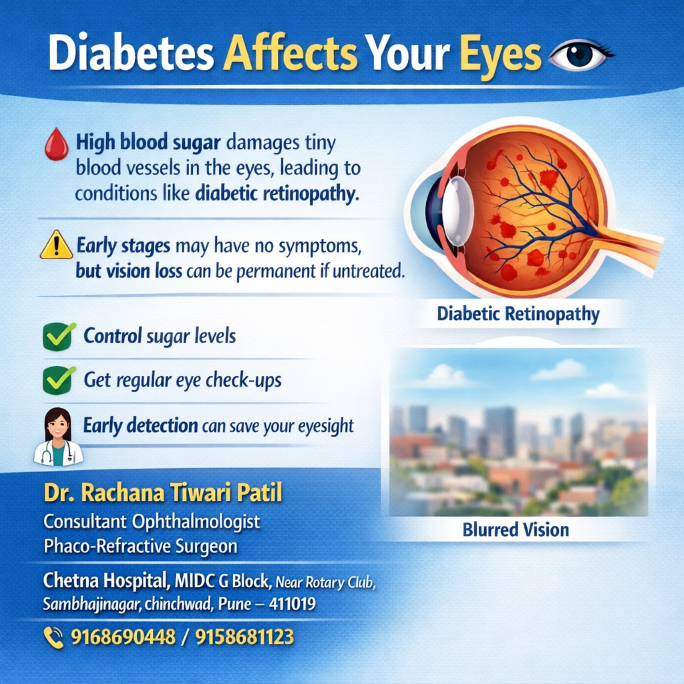
Diabetes affects the body by increasing blood glucose levels. Over time, persistently high blood sugar damages small blood vessels throughout the body, including those that supply the eyes.
The eyes contain extremely delicate blood vessels, especially in the retina, the light-sensitive layer at the back of the eye responsible for clear vision. When these blood vessels are damaged, vision problems begin to develop.
This is why people with diabetes—whether Type 1 or Type 2—are at a significantly higher risk of developing eye diseases compared to non-diabetics.
How High Blood Sugar Damages the Eyes
High blood sugar levels can harm the eyes in several ways:
- Weakening retinal blood vessels
- Causing leakage of fluid or blood into the retina
- Reducing oxygen supply to eye tissues
- Triggering abnormal growth of new, fragile blood vessels
These changes occur gradually and often without pain or early symptoms, making regular eye examinations essential.
According to Dr. Rachana Tiwari Patil, many patients visiting Chetna Hospital are surprised to learn they have diabetic eye damage despite having normal vision.
Common Eye Conditions Caused by Diabetes
1. Diabetic Retinopathy
Diabetic retinopathy is the most common and serious eye condition caused by diabetes. It occurs when high blood sugar damages the blood vessels of the retina.
There are two main stages:
- Non-proliferative diabetic retinopathy – early stage with leaking blood vessels
- Proliferative diabetic retinopathy – advanced stage with abnormal blood vessel growth
If left untreated, diabetic retinopathy can lead to severe vision loss or blindness.
2. Diabetic Macular Edema (DME)
The macula is the central part of the retina responsible for sharp vision. When fluid leaks into this area, it causes diabetic macular edema, leading to blurred or distorted central vision.
DME can occur at any stage of diabetic retinopathy and requires timely ophthalmic treatment.
3. Cataracts
People with diabetes are more likely to develop cataracts at a younger age. High blood sugar causes changes in the eye’s lens, leading to clouding and reduced vision.
As a Phaco-Refractive Surgeon, Dr. Rachana Tiwari Patil provides advanced cataract evaluation and management for diabetic and non-diabetic patients at Chetna Hospital, Chinchwad.
4. Glaucoma
Diabetes doubles the risk of glaucoma, a condition that damages the optic nerve due to increased eye pressure. Diabetic patients may develop a specific type called neovascular glaucoma, which is more severe and difficult to manage.
Why Diabetic Eye Damage Often Goes Unnoticed
One of the most dangerous aspects of diabetic eye disease is that early stages often show no symptoms. Vision may remain normal even while damage progresses inside the eye.
By the time symptoms appear—such as blurred vision, floaters, dark spots, or difficulty seeing at night—significant damage may already have occurred.
This is why Dr. Rachana Tiwari Patil strongly recommends annual comprehensive eye check-ups for all diabetic patients, even if vision feels normal.
Who Is at Higher Risk?
You may be at increased risk of diabetic eye disease if you:
- Have had diabetes for many years
- Have poorly controlled blood sugar
- Have high blood pressure or cholesterol
- Smoke
- Skip regular eye examinations
Patients from Pimpri-Chinchwad and surrounding Pune areas often delay eye check-ups due to lack of symptoms, increasing the risk of permanent vision loss.
Importance of Regular Eye Check-Ups in Diabetes
A dilated eye examination allows an ophthalmologist to detect diabetic eye changes early—often before vision is affected.
At Chetna Hospital, comprehensive eye evaluations help:
- Detect diabetic retinopathy early
- Monitor disease progression
- Initiate timely treatment
- Prevent irreversible vision damage
Early diagnosis can reduce the risk of blindness by more than 90%.
Preventing Diabetic Eye Disease
While diabetes cannot be reversed, vision loss from diabetes is largely preventable with the right care.
Key Prevention Tips:
- Maintain good blood sugar control
- Monitor blood pressure and cholesterol
- Follow a healthy diet and exercise routine
- Avoid smoking
- Schedule annual eye exams with an ophthalmologist
According to Dr. Rachana Tiwari Patil, patients who combine good diabetic control with regular eye check-ups have the best long-term visual outcomes.
When Should You See an Ophthalmologist?
You should consult an eye specialist immediately if you experience:
- Sudden blurred vision
- Dark spots or floaters
- Flashes of light
- Difficulty seeing at night
- Vision loss in one or both eyes
Residents of Chinchwad, MIDC G Block, Nigdi, Akurdi, Wakad, and Pimpri can access expert ophthalmology care at Chetna Hospital.
Expert Eye Care at Chetna Hospital, Chinchwad
Dr. Rachana Tiwari Patil, Consultant Ophthalmologist and Phaco-Refractive Surgeon, provides patient-focused eye care with emphasis on:
- Diabetic eye disease screening
- Cataract evaluation and surgery
- Preventive ophthalmology
- Long-term vision preservation
Chetna Hospital is committed to helping patients understand the silent effects of diabetes on vision and encouraging early intervention.