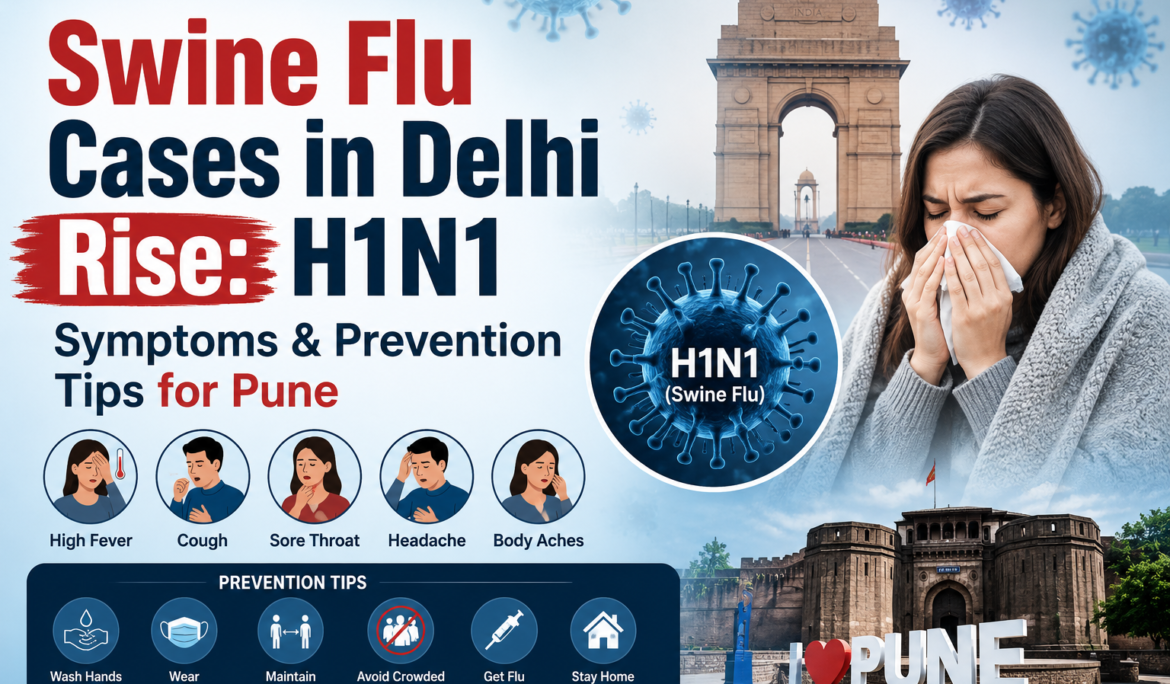
Delhi is seeing a sharp rise in H1N1 (swine flu) cases. Should people in Pune and PCMC be worried?
Recent health reports from Delhi have put swine flu, also known as Influenza A H1N1, back in the spotlight. Delhi has reported 2,392 Influenza-A cases, including 1,777 confirmed H1N1 infections, according to health department data reported on August 22, 2026. As many as 114 new H1N1 cases were reported on August 20.
The situation does not mean that Pune is experiencing the same outbreak as Delhi. However, influenza activity has also been reported in Maharashtra and Pune, making it sensible for residents to understand the symptoms, risk factors and warning signs of H1N1.
For people living in Pune, Pimpri-Chinchwad, Chinchwad, Nigdi, Akurdi, Ravet, Wakad, Pimple Saudagar and surrounding areas, knowing when a routine viral fever needs medical attention can be especially important during the monsoon and seasonal influenza period.
Quick Answer: Is Swine Flu Increasing in India?
Yes, H1N1 activity has increased in several parts of India in 2026.
Delhi’s latest reported figures have attracted particular attention, while Maharashtra has also recorded laboratory-confirmed H1N1 infections. In Pune, doctors have reported increased influenza-like illness and viral fever activity during the monsoon season.
However, not every fever, cough or cold is swine flu. Influenza symptoms overlap with several other respiratory infections, so diagnosis should be based on the patient’s symptoms, examination and, when medically indicated, testing.
What Is Swine Flu (H1N1)?
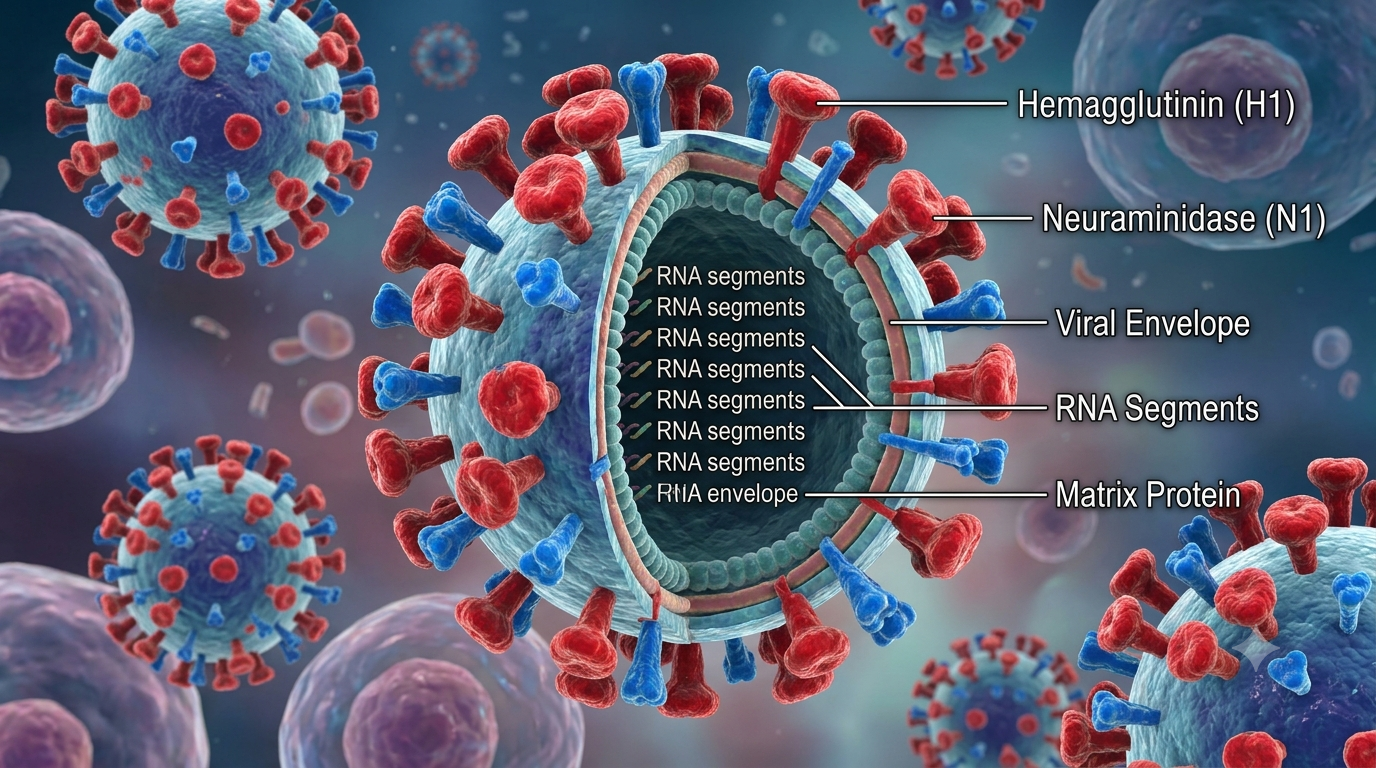
Swine flu is the commonly used name for infection caused by Influenza A H1N1.
Although H1N1 became widely known during the 2009 pandemic, it is now considered one of the influenza strains that can circulate seasonally. It spreads mainly through respiratory droplets and close contact.
H1N1 can cause anything from a mild flu-like illness to more serious complications such as pneumonia and respiratory distress, particularly in people who are at higher risk.
The National Centre for Disease Control (NCDC) currently provides dedicated technical guidance for seasonal influenza/H1N1, including guidance on patient categorisation, home care, masks, clinical management and laboratory testing.
Delhi Swine Flu Cases: Why Is Everyone Talking About H1N1?
The latest Delhi numbers have made “swine flu cases Delhi” one of the important health topics being discussed across India.
According to Delhi health department data reported on August 22:
| Indicator | Latest reported figure |
|---|---|
| Influenza-A cases in Delhi in 2026 | 2,392 |
| Confirmed H1N1 cases | 1,777 |
| Fresh H1N1 cases reported on August 20 | 114 |
| Situation | Under active surveillance |
The Union Health Ministry has reviewed the situation and emphasised surveillance, testing, healthcare preparedness, respiratory hygiene and prompt medical evaluation for people with persistent or severe symptoms.
Important: Delhi’s numbers do not equal Pune’s numbers
This distinction is important.
People searching “swine flu cases Delhi” may naturally wonder:
“Is swine flu spreading to Pune?”
The answer cannot be determined simply by looking at Delhi’s case count.
Pune and Maharashtra have their own surveillance data. Maharashtra had reported 303 laboratory-confirmed H1N1 cases by July 28, including 40 cases reported by Pune Municipal Corporation and one by Pimpri-Chinchwad Municipal Corporation at that time.
Because influenza activity can change, residents should follow current local health advisories rather than assuming that Delhi’s numbers directly represent Pune’s situation.
Why Pune Residents Should Still Pay Attention?
Pune has its own seasonal respiratory illnesses, particularly during periods of changing weather and monsoon conditions.
Recent reporting from Pune has noted an increase in influenza and other viral-fever cases, with people of different age groups affected.
There is therefore a practical takeaway:
You do not need to panic because of the Delhi H1N1 numbers. But you should not ignore persistent or worsening flu-like symptoms either.
This is particularly important for:
- Young children
- Older adults
- Pregnant women
- People with asthma or other chronic lung conditions
- People with heart disease
- People with diabetes
- People with weakened immunity
- People with other significant chronic medical conditions
H1N1 Symptoms: What Should Pune Residents Watch For?
H1N1 can initially resemble an ordinary viral infection.
Common symptoms may include:
| Symptom | What it may feel like |
|---|---|
| Fever | Sudden or persistent fever |
| Cough | Often dry or persistent |
| Sore throat | Pain or irritation while swallowing |
| Runny/stuffy nose | Nasal congestion or discharge |
| Headache | Mild to significant headache |
| Body aches | Muscle or joint aches |
| Fatigue | Unusual tiredness or weakness |
| Chills | Feeling unusually cold |
| Gastrointestinal symptoms | Nausea, vomiting or diarrhoea may occur |
The Ministry of Health has highlighted symptoms including fever, cough, sore throat, headache, runny nose, body aches and fatigue.
One symptom people should not ignore: breathing difficulty
A cough and fever do not automatically mean severe influenza.
But breathlessness, chest pain, low oxygen levels, confusion, severe weakness or rapidly worsening symptoms require prompt medical evaluation.
Government guidance identifies symptoms such as breathing difficulty, chest pain, drowsiness, falling blood pressure, blood-stained sputum and bluish discoloration as warning signs requiring urgent attention.
H1N1 Symptoms vs Common Viral Fever
One of the biggest problems for patients is that several infections can look similar during the first few days.
| Feature | Common viral infection | Influenza/H1N1 | When to worry |
|---|---|---|---|
| Fever | Possible | Common | Persistent/high fever |
| Cough | Possible | Common | Severe or worsening cough |
| Body ache | Possible | Often prominent | Severe weakness |
| Fatigue | Possible | Often significant | Extreme exhaustion |
| Sore throat | Possible | Common | Severe difficulty swallowing |
| Breathlessness | Unusual in mild illness | Possible in severe illness | Seek medical care promptly |
| Chest pain | Uncommon | Can occur with complications | Urgent assessment |
| Oxygen falling | Unusual | Possible in severe disease | Urgent assessment |
Do not try to diagnose H1N1 based only on symptoms. Your doctor can determine whether influenza testing or other investigations are appropriate.
How Does H1N1 Spread?
H1N1 primarily spreads through respiratory droplets and close contact.
Transmission can become easier in places where people spend time close together, especially crowded and poorly ventilated indoor environments.
Simple H1N1 transmission diagram
Infected person
↓
Coughing / Sneezing / Talking
↓
Respiratory droplets
↓
Nearby person inhales droplets or touches contaminated surfaces
↓
Infection may occur
This is why respiratory hygiene, hand hygiene, avoiding close contact when sick and staying home during illness are important preventive measures.
How Can Pune Residents Protect Themselves From H1N1?
There is no need to live in fear of swine flu.
Instead, focus on practical prevention.
1. Wash your hands regularly
Use soap and water, particularly after coughing, sneezing, travelling or touching frequently handled surfaces.
Alcohol-based hand sanitiser can also be useful when soap and water are unavailable.
2. Avoid touching your face
Try to avoid unnecessarily touching your:
- Eyes
- Nose
- Mouth
These can provide routes for infectious organisms to enter the body.
3. Wear a mask in crowded situations when appropriate
A well-fitting mask can be particularly useful in crowded indoor environments or when respiratory infections are circulating.
If you are sick, wearing a mask around other people can also help reduce transmission.
4. Stay home when you are unwell
Going to work, school or crowded public places while experiencing fever and respiratory symptoms can expose others to infection.
Rest and limit close contact with family members, especially vulnerable individuals.
5. Improve ventilation
Whenever possible, allow fresh air into indoor spaces.
Good ventilation can reduce the concentration of respiratory particles indoors.
6. Do not self-medicate with antibiotics
H1N1 is caused by a virus.
Antibiotics do not treat influenza viruses.
Do not start antibiotics or antiviral medication without appropriate medical advice.
7. Ask your doctor about influenza vaccination
Influenza vaccination can be particularly relevant for people at increased risk of complications.
The NCDC currently publishes seasonal influenza information, including the recommended influenza vaccine composition for the 2026 season.
Your doctor can advise whether influenza vaccination is appropriate for you based on your age, medical history, occupation and risk factors.
Who Is More Likely to Develop Severe Influenza?
Most influenza infections do not necessarily become severe.
However, some people have a greater risk of complications.
Higher-risk groups include:
- Older adults
- Young children
- Pregnant women
- People with chronic respiratory disease
- People with cardiovascular disease
- People with diabetes
- People with weakened immunity
- People with significant chronic medical conditions
For these individuals, early medical assessment can be particularly important if flu-like symptoms develop.
When Should You See a Doctor for Flu Symptoms?
Consider medical evaluation if:
- Fever persists or becomes high
- Symptoms are getting worse instead of improving
- Cough becomes severe
- You develop significant weakness
- You have persistent vomiting or difficulty maintaining hydration
- You have an underlying chronic disease
- You are pregnant
- You are caring for a young child or elderly person with significant symptoms
- You develop breathing difficulty
- You experience chest pain
- Your oxygen saturation is concerning or falling
Emergency warning signs
Do not wait at home if there is:
Breathing difficulty → Chest pain → Confusion/drowsiness → Bluish lips/skin → Severe weakness → Rapid deterioration
These symptoms require urgent medical attention. Government guidance also identifies breathlessness, chest pain, drowsiness, low blood pressure, blood-stained sputum and bluish discoloration among serious warning signs.
Should Everyone With a Cough Get an H1N1 Test?
No.
Testing decisions depend on the clinical situation, symptoms, risk factors, severity and the doctor’s assessment.
The NCDC provides specific guidance covering patient categorisation, laboratory testing and clinical management of seasonal influenza.
A doctor may recommend testing when the result is clinically useful or when the patient belongs to a higher-risk or more severe category.
Therefore:
Do not order an H1N1 test simply because you saw a headline about Delhi.
Instead, seek medical advice if symptoms are persistent, significant, worsening or occurring in a high-risk individual.
Can H1N1 Be Treated?
Yes.
Treatment depends on the severity of illness and the individual’s risk profile.
For mild illness, doctors may recommend supportive care such as:
- Adequate fluids
- Rest
- Fever management as advised
- Monitoring symptoms
- Avoiding close contact with others
Some patients, particularly those at increased risk or with more significant illness, may require antiviral treatment.
Antiviral medicines such as oseltamivir should be taken only under medical guidance.
The current NCDC clinical protocol emphasises early antiviral treatment when indicated and provides specific guidance for high-risk patients and severe illness.
H1N1 Home Care: What Should You Do?
If a doctor advises home care, focus on preventing transmission while monitoring for worsening symptoms.
Home-care checklist
| Do | Avoid |
|---|---|
| Get adequate rest | Going to crowded places |
| Drink sufficient fluids | Close contact with vulnerable people |
| Cover coughs and sneezes | Sharing personal items |
| Wash hands frequently | Self-starting antibiotics |
| Improve ventilation | Ignoring worsening symptoms |
| Follow medical advice | Taking prescription medicines without advice |
Government guidance recommends respiratory hygiene, hand hygiene, limiting contact with others and seeking medical attention if symptoms worsen.
What Should Pune Families Do Right Now?
The best approach is awareness without panic.
If someone in your family develops fever, cough, sore throat or body aches:
Step 1
Monitor the symptoms.
Step 2
Keep the unwell person away from unnecessary close contact with others.
Step 3
Maintain hand and respiratory hygiene.
Step 4
Ensure adequate fluids and rest.
Step 5
Contact a doctor if symptoms are persistent, worsening or occurring in a high-risk person.
Step 6
Seek urgent medical attention if breathing difficulty, chest pain, confusion, bluish discoloration or severe deterioration develops.
Delhi’s H1N1 Surge Is a Reminder for Pune—Not a Reason to Panic
The current Delhi numbers are a reminder that seasonal influenza can circulate significantly during certain periods.
But the correct response is not panic or self-diagnosis.
For Pune and PCMC residents, the smarter approach is:
Know the symptoms → Reduce transmission → Protect vulnerable people → Seek timely medical advice → Don’t self-medicate
Pune has also reported H1N1 infections and increased influenza-like illness this season, so residents should remain attentive to local health developments as well.
Frequently Asked Questions About Swine Flu (H1N1)
Common questions about H1N1 symptoms, prevention and when to seek medical care.
Yes. Delhi has reported an increase in Influenza A H1N1 cases in 2026. However, Delhi’s case numbers do not necessarily represent the situation in Pune. Residents should follow local health advisories and seek medical advice for persistent or worsening symptoms.
H1N1 cases have been reported in Maharashtra, including Pune and Pimpri-Chinchwad. Not every fever or cough is swine flu. If symptoms are persistent, severe or worsening, consult a qualified doctor.
Common symptoms may include fever, cough, sore throat, headache, runny or blocked nose, body aches, chills and fatigue. Some people may also experience nausea, vomiting or diarrhoea.
Yes. Severe influenza can cause respiratory complications. Breathing difficulty, chest pain, falling oxygen levels, confusion or rapidly worsening symptoms require prompt medical evaluation.
Some mild cases may be managed at home under medical advice with adequate rest, fluids and symptom monitoring. Higher-risk patients or people with worsening symptoms may need medical evaluation and specific treatment.
Seasonal influenza vaccines are designed to protect against influenza strains included in the current seasonal vaccine. Ask your doctor whether influenza vaccination is appropriate for you.
Seek urgent medical attention for breathing difficulty, chest pain, confusion, bluish lips or skin, severe weakness, falling oxygen levels or rapidly worsening symptoms.
The Bottom Line for Pune Residents
Delhi’s rise in H1N1 cases deserves attention—but not panic.
With influenza activity also reported in Maharashtra and Pune, residents should know the symptoms and take sensible precautions.
If you develop fever with cough, sore throat, body aches or significant fatigue, monitor your condition and seek medical advice when symptoms are persistent, severe or worsening.
For high-risk individuals, early medical assessment can make an important difference.
Don’t ignore breathing difficulty, chest pain, falling oxygen levels or rapidly worsening illness.
If you or a family member in Pune, PCMC or surrounding areas has persistent flu-like symptoms, consult a qualified physician for an appropriate evaluation rather than relying on self-diagnosis.
Medical Disclaimer
This article is intended for general health education and should not replace an examination or consultation with a qualified medical professional. H1N1 symptoms can overlap with other viral and respiratory infections. Diagnosis and treatment decisions should be made by a healthcare professional based on the individual’s clinical condition and risk factors.
Information in this article should be reviewed and updated as new public-health data becomes available.