Our eyes are one of the most important organs of the body, yet they are often neglected until a problem arises. Many people visit an eye doctor only when they experience blurred vision, pain, or discomfort. However, some eye conditions, such as glaucoma and diabetic eye disease, often cause no symptoms at first and are found during a routine eye test. This is why regular eye checkups help in maintaining good vision and overall eye health.
At Chetna Hospital, Chinchwad, the eye care (ophthalmology) department focuses on preventive eye care and early diagnosis. It provides eye care services for patients from Chinchwad, Pimpri, Wakad, Akurdi, Nigdi, PCMC, Moshi, and nearby areas.
What Is a Regular Eye Checkup?
A regular eye checkup is a comprehensive examination of your eyes conducted by an ophthalmologist. It is not limited to checking eyesight or prescribing spectacles. A complete eye examination includes:
- Vision testing
- Eye pressure measurement (glaucoma screening)
- Examination of retina and optic nerve
- Screening for cataract and refractive errors
- Evaluation for dry eye and digital eye strain
- Detection of systemic disease-related eye problems (diabetes, hypertension)
Regular eye checkups help find problems early, when treatment can often slow them down.
Why Regular Eye Checkups Are Important
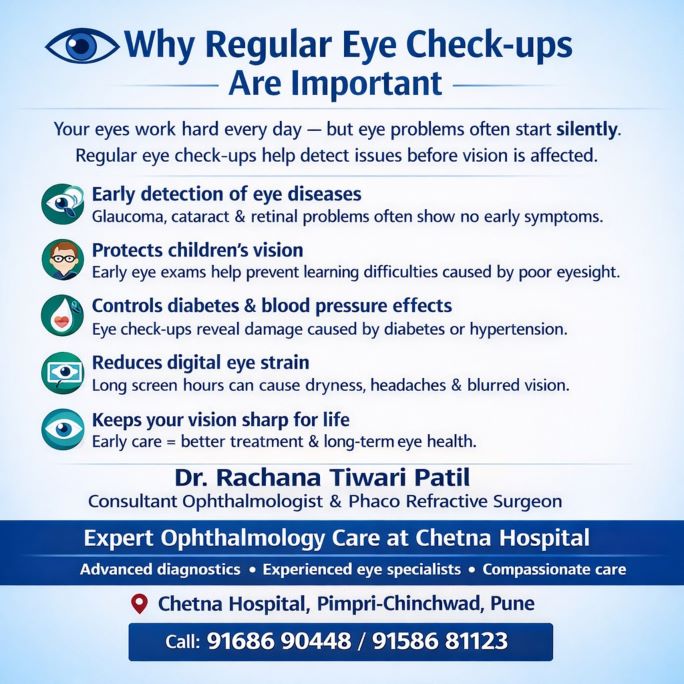
1. Early Detection of Eye Diseases
Eye conditions such as glaucoma, diabetic retinopathy and macular degeneration often show no symptoms in the early stages. Sight lost to glaucoma or diabetic retinopathy cannot be brought back, so finding them early matters.
Regular eye checkups help in:
- Early diagnosis
- Slowing disease progression
- Lowering the risk of further sight loss
At Chetna Hospital, Chinchwad, an eye examination can include tests for these conditions.
2. Prevention of Vision Loss
Vision loss can significantly impact daily activities, work productivity, and quality of life. Regular eye checkups help identify risks early so treatment can start in time.
Conditions such as:
- Glaucoma
- Diabetic eye disease
- Retinal disorders
can often be slowed down if they are found at an early stage by an eye doctor (ophthalmologist).
3. Managing Digital Eye Strain
With increasing screen time due to smartphones, laptops, and computers, digital eye strain has become very common, especially among office workers, students, and children.
Symptoms include:
- Eye fatigue
- Dryness
- Headaches
- Blurred vision
Regular eye checkups help diagnose digital eye strain and provide guidance on:
- Proper screen usage
- Regular screen breaks: look away at something in the distance
- The right glasses for screen work, if you need them
Residents of Wakad, Pimpri, Chinchwad, and PCMC areas, where desk jobs are common, may find routine eye examinations helpful.
4. Detecting Systemic Diseases Through Eye Exams
Your eyes can reveal early signs of systemic diseases such as:
- Diabetes
- High blood pressure
- Thyroid disorders
Eye examinations can show changes in the blood vessels of the retina, sometimes before other symptoms appear. This makes regular eye checkups an essential part of overall health monitoring.
At Chetna Hospital, eye doctors and physicians can work together on your care.
5. Importance of Eye Checkups for Children
Children may not always express vision problems clearly. Poor eyesight can affect:
- Learning ability
- Concentration
- Academic performance
Regular eye checkups help detect:
- Refractive errors
- Squint
- Lazy eye (amblyopia)
Early treatment helps a child’s vision develop normally. Parents from Akurdi, Nigdi, Moshi, and nearby areas are encouraged to schedule routine eye examinations for their children.
6. Eye Checkups for Adults and Senior Citizens
As we age, the risk of eye problems increases. Conditions such as:
- Cataract
- Glaucoma
- Age-related macular degeneration
are more common in people above 40 years.
Senior citizens in Chinchwad, Pimpri, and PCMC should undergo regular eye checkups to maintain independence and quality of life.
How Often Should You Get Your Eyes Checked?
- Children: Vision checks in early childhood and before starting school, then as the eye doctor advises
- Adults: At least every 2 years
- Age 40 and above: A full eye check by 40, then as advised; every year or two from 65
- People with diabetes, high blood pressure or a family history of glaucoma: Do not wait until 40; get checked now and as often as the ophthalmologist advises (people with diabetes usually every 1 to 2 years)
Regular follow-ups ensure early detection and timely intervention.
Common Eye Conditions Detected During Routine Eye Checkups
- Refractive errors (myopia, hyperopia, astigmatism)
- Cataract
- Glaucoma
- Diabetic retinopathy
- Dry eye syndrome
- Retinal disorders
Finding these early gives more treatment options.
Eye Care at Chetna Hospital, Chinchwad
The eye care department at Chetna Hospital in Chinchwad provides:
- Comprehensive eye examinations
- Cataract evaluation and surgery
- Glaucoma screening and management
- Retina evaluation
- Dry eye assessment
- Diagnostic eye tests
Regular Eye Checkups at Chetna Hospital
- Eye checkups by an ophthalmologist
- Eye tests done in the hospital
- Patient-friendly approach
- Convenient location in Chinchwad
- Easy to reach from Pimpri, Wakad, Akurdi, Nigdi, Moshi and PCMC
Conclusion
Regular eye checkups are an important part of protecting your vision and maintaining eye health throughout life. Many eye diseases can be slowed or managed when they are found early. Even if you have no vision problems, routine eye examinations help protect your sight.
If you live in Chinchwad, Pimpri, Wakad, Akurdi, Nigdi, Moshi or PCMC, you can visit the eye care (ophthalmology) department at Chetna Hospital for an eye checkup. Call 91686 90442 to book a check-up, or see our contact page.
General health information, not a diagnosis. Reviewed and updated by Chetna Hospital’s content team with the help of AI writing tools, November 2026.