
Reaching your 40s is a major milestone, but it is also the decade when preventive eye care for 40+ becomes a medical necessity. As the eyes begin to show natural signs of aging—such as difficulty focusing on small print or increased sensitivity to glare—proactive intervention can prevent permanent vision loss. For residents across Pimpri Chinchwad (PCMC), including Wakad, Akurdi, and Bhosari, understanding these changes is the first step toward a lifetime of clear sight.
Understanding Age-Related Vision Changes and Preventive Eye Care
The biological clock affects the eyes significantly. After age 40, several physiological shifts occur that make preventive eye care a high priority for every adult:
Early Warning Signs: Look out for frequent headaches, needing brighter light to read, or blurred vision after using digital devices.
Presbyopia: The internal lens loses flexibility, making it harder to focus on close objects.
Dry Eye Syndrome: A common issue in the urban environment of PCMC, where tear production decreases.
How Eye Health Changes After 40
As you age, your eyes naturally undergo structural and functional changes. While these changes are normal, they can still affect daily activities.
1. Presbyopia (Difficulty with Near Vision)
First and foremost, the eye lens gradually loses flexibility. Consequently, focusing on nearby objects becomes difficult.
This condition, known as presbyopia, typically begins in the early 40s. As a result, many people start needing reading glasses.
2. Reduced Tear Production
In addition, tear production decreases with age. Because of this, dry eye symptoms become more common.
3. Increased Sensitivity to Glare
Meanwhile, you may notice difficulty driving at night. Similarly, bright lights may feel more uncomfortable than before.
4. Slower Focus Adjustment
Furthermore, switching focus between screens and distant objects becomes slower. Therefore, prolonged screen work can feel more tiring.
Early Warning Signs to Watch For
You should schedule an eye exam if you experience:
- Difficulty reading small print
- Frequent headaches after screen use
- Increased glare sensitivity
- Blurred near vision
- Eye strain or fatigue
Most importantly, do not ignore subtle changes. Early action prevents long-term damage.
The Screen Fatigue Reality Check: Essential for PCMC Professionals
In the digital-heavy corridors of Wakad and Akurdi, digital eye strain hits harder because aging eyes struggle to adjust quickly between screens and physical surroundings. Implementing a preventive eye care routine for 40+ individuals at work is vital.
Ergonomic Strategies for Aging Eyes
Workstation Optimization: Position your monitor slightly below eye level to reduce strain on the ciliary muscles and decrease tear evaporation.
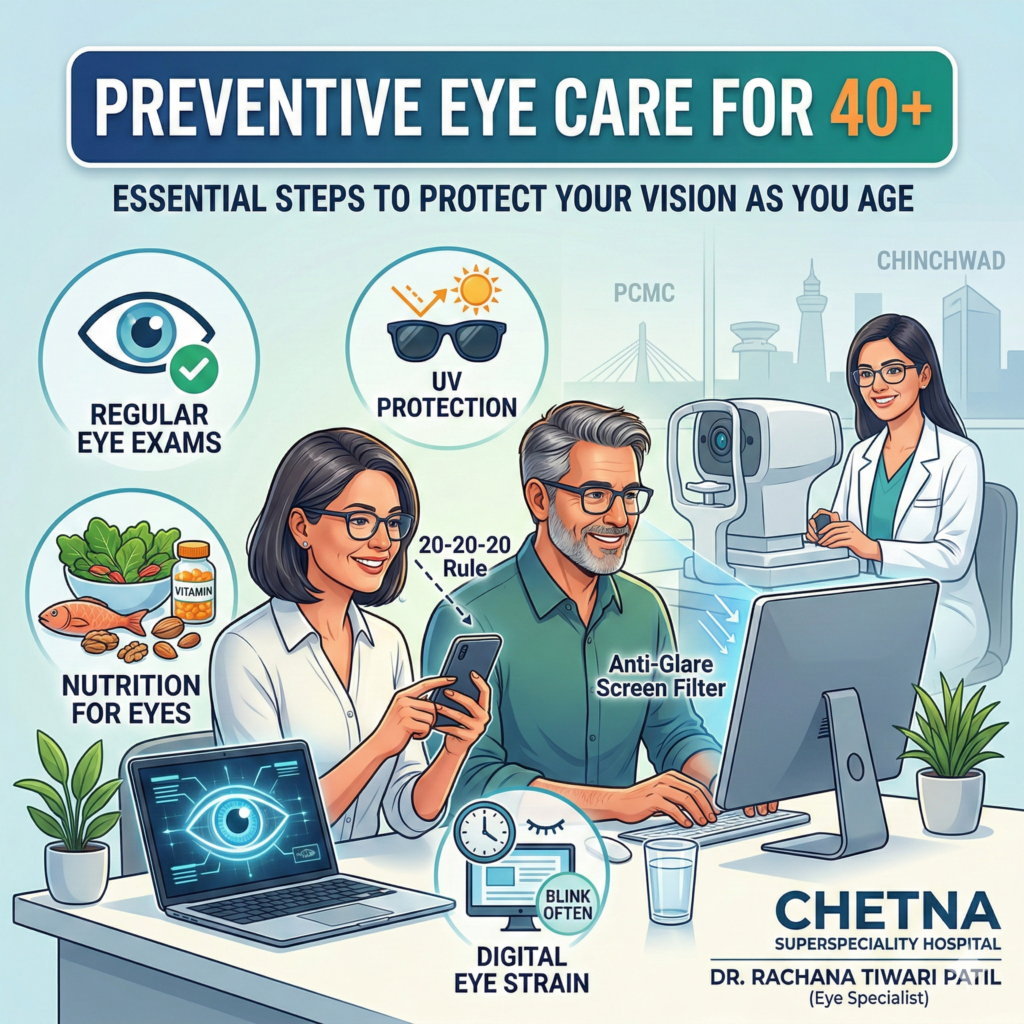
The 20-20-20 Rule: Every 20 minutes, look at something 20 feet away for 20 seconds to relax the eye muscles.
Why Screen Fatigue Is Worse After 40
Because focusing ability decreases with age, constant screen refocusing becomes harder.
Additionally, blinking frequency drops during screen use. Consequently, dry eye symptoms worsen.
Moreover, blue light exposure can disrupt sleep cycles. Therefore, managing screen habits becomes essential.
The 20-20-20 Rule — And More
The 20-20-20 rule is helpful. However, adults over 40 may need additional precautions.
Every 20 minutes, look 20 feet away for 20 seconds.
In addition:
- Keep screens at arm’s length
- Position the screen slightly below eye level
- Use blue light filters
- Blink consciously
- Take longer hourly breaks
By following these steps, you significantly reduce digital eye strain.
Common Eye Conditions After 40
While some changes are natural, others require medical attention. Therefore, regular screenings are critical.
Presbyopia
As mentioned earlier, presbyopia affects nearly everyone after 40. Fortunately, glasses or contact lenses effectively manage it.
Dry Eye Syndrome
Because tear production decreases, irritation and burning become common. However, early treatment prevents chronic discomfort.
Glaucoma
Glaucoma is known as the “silent thief of sight.” In fact, it often shows no symptoms initially. Therefore, routine eye pressure checks are essential.
Age-Related Macular Degeneration (AMD)
Although AMD is more common after 50, early signs may appear in your 40s. Consequently, retinal exams help detect early changes.
Cataracts
Over time, the eye lens becomes cloudy. As a result, vision may appear blurry or hazy. Fortunately, cataract surgery is highly effective when needed.
Essential Preventive Eye Care Measures
Preventive eye care for 40+ involves consistent habits. Most importantly, prevention is easier than treatment.
1. Annual Comprehensive Eye Exams
Even if you see clearly, annual checkups are vital.
During a comprehensive exam, your doctor will perform:
- Visual acuity testing
- Eye pressure measurement
- Retinal evaluation
- Glaucoma screening
- OCT imaging
As a result, hidden conditions can be detected early.
2. UV Protection Is Non-Negotiable
Living in sunny regions like Pimpri Chinchwad increases UV exposure. Therefore, protecting your eyes outdoors is essential.
You should:
- Wear 100% UV-protection sunglasses
- Choose wraparound frames
- Wear wide-brim hats
Over time, UV damage contributes to cataracts and macular degeneration. Hence, daily protection matters.
3. Maintain Overall Health
Your eye health reflects your systemic health. For example, diabetes and hypertension directly affect retinal blood vessels.
Therefore:
- Exercise regularly
- Control blood sugar
- Monitor blood pressure
- Avoid smoking
Similarly, managing cholesterol improves blood circulation to the eyes.
Nutrition for Healthy Eyes After 40
In addition to medical care, diet plays a powerful preventive role.
Key Nutrients
Lutein & Zeaxanthin
These antioxidants protect against blue light damage. Therefore, include leafy greens in your meals.
Vitamin C
This supports blood vessel health. For example, citrus fruits and bell peppers are excellent sources.
Omega-3 Fatty Acids
These reduce dry eye symptoms. Consequently, fatty fish like salmon should be included weekly.
Zinc
Zinc supports retinal function. Moreover, it may help slow AMD progression.
Overall, a colorful, balanced diet supports long-term eye health.
Managing Digital Eye Strain After 40
Digital eye strain affects nearly 90% of regular screen users. However, proper ergonomics can significantly reduce symptoms.
Optimize Your Workspace
- Keep the screen 20–26 inches away
- Position it slightly below eye level
- Avoid glare from windows
- Adjust brightness properly
Additionally, increase text size to avoid squinting.
Use Technology Wisely
Most devices now offer blue light filters. Therefore, activate night mode when possible.
Similarly, consider anti-glare screens if you work long hours.
When to See an Eye Specialist Immediately
While gradual changes are common, some symptoms require urgent care.
Seek immediate help if you notice:
- Sudden vision loss
- Severe eye pain
- Flashing lights
- New floaters
- Curtain-like shadow
Because these signs may indicate retinal emergencies, prompt treatment is critical.
Expert Eye Care in Pimpri Chinchwad
For residents of Pimpri Chinchwad, Wakad, Akurdi, Nigdi, Bhosari, and Pimple Saudagar, accessing advanced eye care is convenient.
At Chetna Superspeciality Hospital, Chinchwad, comprehensive preventive eye care for 40+ is available under the expertise of Dr. Rachana Tiwari Patil.
Services include:
- Advanced eye examinations
- Glaucoma screening
- Cataract evaluation
- OCT retinal scans
- Dry eye treatment
- Diabetic eye management
Moreover, modern diagnostic technology ensures early detection and personalized treatment.
FAQ
Ans. The most common reason is Presbyopia, a natural part of aging where the eye’s internal lens loses flexibility. This makes it difficult to focus on close objects, like mobile screens or books. While it may feel “sudden,” it is usually a gradual process that reaches a tipping point in your early 40s. Regular checkups at Chetna Hospital can help determine if you need reading glasses or progressive lenses.
Ans. If you have no underlying conditions, a comprehensive exam every 1 to 2 years is recommended. However, if you have risk factors such as diabetes, high blood pressure, or a family history of glaucoma, an annual exam is essential. Early detection is the core of preventive eye care for 40+, as many conditions like glaucoma have no symptoms until vision loss occurs.
Ans. While digital eye strain (Computer Vision Syndrome) is incredibly uncomfortable—causing dryness, blurred vision, and headaches—it usually doesn’t cause permanent structural damage. However, it can significantly impact your productivity and quality of life. Using the 20-20-20 rule and ensuring your workspace in Wakad or PCMC is ergonomically sound are key preventive measures.