Myopia, also known as nearsightedness or short-sightedness, is becoming more common around the world, including among teenagers. But what exactly is myopia, why is it on the rise, and how can you protect your child’s vision?
What is Myopia?
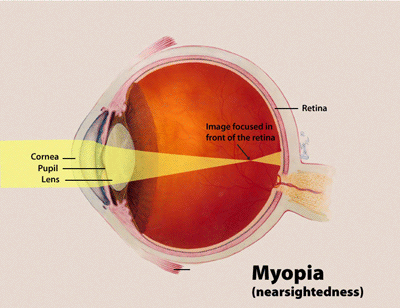
Myopia is a refractive error where distant objects appear blurry, while near objects are seen clearly. This happens when the eyeball is too long or the cornea is too curved, causing light rays to focus in front of the retina rather than directly on it.
While myopia can be inherited, lifestyle factors like long hours of near work (reading, homework, phones and other screens) and too little time outdoors are linked to the rise in myopia, especially among children and teenagers.
Why is Myopia Increasing in Teenagers?
Teenagers today are living in a hyper-connected digital world. Online learning, video games, social media, and prolonged smartphone usage have led to extended hours of near work with minimal outdoor exposure. These habits are linked to myopia starting earlier and getting worse faster. Myopia often starts between ages 8 and 12 and may get worse through the teenage years.
Major risk factors include:
- Prolonged screen time (phones, tablets, laptops)
- Lack of natural sunlight due to indoor confinement
- Genetics – having one or both parents with myopia
- Continuous near work without breaks (studying, reading)
- Holding books or screens very close for long periods
Symptoms of Myopia in Teenagers
Myopia often goes unnoticed in its early stages. As a parent, it’s important to stay alert for subtle signs such as:
- Squinting to see far objects (TV, blackboard)
- Sitting too close to the screen or books
- Frequent headaches or eye strain
- Complaints of blurred vision, especially at night
- Poor performance in sports or outdoor activities
- Rubbing eyes frequently or excessive blinking
If any of these signs appear, it’s essential to schedule a comprehensive eye examination.
Long-Term Effects of Untreated Myopia
Myopia isn’t just about wearing glasses. If not properly managed, it can lead to high myopia, which carries serious risks including:
- Retinal detachment
- Glaucoma
- Cataracts
- Macular degeneration
- Permanent vision loss
The risk rises as myopia gets stronger. People with high myopia should have their retina checked regularly. Go to the nearest emergency department straight away, or call 108 or 112, if you suddenly see many new floaters or flashes, or a dark curtain or shadow over your vision, as these can be signs of retinal detachment.
How to Diagnose Myopia?
Diagnosis involves a simple, non-invasive eye examination by an ophthalmologist or optometrist. At Chetna Hospital, the eye department checks your child’s vision, eye health and glasses prescription.
We also examine whether your teenager is at risk for myopia that is getting worse and discuss options to manage it.
How is Myopia Treated?
1. Prescription Glasses or Contact Lenses
These are the most common way to correct blurry distance vision. The prescription needs updating as the eyes change.
2. Orthokeratology (Ortho-K) Lenses
These are special hard contact lenses worn overnight to reshape the cornea for a while, so glasses may not be needed during the day. They carry a risk of serious eye infection, so careful cleaning and regular check-ups are essential.
3. Low-Dose Eye Drops for Myopia Control
Special low-dose eye drops, prescribed by an eye doctor, can slow myopia progression in many children. They are usually used for several years and can have side effects, so they should be used only as prescribed and with regular check-ups.
4. Myopia-Control Contact Lenses
Special soft contact lenses are designed to slow myopia progression in some children. They may not work for everyone and, like all contact lenses, carry a risk of infection if not worn and cleaned correctly.
5. LASIK or Refractive Surgery
An option for some adults whose prescription has stopped changing. It is not done for teenagers, as their eyes are still changing. Like any surgery, it has risks, such as glare, halos and poor night vision.
How to Prevent or Slow Down Myopia in Teenagers
You cannot change genes, but some habits may help:
1. Limit Screen Time
Encourage breaks during device use. Follow the 20-20-20 rule – every 20 minutes, look at something 20 feet away for 20 seconds.
2. Encourage Outdoor Activities
Regular time outdoors every day is a good first step. Time in daylight is linked to a lower risk of myopia.
3. Proper Lighting and Posture
Study and read in good light, and keep books and screens at a comfortable distance rather than very close.
4. Avoid Late-Night Screen Use
Screen use late at night can make it harder to fall asleep. Try to stop screens a couple of hours before bed.
5. Schedule Regular Eye Exams
Have your teenager’s eyes checked as often as the eye doctor advises, and sooner if they notice any change in vision. Eye exercises, vitamins or pills have not been shown to prevent myopia.
When to See a Doctor?
Children do not always notice or mention blurry vision. If there is a family history of myopia, or your teen shows any of the signs above, book an eye check-up.
The eye care (ophthalmology) department at Chetna Hospital, Sambhajinagar, Chinchwad sees children and teenagers for eye check-ups and myopia care.
Call 91686 90442 (eye department) or 9158681123 (main hospital line) to book a check-up.
Website – www.chetnahospital.co.in
Address – Chetna Hospital,
Sambhajinagar, MIDC, G Block, Near Rotary Club, Chinchwad 411019
General health information, not a diagnosis. Reviewed and updated by Chetna Hospital’s content team with the help of AI writing tools, November 2026.