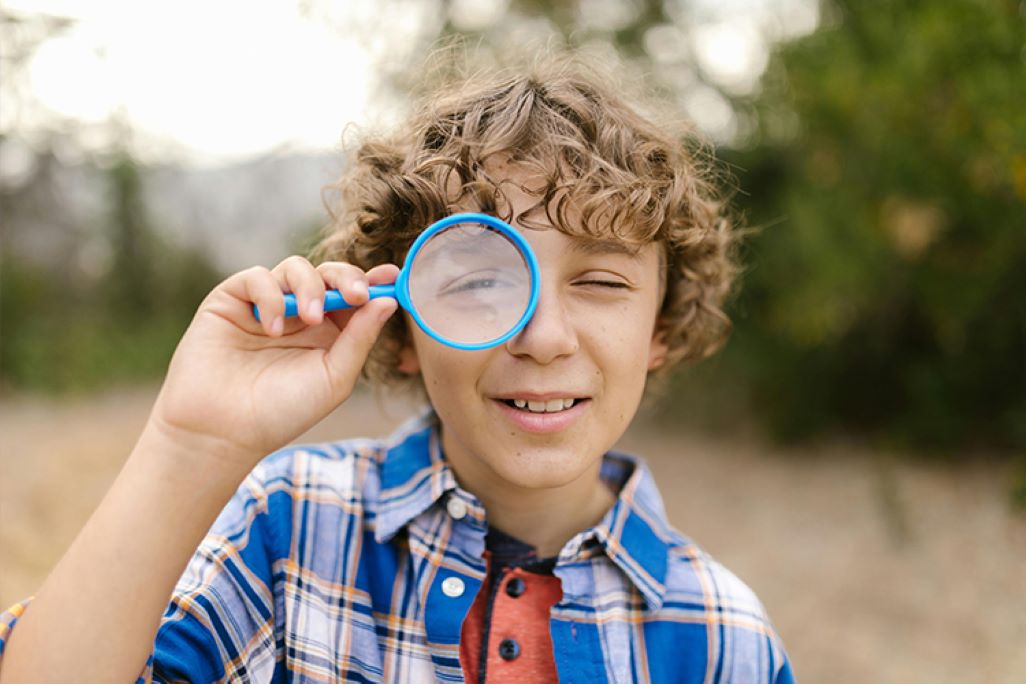
In today’s screen-driven world, parents are increasingly concerned about their children’s eye health. Many notice their kids squinting while watching television, holding books too close, or complaining that the classroom board looks blurry. These are often signs of Myopia, also known as nearsightedness — one of the most common eye conditions in children.
What Is Myopia?
Myopia is a refractive error of the eye in which distant objects appear blurry, while near objects are seen clearly. This happens when the eyeball grows slightly longer than normal or when the cornea (the clear front surface of the eye) is too curved.
As a result, light rays entering the eye focus in front of the retina instead of directly on it, causing difficulty in seeing faraway objects like the school board, traffic signs, or television.
Myopia usually begins in school-age children and can get worse through the teenage years, while the eyes are still growing.
How Common Is Myopia in Children?
Myopia has become more common over the last few decades.
The American Academy of Ophthalmology estimates that by 2050, nearly half of the world’s population may be short-sighted. More time indoors and less time outdoors are thought to play a part.
Why Myopia Is Increasing in Kids
Myopia is influenced by both genetic and environmental factors. The exact cause is not fully known. These factors are linked to a higher risk:
1. Excessive Screen Time
Long hours on phones, tablets and computers mean children focus on close-up things for a long time. This can cause eye strain, and a lot of close-up, indoor time is linked to a higher risk of myopia.
2. Lack of Outdoor Activity
Children who spend more time outdoors have a lower risk of myopia. Time outdoors may also help stop it getting worse.
3. Genetics
If one or both parents are myopic, the child is more likely to be short-sighted too. Myopia often runs in families.
4. Poor Reading Habits
Reading or writing in dim light, sitting too close to books, or spending long hours studying without breaks may add to eye strain and the risk of myopia.
5. Urban Lifestyle
Children living in urban areas are exposed to less natural light and more indoor or screen-based activities — another key reason for rising myopia rates.
Symptoms of Myopia in Children
Parents are often the first to notice changes in their child’s vision. Watch for these signs:
- Squinting or blinking frequently to see distant objects clearly.
- Sitting too close to the TV or holding books very near the face.
- Complaints of headaches or eye fatigue.
- Difficulty seeing the classroom board or reading from a distance.
- Rubbing the eyes often or complaining of blurred vision.
- Poor academic performance due to unclear vision.
If your child shows any of these signs, book an eye test.
How Myopia Progresses
Myopia usually starts in children aged 6 to 13 years and can get worse through the teenage years. As the eye grows, a child may need stronger glasses.
Adults with severe (high) myopia have a higher risk of some eye conditions later in life, such as:
- Retinal detachment – The retina pulls away from the back of the eye. It needs urgent treatment to prevent sight loss.
- Glaucoma – Damage to the optic nerve, often linked to raised eye pressure.
- Cataract – Clouding of the natural lens of the eye.
- Myopic maculopathy – Thinning and damage in the central retina (macula) that can affect central vision.
This is why regular eye tests matter. People with high myopia are advised to have regular retinal checks.
How Myopia Is Diagnosed
An eye test can find myopia. The eye doctor or optometrist will check:
- Visual acuity (clarity of vision at various distances)
- Refractive error measurement to determine the prescription
- Eye health evaluation to rule out other issues like lazy eye or squint
- Retinal examination if high myopia or complications are suspected
At Chetna Hospital, tests such as retinal imaging, OCT (Optical Coherence Tomography), and refraction assessments may be used to check and monitor myopia.
Prevention and Control of Myopia
Genetic factors cannot be changed, and myopia is hard to prevent. Some habits may lower the risk or help slow it down.
1. Encourage Outdoor Play
Let your child play outdoors every day. Time outdoors is linked to a lower risk of myopia.
2. Limit Screen Time
Follow the 20-20-20 rule:
After every 20 minutes of screen use, look at something 20 feet away for at least 20 seconds.
Set limits on phone and tablet use for entertainment, and balance indoor time with outdoor play.
3. Ensure Proper Lighting
Encourage reading and studying in good light. Reading in dim light can make the eyes feel tired.
4. Maintain Correct Reading Distance
Teach children not to hold books or devices too close to their eyes, and to take regular breaks from close-up work.
5. Balanced Diet
A nutritious diet rich in vitamin A, C, E, lutein, and omega-3 fatty acids supports general health, including the eyes. Diet alone does not prevent myopia.
6. Regular Eye Check-Ups
Make sure your child has an eye test at least every 2 years, even with no complaints. If your child wears glasses, follow the check-up plan your eye doctor advises.
7. Follow Doctor’s Advice on Treatment
For children already diagnosed with myopia, your ophthalmologist may suggest:
- Prescription glasses or contact lenses
- Special myopia-control lenses or orthokeratology lenses (hard lenses worn overnight)
- Eye drops that may slow myopia, only if your eye doctor prescribes them
Each case is unique, so regular follow-up with your eye specialist is important.
Treatment Options for Myopia
Options to correct and control myopia in children include:
Corrective Glasses
The most common and simplest way to correct myopia. The prescription is updated as the eyes change.
Contact Lenses
For older children or teens, soft lenses can be an alternative to glasses. Special lenses like orthokeratology (Ortho-K) flatten the cornea for a while overnight so that daytime vision is clearer. They carry a risk of serious eye infection, so careful cleaning and follow-up are needed.
Eye Drops to Slow Myopia
Some eye drops can slow myopia progression in many children. They are used only when an ophthalmologist prescribes them and checks your child regularly. Do not use any eye drops without advice.
Myopia-Control Lenses
New lens designs, such as multifocal or defocus lenses, are made to slow myopia progression in children. They may not work for every child.
Laser Treatments (for Adults)
For adults whose prescription has been stable, laser procedures like LASIK or SMILE can reduce the need for glasses in suitable eyes. They are not done in children.
Tips for Parents
- Take your child’s complaints about blurry vision or headaches seriously.
- Avoid excessive screen exposure, especially before bedtime.
- Promote hobbies that don’t involve near focus — like outdoor games or creative activities.
- Monitor posture during reading or screen use.
- Visit an eye doctor regularly, even if your child doesn’t wear glasses.
When to Visit an Eye Specialist
Book an eye test if your child:
- Squints frequently or moves closer to see objects.
- Often has blurred vision or headaches.
- Complains of eye pain or eye strain.
- Fails a school vision screening.
Go to an emergency department straight away, or call 108 or 112, if your child (or you) has sudden loss of vision, a dark shadow or curtain over the vision, new flashes of light or a sudden shower of floaters, an eye injury, a chemical in the eye, or severe eye pain with redness.
Final Thoughts
Myopia may seem like a minor issue at first, but if it is not corrected, it can affect your child’s learning and confidence. With early diagnosis, healthy habits and regular follow-up, you can help look after your child’s vision.
As a parent, your awareness and proactive care play a vital role in your child’s eye health. Encourage outdoor play, limit screens, and keep up with routine eye tests.
The eye care (ophthalmology) department at Chetna Hospital, Chinchwad, checks children’s eyes. Call 91686 90442 to book a check-up.
General health information, not a diagnosis. Reviewed and updated by Chetna Hospital’s content team with the help of AI writing tools, November 2026.