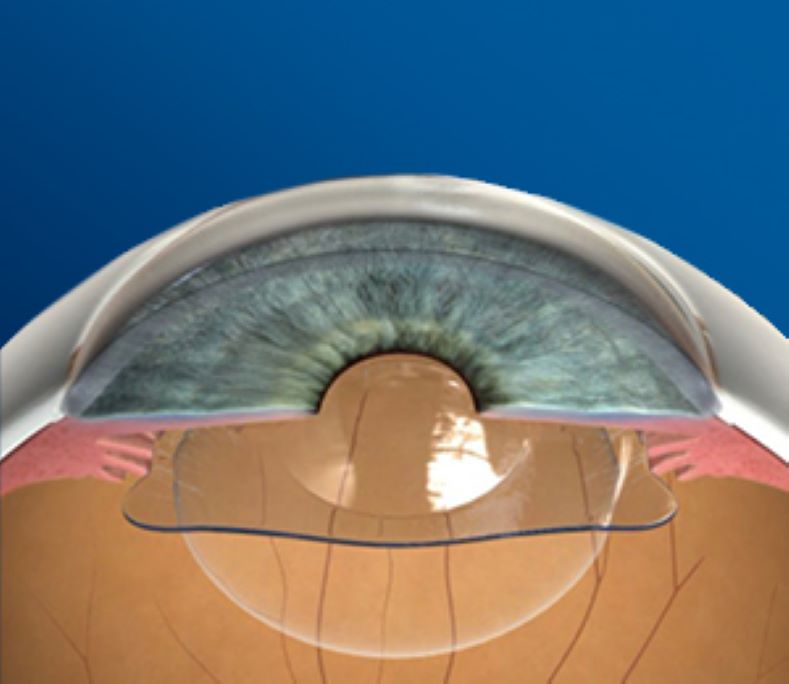
Good vision matters for daily life. Conditions such as cataracts, presbyopia (needing reading glasses with age) or high glasses prescriptions can make vision blurry. For some people, Lens Exchange Surgery is an option to reduce dependence on glasses. In this guide, we explain lens exchange surgery, its benefits and risks, the procedure and recovery.
What is Lens Exchange Surgery?
Lens exchange surgery, medically known as Refractive Lens Exchange (RLE) or Clear Lens Extraction, involves the replacement of the eye’s natural lens with an artificial intraocular lens (IOL). This procedure is similar to cataract surgery but is performed primarily to correct vision issues rather than removing a cataract.
RLE may be considered for people with:
- Presbyopia (age-related difficulty in focusing on near objects)
- High refractive errors, especially long sight (farsightedness), in people over about 40 to 45
- Early cataracts or lens opacities
By replacing the natural lens, this procedure can reduce the need for glasses or contact lenses. Some people still need glasses for some tasks.
How Does It Work?
The procedure involves a series of steps:
- Evaluation and Consultation: A full eye examination is done to check your vision and eye health, including the retina. Your eye surgeon determines the appropriate type of intraocular lens (IOL) to match your visual needs.
- Anesthesia and Preparation: On the day of the surgery, local anaesthetic (usually eye drops) is used to numb the eye. You are awake, and you may feel some pressure.
- Lens Removal: A small incision is made on the cornea, and the natural lens is broken up with ultrasound (phacoemulsification) and removed.
- IOL Implantation: The chosen intraocular lens is inserted and positioned. The cut usually seals itself without stitches.
You usually go home the same day. The operation itself usually takes under 30 minutes per eye.
Types of Intraocular Lenses (IOLs)
The choice of IOL significantly impacts post-surgery vision. Several options are available, tailored to individual needs:
- Monofocal Lenses: Provide clear vision at a single distance (near, intermediate, or far).
- Multifocal Lenses: Focus at more than one distance, which can reduce the need for glasses, but they can cause more glare and halos at night.
- Toric Lenses: Correct astigmatism along with other refractive errors.
- Extended Depth-of-Focus (EDOF) Lenses: Give a range of vision from distance to intermediate, usually with fewer halos than multifocal lenses. Reading glasses may still be needed.
Every lens type has trade-offs. Your eye surgeon will help you choose a lens that suits your lifestyle, vision goals and eye health.
Benefits of Lens Exchange Surgery
Possible benefits of lens exchange surgery include:
- Vision: Many people see well at the distances their chosen lens is designed for.
- Less Need for Glasses: Many people depend less on glasses, though some still need them for some tasks.
- Long-Term Lens: The artificial lens is designed to stay in the eye long term. Vision can still change because of other eye conditions, and some people need laser fine-tuning later.
- No Cataract Later: Because the natural lens is removed, a cataract cannot form in it. However, the thin capsule behind the new lens can become cloudy over time (posterior capsule opacification). This is treated with a quick laser procedure.
- Recovery: The operation uses a small cut, and most people return to daily activities within days to a week.
- Daily Life: Clearer vision can make daily activities easier.
Who is a Suitable Candidate?
Lens exchange surgery is not for everyone. It may suit:
- Adults aged 40 and above with presbyopia.
- People with high refractive errors, especially long sight, who are not suitable for LASIK or other laser vision correction.
- People with early lens clouding (early cataract) whose vision is affected.
It is usually less suitable for younger people, people who only want to stop using reading glasses, and people with very high short sight, who have a higher risk of retinal detachment. Your ophthalmologist will assess your needs and health history to see if the procedure suits you.
Recovery and Post-Operative Care
Most people recover without problems. Here is what to expect:
- Initial Healing: Vision begins to improve within a day, though slight blurriness or halos around lights may persist initially.
- Follow-Up Visits: Check-ups make sure the eye is healing well and the lens is in the right position.
- Daily Activities: Most patients resume everyday activities within a week, though strenuous work or heavy lifting should be avoided during recovery.
- Eye Drops: Use the eye drops prescribed by your eye doctor, as directed.
Follow your aftercare instructions carefully. If you notice new floaters, flashes of light, a shadow or curtain over your vision, increasing pain or a drop in vision, go to an emergency department straight away or call 108 or 112.
Safety and Risks
As with any eye surgery, lens exchange has risks, including:
- Infection
- Inflammation
- Glare or halos around lights
- Retinal detachment (uncommon, but the risk is higher in very short-sighted eyes)
- Remaining focusing error, which may need glasses or laser treatment
- Clouding of the capsule behind the lens (posterior capsule opacification)
Serious complications are uncommon, and many can be treated if found early. Your eye doctor will explain your own risks.
FAQs About Lens Exchange Surgery
1. How long does the surgery take? The procedure usually takes about 20-30 minutes per eye and is performed on an outpatient basis.
2. Does lens exchange surgery hurt? Numbing drops are used, so most people feel only pressure during surgery. The eye may feel scratchy or mildly sore for a few days afterwards.
3. Can both eyes be treated on the same day? It’s common to treat one eye at a time, with a gap of 1-2 weeks between surgeries.
4. Do the results last? The artificial lens is designed to stay in the eye long term, and a cataract cannot form in it. Vision can still change because of other eye conditions or capsule clouding, which is treated with laser.
Is Lens Exchange Right for You?
If blurry vision affects your daily life, an eye examination can show whether lens exchange, another procedure or glasses would suit you. The eye care (ophthalmology) department at Chetna Hospital can talk you through your options.
For a consultation, call the eye care (ophthalmology) department at Chetna Hospital on 91686 90442.
Website – www.chetnahospital.co.in
Address – Chetna Hospital, Sambhajinagar, MIDC, G Block, Near Rotary Club, Chinchwad 411019
General health information, not a diagnosis. Reviewed and updated by Chetna Hospital’s content team with the help of AI writing tools, November 2026.