
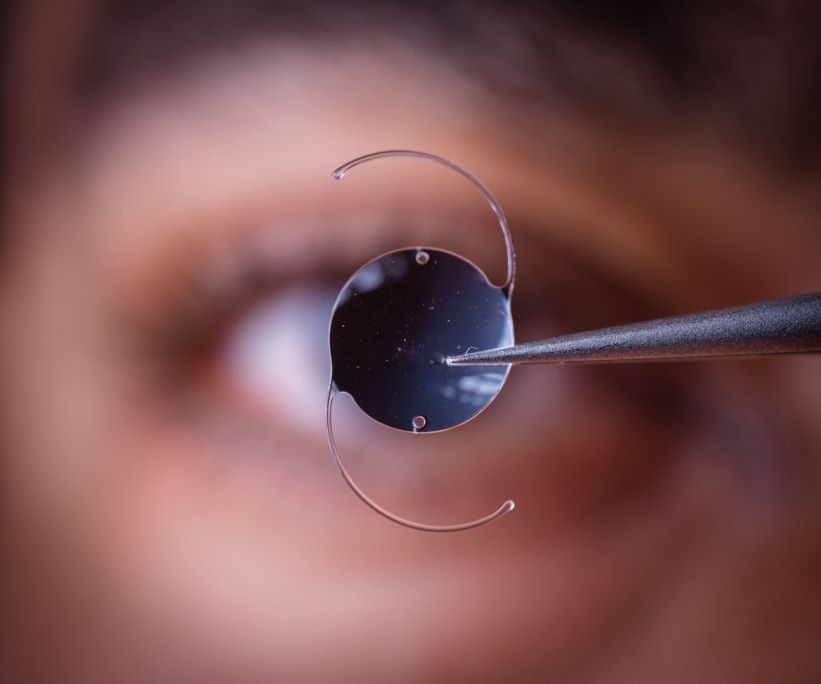
Many people find glasses and contact lenses inconvenient. Implantable Collamer Lens (ICL) surgery is one option for correcting short sight (myopia), with or without astigmatism, and in some cases long sight. It is not right for everyone and, like any surgery, it carries risks. Here we explain ICL surgery, its benefits, the process and the risks.
What is ICL Surgery?
ICL surgery is a procedure to correct refractive errors (focusing problems) so you depend less on glasses or contact lenses. Unlike LASIK, which reshapes the cornea, ICL involves implanting a custom-made lens inside your eye, working in harmony with your natural lens. This lens, made from a soft, flexible material called Collamer, is meant to stay in the eye long term, but it can be removed or replaced if needed.
ICL may suit some people who cannot have LASIK because of thin corneas, dry eyes or a high prescription. Many people need glasses less afterwards, but some still need them for some tasks, and long-term data are still limited.
Who Can Benefit from ICL Surgery?
ICL surgery may suit people who:
- Are between the ages of 21 and 45.
- Have had a stable glasses prescription for at least a year.
- Have moderate to high short sight (myopia), with or without astigmatism. Lenses for long sight (hyperopia) are available in some places.
- Are not suitable for LASIK due to thin corneas, dry eyes, or other medical conditions.
- Have healthy eyes, with enough space inside the front of the eye and a healthy cornea, as checked by the eye doctor.
Advantages of ICL Surgery
ICL surgery has some benefits for suitable people:
- Vision Quality: Many people get clear vision without glasses, though results vary and glare at night can occur.
- Recovery: Vision often improves within a day or two, though it can take longer to settle.
- Can Be Removed: The implanted lens can be removed or replaced if needed.
- Lower Dry Eye Risk: ICL does not cut through the corneal nerves like LASIK, so dry eye after surgery is less likely.
- No Corneal Tissue Removal: The cornea is not reshaped, so ICL may be an option for people with thin corneas.
- UV Filter: Some ICL lenses contain a UV filter. You still need sunglasses in bright sun.
The ICL Surgery Process
Here’s what you can expect during the ICL surgery journey:
1. Initial Consultation:
Your eye doctor will do a full eye exam to check if ICL suits you. This includes measuring your prescription, the space inside the front of your eye, the cells lining the cornea and your overall eye health.
2. Pre-Surgery Preparation:
Before the surgery, you may need to stop wearing contact lenses for a while. With some lens types, a small laser opening is made in the iris beforehand.
3. The Procedure:
- The surgery is done under local anaesthetic (usually numbing drops) and is usually short.
- A small incision is made in the cornea.
- The ICL is folded and inserted through the incision, then unfolded and positioned behind the iris and in front of the natural lens.
4. Post-Surgery Care:
After the procedure, you will be given eye drops to use as prescribed. Most people return to normal activities within a few days. Follow your doctor’s advice and keep your follow-up appointments. If you get severe eye pain, headache with nausea, or a sudden drop in vision after surgery, go to an emergency department straight away or call 108 or 112.
Potential Risks and Considerations
Like any eye surgery, ICL carries risks. These include:
- Infection: As with any surgical procedure, there’s a small risk of infection.
- Glare or Halos: Some patients may experience glare or halos around lights, especially at night.
- Raised Eye Pressure: Pressure in the eye can rise, which needs prompt treatment. It may raise the risk of glaucoma.
- Cataract: The lens can raise the risk of a cataract forming earlier.
- Lens Movement or Cell Loss: The ICL may shift and need repositioning. Loss of cells lining the cornea can, rarely, cloud the cornea.
Your eye doctor will explain your own risks before you decide. Careful checks before surgery and regular follow-up afterwards help find problems early.
Comparing ICL Surgery to LASIK
Both ICL and LASIK are popular options for vision correction, but they cater to different needs:
| Feature | ICL Surgery | LASIK |
|---|---|---|
| Corneal Impact | No corneal tissue removal | Reshapes the cornea |
| Dry Eye Risk | Lower | Higher |
| Reversibility | Lens can be removed | Cornea change is permanent |
| Suitability | May suit thin corneas, high myopia | Suitable for low to moderate myopia |
| UV Filter | In some lenses | None |
Is ICL Surgery Right for You?
ICL surgery is one option for people who want to depend less on glasses and contact lenses. If you are thinking about it, see an ophthalmologist to check whether it suits your eyes and to discuss what to expect.
Results vary from person to person, and some people still need glasses for some tasks.
For a consultation, call the eye care (ophthalmology) department at Chetna Hospital on 91686 90442.
Website – www.chetnahospital.co.in
Address – Chetna Hospital, Sambhajinagar, MIDC, G Block, Near Rotary Club, Chinchwad 411019
General health information, not a diagnosis. Reviewed and updated by Chetna Hospital’s content team with the help of AI writing tools, November 2026.