High blood pressure, also known as hypertension, is one of the leading causes of heart disease worldwide. Often called the “silent killer,” uncontrolled blood pressure can gradually damage your heart without showing obvious symptoms. Many people ignore high BP readings or stop medications once they feel better—unaware that persistent hypertension can lead to heart attack, heart failure, stroke, and sudden cardiac death.
For people living in Chinchwad, Pune and nearby areas such as Wakad, Thergaon, Pimpri, Nigdi, Akurdi, Baner, Hinjewadi, Pimple Saudagar, Ravet, Punawale, Chakan, and Talegaon, awareness and early treatment are essential.
The Cardiology Department at Chetna Hospital, Chinchwad provides comprehensive diagnosis, treatment, and preventive care for high blood pressure and heart-related conditions.
🧠 What Is Uncontrolled Blood Pressure?
Blood pressure is the force of blood pushing against artery walls. It is measured as:
- Systolic BP – pressure when the heart beats
- Diastolic BP – pressure when the heart rests
When BP remains consistently high (usually above 140/90 mmHg) and is not properly managed, it is termed uncontrolled blood pressure.
Uncontrolled BP may occur due to:
- Irregular medication intake
- Poor lifestyle habits
- Stress and lack of exercise
- High salt intake
- Undiagnosed hypertension
At Chetna Hospital Cardiology Department, patients receive regular BP monitoring and guidance to prevent long-term heart damage.
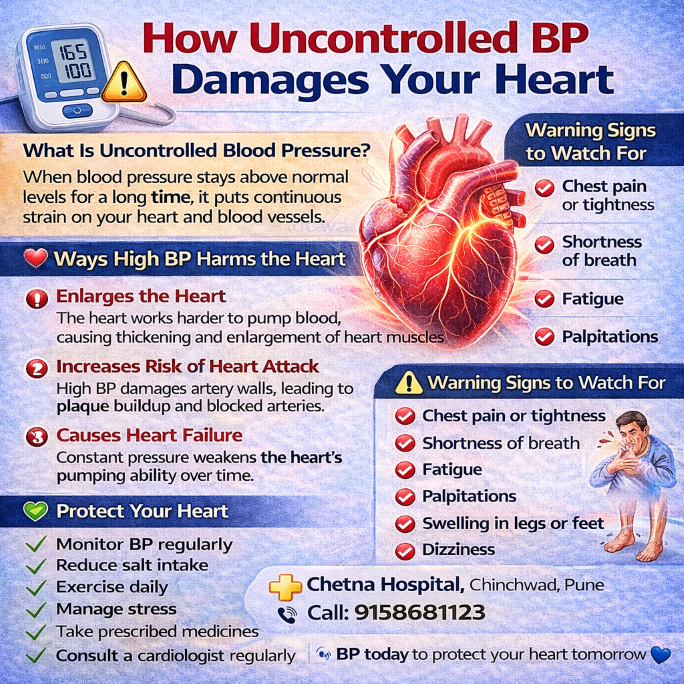
❤️ How Uncontrolled Blood Pressure Damages Your Heart
🫀 1. Enlarges and Weakens the Heart
High BP forces the heart to pump harder. Over time, the heart muscle thickens (left ventricular hypertrophy), reducing efficiency and increasing the risk of heart failure.
🫀 2. Causes Coronary Artery Disease
Uncontrolled BP damages the inner lining of arteries, allowing cholesterol to build up. This narrows arteries and reduces blood supply to the heart, increasing the risk of chest pain (angina) and heart attack.
🫀 3. Increases Risk of Heart Attack
Weakened and narrowed arteries can suddenly block, leading to a heart attack, often without warning.
🫀 4. Leads to Heart Failure
When the heart becomes too weak or stiff to pump blood effectively, heart failure develops—causing breathlessness, fatigue, and swelling in legs.
🫀 5. Triggers Irregular Heartbeats
High BP affects the heart’s electrical system, leading to arrhythmias such as palpitations or atrial fibrillation.
The cardiologists at Chetna Hospital, Chinchwad specialize in identifying these changes early through advanced cardiac testing.
🚨 Warning Signs That High BP Is Affecting Your Heart
Many patients remain asymptomatic, but some may experience:
- Chest pain or tightness
- Shortness of breath
- Palpitations
- Fatigue and weakness
- Swelling in legs or feet
- Dizziness or fainting
- Headaches or blurred vision
If you experience these symptoms, especially if you have known hypertension, consult a heart specialist immediately.
🩺 Diagnosis of BP-Related Heart Damage at Chetna Hospital
The Cardiology Department at Chetna Hospital, Chinchwad, Pune offers advanced diagnostic services, including:
- Blood Pressure Monitoring
- ECG (Electrocardiogram)
- 2D Echocardiography (Echo)
- TMT (Treadmill Stress Test)
- Holter Monitoring
- Blood Tests (cholesterol, sugar, kidney function)
These tests help detect early heart damage and guide personalized treatment.
🏥 Why Choose Chetna Hospital Cardiology Department?
The Cardiology Department at Chetna Hospital is committed to providing patient-centric, evidence-based cardiac care.
✅ Our Key Strengths:
✔ Experienced cardiology team
✔ Advanced diagnostic facilities
✔ Comprehensive BP & heart management
✔ Preventive cardiac check-up packages
✔ Personalized lifestyle and medication plans
Patients from Chinchwad, Wakad, Pimpri, Nigdi, Akurdi, Baner, Hinjewadi, Pimple Saudagar, Ravet, Punawale, Chakan, and Talegaon trust Chetna Hospital for reliable heart care.
🛡️ How to Prevent Heart Damage from High BP
🥗 1. Follow a Heart-Healthy Diet
Reduce salt intake and avoid processed foods. Include fruits, vegetables, whole grains, and lean proteins.
🏃 2. Exercise Regularly
At least 30–45 minutes of moderate exercise daily helps lower BP and strengthens the heart.
🚭 3. Quit Smoking & Limit Alcohol
Both habits significantly worsen BP and heart damage.
🧘 4. Manage Stress
Stress contributes to uncontrolled BP. Practice yoga, meditation, and breathing exercises.
💊 5. Take Medicines Regularly
Never stop BP medications without consulting a cardiologist.
🩺 6. Regular Cardiac Check-ups
Routine monitoring helps detect complications early.
📍 Cardiac Care for Nearby Areas Around Chinchwad
Residents of Wakad, Thergaon, Pimpri, Nigdi, Akurdi, Baner, Hinjewadi, Pimple Saudagar, Ravet, Punawale, Chakan, and Talegaon can easily access advanced cardiac care at Chetna Hospital, Chinchwad, Pune.
Our hospital provides:
- BP and heart check-ups
- ECG, 2D Echo, and TMT tests
- Hypertension management
- Preventive cardiology services
🧠 Who Is at Higher Risk of BP-Related Heart Disease?
- Adults above 35–40 years
- People with diabetes or high cholesterol
- Individuals with family history of heart disease
- Obese or sedentary individuals
- High-stress professionals
If you fall into any of these categories, regular heart screening is essential.
🏁 Conclusion: Don’t Let High BP Damage Your Heart
Uncontrolled blood pressure may not cause pain today, but it can cause irreversible heart damage tomorrow. Early diagnosis, lifestyle modification, and expert cardiology care can significantly reduce risks.
The Cardiology Department at Chetna Hospital, Chinchwad, Pune is dedicated to helping patients control blood pressure, protect their heart, and live healthier lives.
📞 Call 9158681123 to book your cardiology consultation or heart check-up today.
💙 Control your BP today to protect your heart tomorrow.