What is Eye Strain?
Eye strain, known medically as asthenopia, is a common condition that affects millions of people globally. Essentially, it occurs when your eyes become exhausted from intense or prolonged use. Whether you are staring at a computer screen for hours, reading in a dimly lit room, or driving long distances, your eyes can become fatigued and uncomfortable. In our modern digital age, this condition has become increasingly prevalent, and many residents seeking an Eye Hospital near Sambhaji Nagar, Chinchwad, find that these symptoms significantly impact their daily productivity.
Most of us spend a significant portion of our day tethered to various screens, making digital eye strain more than just a minor inconvenience. At Chetna Hospital, we see firsthand how untreated fatigue can diminish your overall quality of life. Understanding the root cause is the first step toward relief and long-term ocular health.
Common Causes of Eye Strain
Digital Device Usage
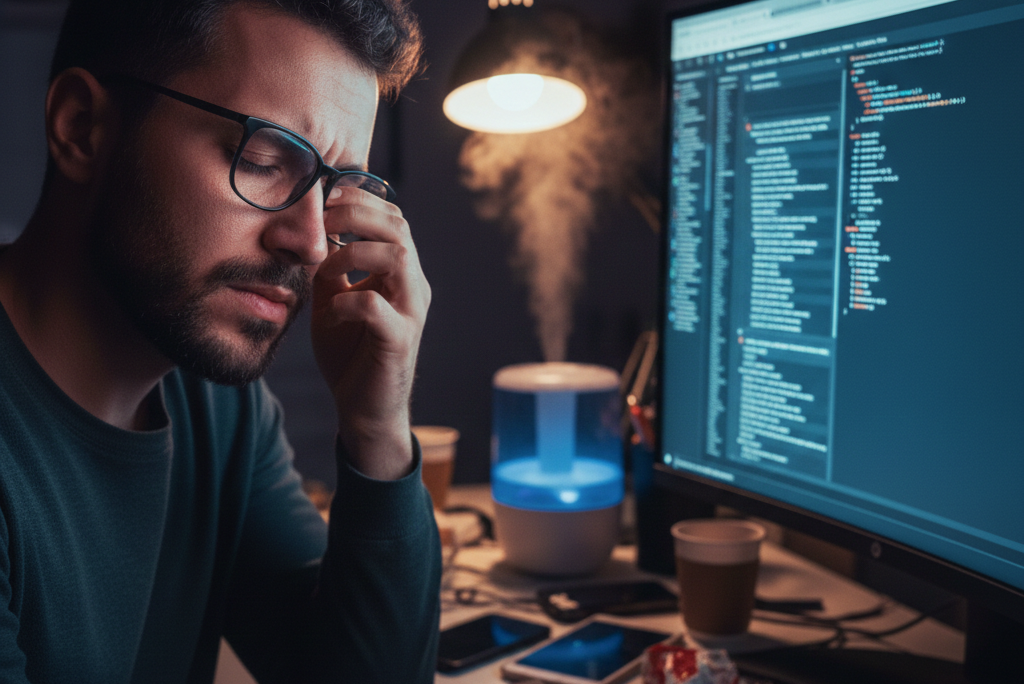
Without a doubt, the primary culprit for modern eye strain is excessive screen time. Devices like smartphones, tablets, and computers emit blue light that tires the eyes quickly. Furthermore, when we focus on digital screens, we tend to blink less frequently, which reduces the natural lubrication our eyes need to stay comfortable.
Poor Lighting Conditions
Working or reading in dim lighting forces your eyes to work much harder to see clearly. On the other hand, overly bright lighting or harsh glare can be just as damaging. The sharp contrast between a bright screen and a dark room is particularly problematic for your visual comfort.
Uncorrected Vision Problems
If you have underlying issues like nearsightedness, farsightedness, or astigmatism that aren’t properly addressed with glasses, your eyes must work overtime to compensate. Consequently, this constant “heavy lifting” by your eye muscles leads to chronic strain. For residents in Sambhaji Nagar, Nigdi, Akurdi, Chinchwad, Bhosari, and Thergaon, seeking a professional evaluation is the best way to address these refractive errors. Dr. Rachana Tiwari Patil at Chetna Hospital, Chinchwad, specializes in identifying these hidden causes of strain and providing precise corrective solutions.
Environmental Factors
Sometimes, it’s not what you’re doing, but where you are. Factors include:
- Air conditioning or heating that dries out the air.
- Dust, allergens, and cigarette smoke.
- Wind from fans or air vents blowing directly toward your face.
Signs and Symptoms
Recognizing the symptoms early is crucial for preventing long-term discomfort. These signs generally fall into two categories:
Physical Symptoms:
- Tired, burning, or itching eyes.
- Watery or excessively dry eyes.
- Blurred or double vision.
- Increased sensitivity to light.
- Headaches, as well as neck and shoulder pain.
Behavioral Symptoms:
- Frequent eye rubbing.
- Squinting or excessive blinking.
- Avoiding tasks that require deep visual focus.
Digital Eye Strain and Modern Life
Since the average person now spends between 6 and 9 hours a day looking at screens, digital eye strain is a genuine public health concern. This is especially true for office workers, students, and gamers.
To combat this, many experts recommend the 20-20-20 rule: Every 20 minutes, look at something 20 feet away for at least 20 seconds. This simple habit allows your focusing muscles to relax and reset.
Prevention Strategies: Taking Control
1. Optimize Your Workspace
Creating an eye-friendly environment is your first line of defense. For instance, try:
- Position your screen 20–26 inches away from your face.
- Keeping the top of the screen at or slightly below eye level.
- Use a humidifier to keep the air moist.
2. Practice Better Habits
Moreover, remember to blink consciously. It sounds simple, but it’s the most effective way to keep your eyes hydrated. Additionally, ensure your posture is correct; slouching often leads to a shorter viewing distance, which increases strain.
3. Regular Eye Examinations
Ultimately, nothing replaces a professional check-up. Scheduling a comprehensive eye exam annually helps detect and correct vision problems before they become painful.
Eye Strain and Age-Related Conditions
Presbyopia
As we age, usually starting around 40, the lens of the eye becomes less flexible. This is called presbyopia. It makes focusing on close objects difficult and is a major contributor to eye strain during reading.
Cataracts: Before and After
Cataracts (clouding of the lens) also play a role. Interestingly, the experience of eye strain changes significantly after treatment:
| Feature | Before Cataract Surgery | After Cataract Surgery |
| Glare Sensitivity | Requires very bright light | Significantly reduced |
| Light Needs | Requires very bright light | Improved vision in low light |
| Color | Colors appear dull or yellowed | Enhanced, vibrant color perception |
| Effort | High mental/visual fatigue | Reduced strain during daily tasks |
For residents in Sambhaji Nagar, Nigdi, Akurdi, Chinchwad, Bhosari, and Thergaon, understanding these shifts is key to managing long-term eye health.
Why Choose Dr. Rachana Tiwari at Chetna Hospital?
- Technology-Driven Care: Access to state-of-the-art diagnostic and surgical equipment at Chetna Superspeciality Hospital.
- Hyper-Local Convenience: Centrally located in Sambhaji Nagar, Chinchwad, serving patients within a 5 km radius, including Nigdi, Akurdi, and Pradhikaran.
- High Success Rate: A proven track record of thousands of successful cataract and vision correction surgeries.
- Cashless Facility: Empaneled with major TPA and insurance providers for hassle-free surgical claims.
When to See an Eye Doctor
While rest often helps, you should seek professional help immediately if you experience:
- Severe eye pain or sudden vision changes.
- Seeing flashing lights or “floaters.”
- Persistent headaches that only occur during visual tasks.
Dr. Rachana Tiwari Patil at Chetna Hospital, Chinchwad, 16+ Years Experience, offers specialized care for those struggling with persistent strain. Professional evaluation is often the quickest path to lasting relief.
Pro-Tip: If you’re in the Chinchwad area, you can contact the clinic at +91 9168690448 to discuss your symptoms.
Final Thoughts
Eye strain is a manageable condition, but it requires a proactive approach. By adjusting your environment, staying hydrated, and honoring the 20-20-20 rule, you can protect your vision for years to come.
Frequently Asked Questions
Dr. Rachana Tiwari is available for eye consultations at Chetna Hospital, Chinchwad, from 10:00 AM to 1:00 PM and 5:00 PM to 9:00 PM. We recommend booking an appointment at +91 9168690448
Yes, Dr. Rachana Tiwari is a highly experienced Phaco Refractive Surgeon specializing in advanced, stitchless cataract surgery (Phaco) and premium IOL transplantations at Chetna Hospital, Chinchwad.