Table of Contents
- Understanding Eye Dryness
- Common Causes of Dry Eyes
- Natural Methods to Maintain Healthy Eyes
- Daily Habits That Prevent Eye Dryness
- Dietary Changes for Better Eye Health
- When to See an Eye Doctor
- Environmental Factors and Eye Care
- Simple Eye Exercises
Dry eyes are common. They can cause discomfort, irritation and blurred vision. Many people can ease mild dry eyes with simple self-care. This guide from the eye care (ophthalmology) department at Chetna Hospital, Sambhaji Nagar, Chinchwad, Pune, explains what helps.
Understanding Eye Dryness
Eye dryness occurs when your eyes don’t produce enough tears or when the tears evaporate too quickly. This condition, medically known as dry eye syndrome, can make your eyes feel scratchy, burning, or like there’s sand in them. The tear film that covers your eyes has three layers: oil, water, and mucus. When any of these layers becomes imbalanced, eye dryness develops.
Your tears do more than just express emotions – they’re essential for maintaining healthy eyes. They wash away dust and debris, provide nutrients to the cornea, and create a smooth surface for clear vision. Without adequate tear production or quality, your eyes become vulnerable to irritation and infection.
Many people experience temporary eye dryness, especially during certain activities or in specific environments. However, chronic dry eyes require more attention and care. Knowing the cause helps you choose the right self-care for your situation.
Common Causes of Dry Eyes
Several things can cause eye dryness, and spotting your triggers helps. Age plays a part: dry eyes are more common after 50. Women are more likely to experience dry eyes, particularly during hormonal changes like menopause or pregnancy.
Modern lifestyle habits significantly impact eye health. Spending long hours looking at computer screens, smartphones, or tablets makes us blink less, so tears evaporate faster. Air conditioning, heating systems, and windy conditions also contribute to eye dryness by increasing tear evaporation.
Some types of medicine can cause dry eyes as a side effect. Do not stop a prescribed medicine without talking to your doctor first. Examples include:
- Antihistamines and decongestants
- Blood pressure medications
- Antidepressants
- Birth control pills
- Some acne and sleeping medicines
Medical conditions such as blepharitis, Sjögren’s syndrome, lupus, rheumatoid arthritis, diabetes and thyroid problems can also lead to long-term eye dryness. Wearing contact lenses, smoking, smoky places and alcohol can make it worse.
Natural Methods to Maintain Healthy Eyes
Simple lifestyle changes can ease mild eye dryness. They work well alongside any treatment your eye doctor suggests.
Proper Blinking Techniques
Conscious blinking is a simple way to ease eye dryness. When we focus on screens or detailed tasks, we blink less frequently and less completely. Practice full, deliberate blinks several times throughout the day. Close your eyes completely, pause for a moment, then open them slowly. This helps distribute tears evenly across your eye surface.
Eye Dryness: The 20-20-20 Rule
This simple rule can ease eye strain and dryness. Every 20 minutes, look at something 20 feet away for at least 20 seconds. It rests your focusing muscles and reminds you to blink.
Warm Compress Therapy
A warm compress can help. The warmth loosens the oil in the small glands of your eyelids, and this oil slows tear evaporation. Soak a clean cloth in warm (not hot) water and hold it gently over your closed eyes for a few minutes, once or twice a day.
Proper Eye Hygiene
Clean your eyelids every day. After a warm compress, gently massage the lids, then wipe away excess oil and crusts with cotton wool dipped in warm water. Your eye doctor may suggest a specific eyelid cleaner. This removes debris and oil that can affect your tears.
Daily Habits That Prevent Eye Dryness
A few daily habits can improve your eye comfort. These practices are particularly important if you spend considerable time in air-conditioned environments or working on computers.
Optimize Your Work Environment
Place your computer screen slightly below eye level, about an arm’s length (around 25 inches) from your face, so you look slightly down. This reduces eye strain. A humidifier can add moisture to dry air and slow tear evaporation.
Match your screen’s brightness to the light in the room, and raise the contrast if it helps. Use good lighting or a matte screen filter to cut glare. Take regular breaks from the screen.
Stay Hydrated
Drink enough fluids through the day, and a little more in hot, dry weather or when you exercise. Being dehydrated can make dry eyes feel worse.
Quality Sleep
Getting enough sleep matters for eye comfort. Your eyes rest while closed, and poor or short sleep can make dry eyes feel worse. Maintain a consistent sleep schedule and create a comfortable sleeping environment to support overall eye health.
Dietary Changes for Better Eye Health
A balanced diet supports your overall eye health. The foods below are part of a healthy diet, but diet alone is unlikely to fix dry eyes.
Omega-3 Fatty Acids
Omega-3 fatty acids are healthy fats. A large US study (the NEI DREAM study) found fish oil supplements worked no better than a dummy pill for dry eye, so ask your eye doctor before buying supplements. Foods with omega-3 include:
- Salmon, mackerel, and sardines
- Walnuts and flaxseeds
- Chia seeds and hemp seeds
Vitamin A and Beta-Carotene
Vitamin A is needed for healthy eyes. A lack of it can cause dry eyes. Foods rich in vitamin A and beta-carotene include:
- Carrots and sweet potatoes
- Spinach and kale
- Cantaloupe and apricots
- Liver and egg yolks
Antioxidants for Eye Protection
Foods high in vitamins C and E, zinc and lutein are part of an eye-healthy diet:
- Citrus fruits and berries
- Nuts and seeds
- Colorful vegetables like bell peppers and tomatoes
- Dark leafy greens
Limit Inflammatory Foods
For general health, limit processed foods, excess sugar and trans fats, and eat more whole foods.
When to See an Eye Doctor
Self-care helps many people with mild dry eyes. See an eye doctor if your symptoms continue after a few weeks of home care.
Warning Signs Requiring Medical Attention
Go to an emergency department straight away, or call 108 or 112, if you have: sudden changes in vision such as wavy lines, flashes or vision loss; pain when looking at light; a red eye with a severe headache and feeling sick; a very red, painful eye; or an eye injury or something stuck in your eye.
See an eye doctor soon (within a day or two) if you have:
- A painful, red eye (especially if you wear contact lenses)
- Blurred vision that does not clear when you blink
- Discharge from the eyes
- A change in the shape of your eyelids
- Symptoms that don’t improve after a few weeks of home care
Professional Treatment Options
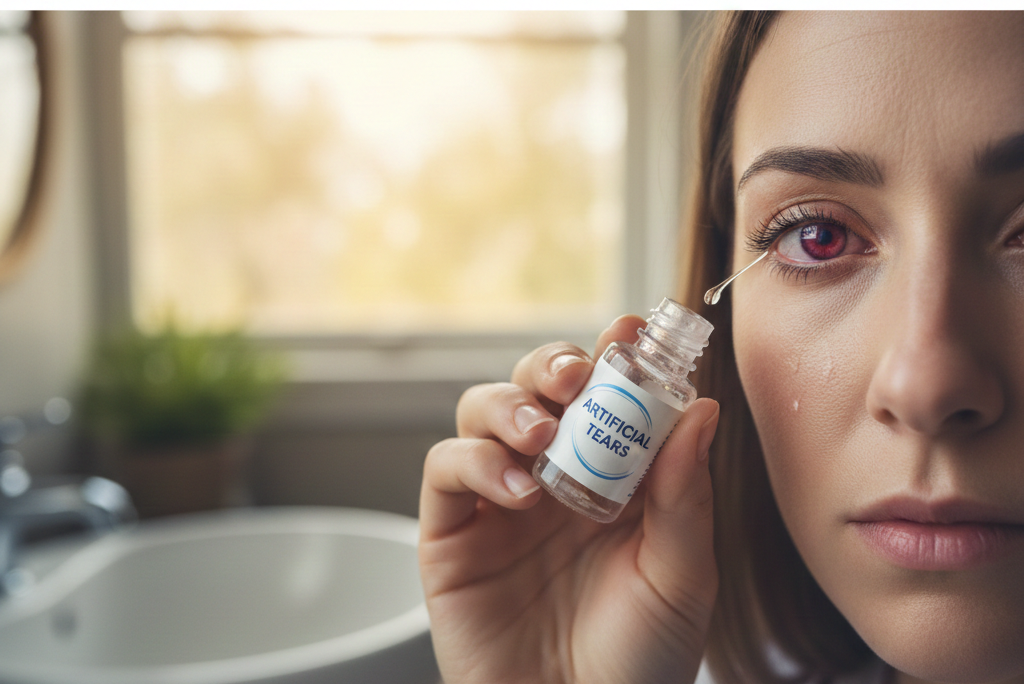
An ophthalmologist can check your eyes and find the cause. Depending on the cause, options may include lubricating eye drops, prescription eye drops, punctal plugs to slow tear drainage, or treatment for an underlying condition. Use only the drops your doctor advises.
Importance of Regular Eye Exams
Regular eye examinations are useful even without obvious symptoms. Finding eye conditions early allows earlier treatment.
Environmental Factors and Eye Care
Your surroundings can affect eye dryness. Small changes at home and work can help.
Indoor Air Quality
Indoor air quality greatly affects eye comfort. Dry indoor air, common during winter months or in air-conditioned spaces, accelerates tear evaporation. A humidifier can add moisture to the air. In a heated room, a bowl of water near the heater also helps.
Position yourself away from direct airflow from fans, air conditioning vents, or heating systems. These can increase tear evaporation and worsen eye dryness. If you must work near air vents, consider redirecting the airflow or using a small desktop humidifier.
Outdoor Protection
When outdoors, protect your eyes from wind, dust, and UV rays. Wraparound sunglasses shield your eyes from drying wind and dust. Choose close-fitting frames that block UVA and UVB rays (marked UV400).
Consider using moisture chamber glasses or goggles in extremely dry or windy conditions. These specialized eyewear options help maintain humidity around your eyes, reducing tear evaporation.
Seasonal Considerations
Different seasons present unique challenges for eye health. During winter, indoor heating systems create dry conditions that worsen eye dryness. Summer brings air conditioning and increased UV exposure. Adjust your eye care routine seasonally, using humidifiers more during dry seasons and ensuring adequate eye protection during high UV periods.
Simple Eye Exercises
These simple exercises can help you relax your eyes and remember to blink. They do not treat the cause of dry eyes.
Blinking Exercises
Practice slow, deliberate blinking exercises throughout the day. Close your eyes gently, count to three, then open them slowly. Repeat this 10-15 times every hour, especially during computer work or other focused activities.
Focus Shifting
This exercise helps relax focusing muscles and encourages natural tear distribution. Hold your finger about 6 inches from your face and focus on it for a few seconds. Then shift your focus to an object across the room. Alternate between near and far focus points 10 times, several times throughout the day.
Eye Rolling and Stretching
Gently roll your eyes in circular motions, first clockwise, then counterclockwise. Some people find this relaxing. Follow this with gentle eye stretches – look up, down, left, and right, holding each position for a few seconds.
Palming Technique
Cup your palms over your closed eyes without applying pressure. The darkness and warmth provide relaxation for tired eyes. Hold this position for 30 seconds to a minute, breathing deeply and allowing your eyes to rest completely.
Managing eye dryness at home combines eyelid care, changes to your surroundings, a balanced diet and screen habits. Doing these simple things regularly can ease mild symptoms for many people.
Everyone’s eyes are different, so you may need to try a few of these approaches to see what helps you. Start with the most practical methods for your lifestyle and gradually incorporate additional strategies as they become comfortable habits.
If your symptoms continue or get worse, see an eye doctor. To book a check-up with the eye care (ophthalmology) department at Chetna Hospital, call 91686 90442 or contact us.
General health information, not a diagnosis. Reviewed and updated by Chetna Hospital’s content team with the help of AI writing tools, November 2026.