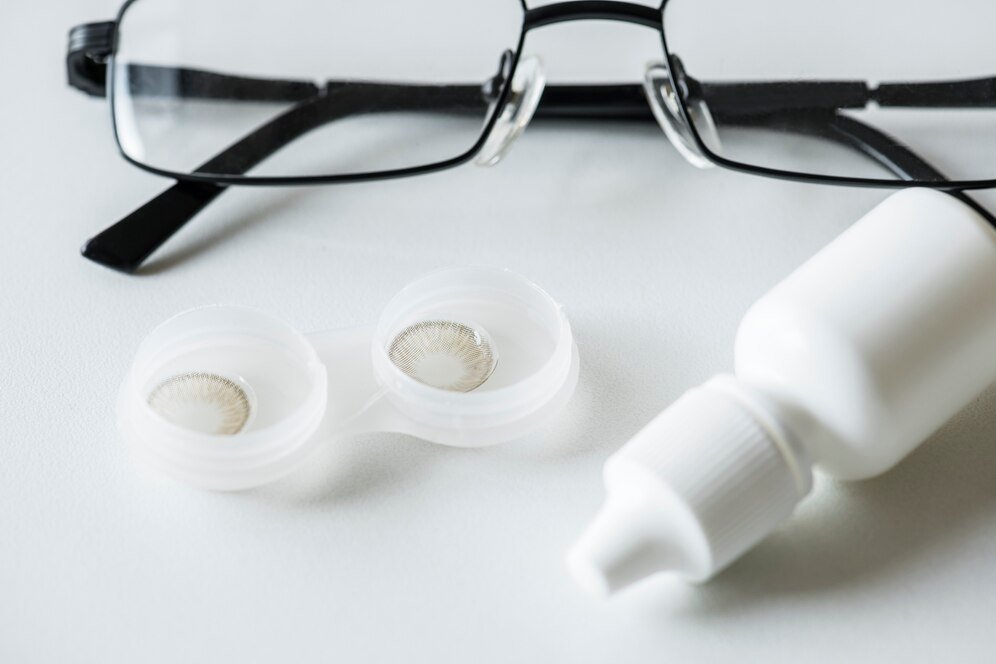
Eye drops can help some people read without glasses for part of the day, but they are not a full or lasting replacement for reading glasses. Prescription drops for presbyopia can make close-up vision clearer for a few hours. The effect wears off, so they must be used every day, and they have side effects and rare risks. If you live in Pune and find reading harder after 40, an eye examination is the first step to find out which option suits you.
What is presbyopia?
Presbyopia is the slow loss of the eye’s ability to focus on things up close. It is a normal part of ageing, not a disease. It usually starts after the age of 40, and it is very common.
Inside your eye is a lens that changes shape to focus. When you are young, it is soft and bends easily. With age, it becomes stiffer, so it cannot change shape enough to bring near objects into focus. The American Academy of Ophthalmology (AAO) says this ageing change cannot be stopped or reversed. You can read more about why near vision gets harder with age.
Signs of presbyopia
It comes on slowly. You may notice:
- holding your phone, a book or a menu farther away to read it
- blurred vision at your normal reading distance
- needing brighter light to read
- eye strain or headaches after reading or close work
- trouble with fine tasks, such as threading a needle
Some things can bring it on before 40. Mayo Clinic lists long-sightedness, diabetes, heart and blood vessel disease, and some medicines, such as those for allergies or depression.
How do eye drops for presbyopia work?
The drops make the pupil, the black centre of the eye, smaller. A small pupil works a bit like a pinhole. It increases the depth of focus, so near objects look sharper. Some drops may also help the focusing muscle inside the eye.
The AAO says the drops start to work in about 30 minutes and last around 4 to 6 hours. Most people need a second dose in the middle of the day. Early studies suggest one newer type may last longer. An eye doctor needs to check your eyes before prescribing them.
Can eye drops replace reading glasses?
For some people, for part of the day, they can. But the AAO is clear that the drops are a short-term aid, not a lasting answer. Keep these limits in mind:
- The effect lasts hours, not all day, and the drops must be used daily.
- Results vary from person to person. The gain may be smaller or shorter than you hope.
- They are most useful for mild to moderate presbyopia.
- You may still need glasses for distance vision.
- Presbyopia keeps changing until about the mid-60s, so what works now may not work later.
The AAO says people who have never worn glasses, or who wear single-vision glasses, are more likely to do well with drops. Some people use them to bridge the gap until they choose a longer-term option, such as lens surgery.
Side effects and risks of presbyopia eye drops
Side effects listed by the AAO and Cleveland Clinic include:
- stinging, itching or irritation
- red eyes
- headache
- blurred vision or tired eyes
- poorer vision at night or in dim light
- more tears just after using them
Rarely, these drops can cause or add to a detached retina. This is when the light-sensitive layer at the back of the eye pulls away. If you are at higher risk of this, your eye doctor may advise you not to use them. Tell them if you have had retinal problems before.
The AAO also warns that if you have an early cataract, the pinhole effect could make your vision worse.
Because the drops can blur vision, especially at night, do not drive or use machines until you know how they affect you. If you wear contact lenses, ask your eye doctor how to use the drops with them.
Other options for presbyopia
- Reading glasses: useful if near vision is your only problem. Some are sold without a prescription, but an eye test should set the right power.
- Bifocal, trifocal or progressive glasses: for people who also need glasses for distance.
- Contact lenses: multifocal lenses, or monovision, where one eye is set for distance and the other for near. Monovision can take time to get used to, and it may make it harder to judge distance or speed.
- Surgery: laser surgery or lens implants can help some people, but every operation has risks. You may still need reading glasses afterwards. Cleveland Clinic notes that people who only need readers may find the risks of surgery outweigh the benefits.
How presbyopia is diagnosed
A routine eye examination finds presbyopia. It may include:
- a vision test with eye charts
- a test to measure the power of glasses you need
- a check of the eye with a slit-lamp microscope, sometimes after drops that widen the pupil
- an eye pressure test
Blurred vision can have many causes. The exam looks for these too, which is why it matters before you start any eye drops.
What you can do at home
Presbyopia cannot be prevented. But Mayo Clinic suggests these steps to protect your eyes and make close work easier:
- Use good, bright light for reading and close work.
- If you use a screen, look at something about 20 feet (6 metres) away for 20 seconds every 20 minutes.
- Wear sunglasses that block UV light, and protective eyewear for sports or gardening.
- Keep diabetes and high blood pressure under control.
- Eat leafy greens, other vegetables and fish.
- Have regular eye examinations, even if you see well. Read more about eye care after 40.
See a doctor if
- blurred near vision makes reading, work or daily tasks hard
- you notice any other change in your eyesight
- you are thinking about eye drops, contact lenses or surgery for near vision
- side effects from eye drops do not go away or bother you
- you have new or worse eye pain, redness, irritation or discharge after using drops
Get urgent help if
Call 108 or 112 or go to the nearest emergency department if you have:
- sudden loss of vision in one or both eyes, with or without pain
- sudden hazy or blurred vision
- flashes of light, black spots or halos around lights
- double vision
- swelling of the face, lips, tongue or throat after using eye drops
Frequently asked questions
Do eye drops fix presbyopia for good?
No. The drops work for some hours and must be used every day. When the effect wears off, near vision goes back to how it was. Presbyopia itself cannot be stopped or reversed.
Who might be suited to presbyopia eye drops?
People with mild to moderate presbyopia, especially those who have never worn glasses or who use single-vision glasses. An eye doctor needs to check your eyes first.
Are presbyopia eye drops right for everyone?
No. If you are at higher risk of a detached retina, they may not be suitable. If you have an early cataract, the drops could make your vision worse. Your eye doctor can tell you if they suit you.
Can I drive after using the drops?
Take care. The drops can blur vision and make it harder to see at night or in dim light. Do not drive until you know how they affect you.
Are ready-made reading glasses enough?
They may be, if near vision is your only problem. Have an eye test first, so you get the right power and other eye problems are not missed.
At what age does presbyopia start?
It usually begins after 40 and keeps changing until about the mid-60s. Some health conditions and medicines can bring it on earlier.
Sources
- American Academy of Ophthalmology: Could presbyopia eyedrops replace reading glasses?
- American Academy of Ophthalmology: What is presbyopia?
- Mayo Clinic: Presbyopia, symptoms and causes
- Mayo Clinic: Presbyopia, diagnosis and treatment
- Cleveland Clinic: Presbyopia
- Cleveland Clinic: Eye drops for presbyopia
How to reach Chetna Hospital
Eye Department (Ophthalmology), Chetna Hospital
Address: Chetna Hospital, Sambhajinagar, MIDC, G Block, Near Rotary Club, Chinchwad 411019
Phone: 9168690442
Website: www.chetnahospital.co.in
To see the eye team about near vision or presbyopia, call 9168690442 or visit Chetna Hospital at the address above.
How this article was prepared: Chetna Hospital’s content team wrote it with the help of AI writing tools and checked it against the sources listed. It is general health information, not personal medical advice.