Urinary Tract Infections (UTIs) are among the most common bacterial infections affecting women globally. Women are particularly prone to UTIs due to anatomical, hormonal, and lifestyle factors. Ignoring early symptoms can lead to severe complications, including kidney infections, recurrent UTIs, and issues related to reproductive health.
For women in Chinchwad, Pimpri, Wakad, Thergaon, Ravet, and Kiwale, consulting a gynaecologist like Dr. Bharati Patil, Obstetrician & Gynaecologist at Chetna Hospital, Chinchwad, Pune, is essential for accurate diagnosis, treatment, and preventive care.
What is a Urinary Tract Infection (UTI)?
A Urinary Tract Infection occurs when harmful bacteria enter the urinary system, including the kidneys, ureters, bladder, and urethra. Most UTIs affect the lower urinary tract, primarily the bladder and urethra.
The most common bacteria causing UTIs is Escherichia coli (E. coli), which normally lives in the intestinal tract. If proper hygiene and preventive measures are not followed, these bacteria can travel to the urinary tract, causing infection.
Why Women Are More Susceptible to UTIs
Women have a higher risk of developing UTIs compared to men due to:
- Shorter Urethra – Bacteria can reach the bladder more easily.
- Sexual Activity – Intercourse can introduce bacteria into the urinary tract.
- Hormonal Changes – Pregnancy, menstruation, and menopause affect urinary tract defenses.
- Hygiene Practices – Incorrect wiping techniques or use of harsh soaps can contribute.
- Lifestyle Factors – Holding urine for long periods or dehydration can increase risk.
Women in Chinchwad, Pimpri, Wakad, Thergaon, Ravet, and Kiwale experiencing recurrent UTIs often consult Dr. Bharati Patil for tailored guidance and preventive strategies.
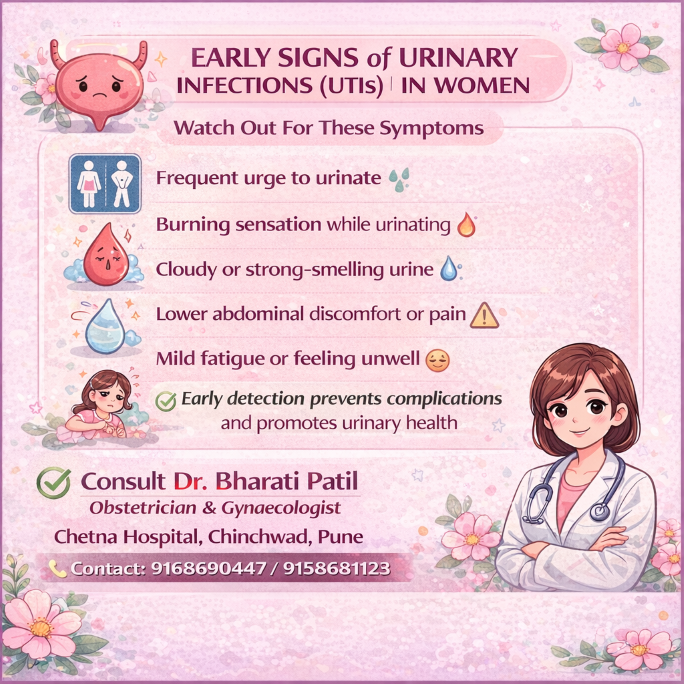
Early Signs of Urinary Infections in Women
Recognizing the early symptoms of a UTI is vital for timely intervention. Dr. Bharati Patil, who provides care across Chinchwad, Pimpri, Wakad, Thergaon, Ravet, and Kiwale, emphasizes the importance of early detection. Common early signs include:
- Frequent Urge to Urinate – Feeling the need to urinate more often than usual.
- Burning Sensation While Urinating – Pain or discomfort during urination is a hallmark symptom.
- Cloudy or Strong-Smelling Urine – Urine may appear murky, dark, or have a strong odor.
- Lower Abdominal Discomfort – Mild cramping or pressure in the lower abdomen or pelvis.
- Mild Fatigue or Feeling Unwell – Low energy levels and general malaise.
Ignoring these symptoms can result in complicated UTIs affecting the kidneys (pyelonephritis), which require hospitalization and intensive treatment.
Causes of UTIs in Women
Several factors contribute to UTIs, including:
1. Bacterial Infection
The most common cause of UTIs is bacterial infection, primarily from E. coli. Bacteria from the digestive tract can enter the urinary tract through the urethra.
2. Sexual Activity
Sexual intercourse increases the likelihood of bacteria entering the urethra, making women more prone to UTIs.
3. Hormonal Fluctuations
Hormones during pregnancy, menstruation, or menopause can alter the urinary tract environment, increasing infection risk.
4. Hygiene and Lifestyle
Holding urine for long periods, improper wiping techniques, or wearing non-breathable underwear can encourage bacterial growth.
5. Underlying Medical Conditions
Diabetes, kidney stones, or immune deficiencies can make women more susceptible to UTIs.
Preventive Measures for UTIs
Prevention is always better than cure. Dr. Bharati Patil advises women in Chinchwad, Pimpri, Wakad, Thergaon, Ravet, and Kiwale to adopt the following habits:
1. Stay Hydrated
Drink at least 6–8 glasses of water daily to flush out bacteria from the urinary tract.
2. Urinate Regularly
Avoid holding urine for long periods to prevent bacterial accumulation in the bladder.
3. Maintain Proper Hygiene
Clean the genital area gently with mild, unscented soap and always wipe from front to back after using the toilet.
4. Wear Breathable Underwear
Cotton underwear allows airflow and reduces moisture, preventing bacterial growth.
5. Urinate After Intercourse
Flushing out bacteria after sexual activity reduces UTI risk.
6. Avoid Harsh Chemicals
Avoid feminine sprays, douches, and harsh soaps that disrupt the natural pH balance.
7. Seek Medical Advice
Consult a gynaecologist if symptoms appear. Self-medication with leftover antibiotics can worsen infections and promote resistance.
Lifestyle Changes to Reduce UTI Risk
Beyond hygiene, certain lifestyle changes can help:
- Balanced Diet – Include water-rich fruits and vegetables, avoid excessive sugar.
- Limit Caffeine and Alcohol – They can irritate the bladder.
- Manage Stress – Chronic stress weakens immunity, increasing susceptibility.
- Exercise Regularly – Improves circulation and overall health.
Women in Chinchwad, Pimpri, Wakad, Thergaon, Ravet, and Kiwale benefit from holistic guidance from Dr. Bharati Patil to integrate these changes effectively.
UTIs During Pregnancy
Pregnancy increases the risk of UTIs due to hormonal changes and pressure on the bladder. Untreated UTIs during pregnancy can lead to:
- Preterm labor
- Low birth weight
- Increased maternal fatigue
- Risk of kidney infections
Dr. Bharati Patil at Chetna Hospital, Chinchwad, Pune, provides safe monitoring, early diagnosis, and preventive care for pregnant women to ensure maternal and fetal health.
Diagnosis and Treatment of UTIs
Proper diagnosis is crucial. Steps include:
- Urine Test – Identifies infection and causative bacteria.
- Antibiotic Therapy – Prescribed based on sensitivity tests.
- Lifestyle and Diet Guidance – To prevent recurrence.
- Further Investigations – For recurrent UTIs, kidney ultrasound or cystoscopy may be recommended.
Treatment under the supervision of a qualified gynaecologist ensures effective recovery and minimizes the risk of recurrence.
Complications of Untreated UTIs
Ignoring UTI symptoms can lead to:
- Kidney infections (pyelonephritis)
- Recurrent infections
- Increased risk of infertility in severe cases
- Pregnancy complications
- Chronic discomfort and fatigue
Early consultation with Dr. Bharati Patil in Chinchwad, Pimpri, Wakad, Thergaon, Ravet, and Kiwale prevents these complications and ensures women receive comprehensive care.
When to Consult a Gynaecologist
Women should seek medical advice if they experience:
- Persistent urinary symptoms for more than 2 days
- Blood in urine
- Fever or chills
- Recurring infections
- Pregnancy with UTI symptoms
Regular check-ups with Dr. Bharati Patil, Obstetrician & Gynaecologist at Chetna Hospital, Chinchwad, Pune, ensure timely intervention and long-term urinary health.
Conclusion
Urinary Tract Infections are common among women but highly preventable. Early recognition of symptoms such as frequent urination, burning sensation, cloudy urine, abdominal discomfort, and fatigue is essential.
Women in Chinchwad, Pimpri, Wakad, Thergaon, Ravet, and Kiwale can benefit from the expertise of Dr. Bharati Patil, Obstetrician & Gynaecologist at Chetna Hospital, Chinchwad, Pune, for diagnosis, treatment, and preventive care. Following hygiene practices, lifestyle changes, and consulting a gynaecologist promptly ensures overall urinary and reproductive health.
📞 Contact: 9168690447 / 9158681123
📍 Chetna Hospital, Chinchwad, Pune