Complete Eye Care Guide by Dr. Rachana Tiwari Patil, Ophthalmologist in Chinchwad, Pune
Dry eyes have become one of the most common eye complaints seen by ophthalmologists today, especially in urban areas like Chinchwad, Pimpri, Wakad, Nigdi, Akurdi, and nearby parts of Pune. With increasing screen time, pollution, air conditioning, and lifestyle changes, people of all age groups are experiencing symptoms of dry eye syndrome.
At Chetna Hospital, Chinchwad, Dr. Rachana Tiwari Patil, Consultant Ophthalmologist and Phaco-Refractive Surgeon, regularly evaluates and treats patients suffering from dry eyes and other ocular surface disorders. This blog explains dry eyes in detail—its causes, symptoms, diagnosis, treatment options, and preventive eye care tips.
What Are Dry Eyes?
Dry eye syndrome occurs when the eyes do not produce enough tears or when the tears evaporate too quickly. Tears are essential for maintaining clear vision, eye comfort, and protecting the surface of the eyes from infection and irritation.
Healthy tears consist of three layers:
- Oil layer – prevents evaporation
- Water layer – provides moisture
- Mucus layer – helps tears spread evenly
Any imbalance in these layers can lead to dryness, irritation, and visual discomfort.
Common Causes of Dry Eyes
Dry eyes can develop due to multiple factors. An eye specialist evaluation is essential to identify the exact cause.
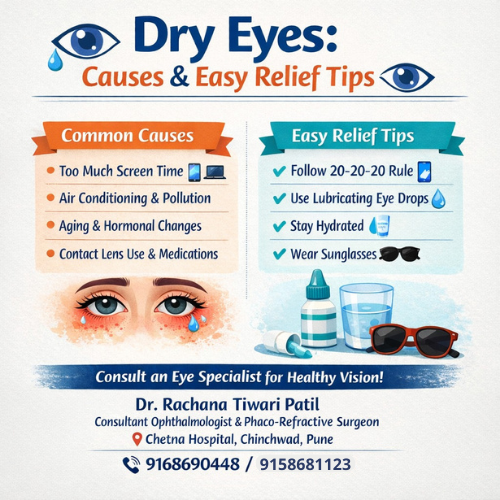
1. Excessive Screen Time
People working on computers, laptops, and mobile phones tend to blink less frequently. Reduced blinking leads to faster tear evaporation, causing dryness and eye strain. This is very common among IT professionals, students, and office workers in areas like Wakad, Hinjewadi, and Pimpri.
2. Air Conditioning and Pollution
Constant exposure to air-conditioned environments, fans, and environmental pollution in busy areas of Pune can worsen dry eye symptoms.
3. Aging
Tear production naturally decreases with age, making dry eyes more common in individuals above 40 years.
4. Hormonal Changes
Hormonal changes, especially in women during pregnancy or menopause, can affect tear production.
5. Contact Lens Use
Long-term or improper contact lens use can reduce oxygen supply to the eyes and increase dryness.
6. Certain Medications
Antihistamines, blood pressure medicines, antidepressants, and some painkillers can contribute to dry eyes.
7. Underlying Medical Conditions
Conditions such as diabetes, thyroid disorders, rheumatoid arthritis, and autoimmune diseases may also lead to dry eye syndrome.
How Are Dry Eyes Diagnosed?
At Chetna Hospital, Chinchwad, Dr. Rachana Tiwari Patil conducts a detailed eye examination to diagnose dry eye disease. Diagnosis may include:
- Detailed patient history
- Slit-lamp examination
- Tear film assessment
- Ocular surface evaluation
Early diagnosis helps prevent complications such as corneal damage and chronic discomfort.
Treatment Options for Dry Eyes
Dry eye treatment depends on the severity and underlying cause. Dr. Rachana Tiwari Patil follows a personalized, evidence-based approach for each patient.
1. Lubricating Eye Drops
Preservative-free artificial tears help maintain eye moisture and provide relief from irritation.
2. Lifestyle and Environmental Modifications
Simple changes can significantly reduce symptoms:
- Take regular screen breaks
- Avoid direct air from fans or AC
- Use humidifiers in dry environments
3. 20-20-20 Rule
For people using screens frequently:
Every 20 minutes, look at something 20 feet away for 20 seconds.
4. Lid Hygiene and Warm Compresses
Helps improve oil secretion from eyelid glands and reduces tear evaporation.
5. Treatment of Underlying Conditions
Managing diabetes, thyroid problems, or eyelid disorders is essential for long-term relief.
6. Advanced Dry Eye Management
For moderate to severe cases, specialized treatments may be advised after evaluation by an ophthalmologist.
Preventing Dry Eyes: Simple Eye Care Tips
Preventive eye care plays a major role in maintaining long-term eye health.
- Blink consciously while using screens
- Stay hydrated throughout the day
- Wear protective sunglasses outdoors
- Avoid smoking and secondhand smoke
- Maintain proper nutrition rich in omega-3 fatty acids
- Get regular eye check-ups, especially if you live in high-pollution areas of Pune
Importance of Early Eye Consultation
Ignoring dry eye symptoms can lead to chronic discomfort, recurrent infections, and reduced quality of life. Early consultation with an eye specialist ensures timely treatment and prevents complications.
Residents of Chinchwad, Pimpri, Akurdi, Nigdi, Wakad, Hinjewadi, Ravet, and nearby Pune areas can easily access professional eye care at Chetna Hospital.
About Dr. Rachana Tiwari Patil
Dr. Rachana Tiwari Patil is a Consultant Ophthalmologist and Phaco-Refractive Surgeon practicing at Chetna Hospital, Chinchwad, Pune. She provides comprehensive eye care services including:
- Dry eye evaluation and management
- Cataract assessment and surgery
- Routine eye check-ups
- Refractive error management
- Computer vision syndrome care
- Treatment of common eye infections and conditions
Dr. Rachana Patil emphasizes patient education, accurate diagnosis, and personalized treatment for all age groups.
Eye Care Services at Chetna Hospital, Chinchwad
Chetna Hospital offers accessible and reliable eye care services for the local community. The hospital is conveniently located for patients from:
- Chinchwad
- Pimpri
- Nigdi
- Akurdi
- Wakad
- Hinjewadi
- Ravet
- PCMC area
- Pune city
With modern diagnostic facilities and experienced medical professionals, Chetna Hospital focuses on quality eye care and patient comfort.