
Expert Eye Care by Dr. Rachana Tiwari Patil at Chetna Hospital, Pimpri-Chinchwad
In today’s digital age, screens have become an inseparable part of our daily lives. From smartphones and laptops to tablets and desktop computers, prolonged screen exposure is affecting eye health across all age groups. One of the most common conditions associated with excessive screen time is Digital Eye Strain, also known as Computer Vision Syndrome (CVS).
At Chetna Hospital, Pimpri-Chinchwad, Pune, Dr. Rachana Tiwari Patil, Consultant Ophthalmologist and Phaco Refractive Surgeon, regularly treats patients suffering from digital eye strain and related eye problems. Early awareness and preventive eye care can help protect your vision and improve quality of life.
What is Digital Eye Strain?
Digital Eye Strain refers to a group of eye and vision-related problems that result from prolonged use of digital devices such as computers, smartphones, tablets, and e-readers. Continuous focusing on screens forces the eye muscles to work harder, leading to discomfort and visual fatigue.
People working in IT, students, office professionals, online learners, and even children attending online classes are increasingly affected by digital eye strain.
Common Symptoms of Digital Eye Strain
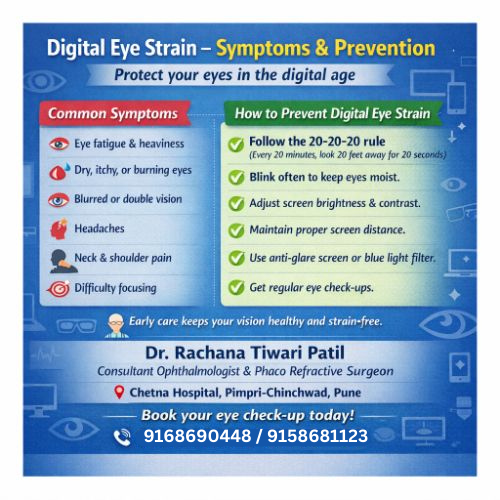
Digital eye strain symptoms can vary from mild discomfort to persistent eye problems. Common symptoms include:
1. Eye Fatigue and Heaviness
A feeling of tired or heavy eyes after prolonged screen use is one of the earliest signs of digital eye strain.
2. Dry, Itchy, or Burning Eyes
Reduced blinking while using screens leads to dry eyes, irritation, and burning sensations.
3. Blurred or Double Vision
Difficulty in focusing or fluctuating vision can occur due to continuous near work.
4. Headaches
Eye strain often leads to frontal or temporal headaches, especially after long working hours.
5. Neck, Shoulder, and Back Pain
Poor posture and incorrect screen positioning contribute to musculoskeletal discomfort.
6. Difficulty in Focusing
Frequent switching between screen and distant objects may become uncomfortable.
If these symptoms persist, it is advisable to consult an eye specialist in Pimpri-Chinchwad for a comprehensive eye examination.
Causes of Digital Eye Strain
Digital eye strain occurs due to multiple contributing factors, including:
- Prolonged screen time without breaks
- Improper lighting or screen glare
- Incorrect viewing distance
- Poor posture while working
- Uncorrected refractive errors (spectacle power issues)
- Reduced blink rate
- Excessive exposure to blue light
According to Dr. Rachana Tiwari Patil, many patients ignore early symptoms, which can worsen over time without proper care.
Who is at Risk?
Digital eye strain can affect anyone, but high-risk groups include:
- IT professionals and office workers
- Students attending online classes
- Smartphone and gaming users
- Graphic designers and content creators
- People working from home
- Children and teenagers with increased screen exposure
Residents of Pimpri, Chinchwad, Akurdi, Nigdi, Wakad, Ravet, Hinjewadi, Bhosari, Pimple Saudagar, and PCMC areas frequently visit Chetna Hospital for eye-related complaints linked to digital screen usage.
How Digital Eye Strain Affects Long-Term Eye Health
While digital eye strain does not usually cause permanent vision loss, ignoring symptoms can lead to:
- Chronic dry eye disease
- Worsening of refractive errors
- Reduced work productivity
- Increased dependency on eye drops
- Frequent headaches and fatigue
Regular eye check-ups help identify underlying issues early and prevent complications.
Prevention of Digital Eye Strain
The good news is that digital eye strain is preventable. Simple lifestyle changes and eye care habits can significantly reduce symptoms.
1. Follow the 20-20-20 Rule
Every 20 minutes, look at an object 20 feet away for at least 20 seconds. This relaxes eye muscles and reduces strain.
2. Blink More Often
Conscious blinking keeps your eyes moist and prevents dryness.
3. Adjust Screen Brightness and Contrast
Ensure your screen brightness matches the surrounding lighting conditions.
4. Maintain Proper Screen Distance
- Computer screen: 50–70 cm away
- Mobile phones: At least arm’s length when possible
5. Correct Your Posture
Keep the screen slightly below eye level and sit with proper back support.
6. Reduce Screen Glare
Use anti-glare screens or adjust lighting to avoid reflections.
7. Use Blue Light Filters
Blue light filtering glasses or screen settings help reduce eye fatigue.
8. Get Regular Eye Check-Ups
An eye examination helps detect refractive errors, dry eye, or other issues early.
Role of Eye Check-Ups in Managing Digital Eye Strain
Many people assume digital eye strain is temporary, but underlying eye problems can worsen symptoms. A comprehensive eye check-up includes:
- Vision testing
- Refraction (spectacle power check)
- Dry eye evaluation
- Eye muscle assessment
- Fundus examination
At Chetna Hospital, Dr. Rachana Tiwari Patil provides personalized eye care plans based on each patient’s lifestyle and screen usage.
Treatment Options for Digital Eye Strain
Treatment depends on symptom severity and underlying causes:
- Prescription glasses for computer use
- Lubricating eye drops for dry eyes
- Blue light protection lenses
- Ergonomic advice and lifestyle counseling
Early treatment improves comfort and prevents progression.
Why Choose Chetna Hospital for Eye Care?
Chetna Hospital, Pimpri-Chinchwad, is a trusted center for comprehensive ophthalmic care, offering:
- Experienced eye specialist – Dr. Rachana Tiwari Patil
- Advanced diagnostic equipment
- Patient-friendly approach
- Personalized treatment plans
- Convenient access for PCMC residents
Patients from Nigdi, Akurdi, Wakad, Hinjewadi, Ravet, Pimple Saudagar, Bhosari, and nearby Pune areas choose Chetna Hospital for reliable eye care.
About Dr. Rachana Tiwari Patil
Dr. Rachana Tiwari Patil is a renowned Consultant Ophthalmologist and Phaco Refractive Surgeon with extensive experience in treating digital eye strain, cataract, refractive errors, and other eye conditions. Her patient-centric approach and emphasis on preventive eye care make her a preferred eye doctor in Pimpri-Chinchwad.
When Should You See an Eye Specialist?
Consult an ophthalmologist if you experience:
- Persistent eye strain
- Frequent headaches
- Blurred vision
- Dry or burning eyes
- Difficulty focusing
Early diagnosis ensures better outcomes and long-term eye health.