From the eye care (ophthalmology) department at Chetna Hospital, Chinchwad, Pune
Many people choose contact lenses over spectacles for comfort and convenience. But poor lens care can lead to eye infections, discomfort, redness and, in rare cases, loss of vision. Many of these problems are avoidable with good lens hygiene.
This guide covers the basic do’s and don’ts of contact lens care to help you keep clear vision and healthy eyes.
Why Proper Contact Lens Care Is Important
Contact lenses sit directly on the surface of the eye. Germs, dirt and poor handling can easily reach the eye. Poor hygiene can lead to:
- Eye infections (keratitis, conjunctivitis)
- Redness and irritation
- Dry eyes
- Corneal ulcers
- Blurred or reduced vision
With the right habits and regular eye check-ups, many of these problems can be prevented.
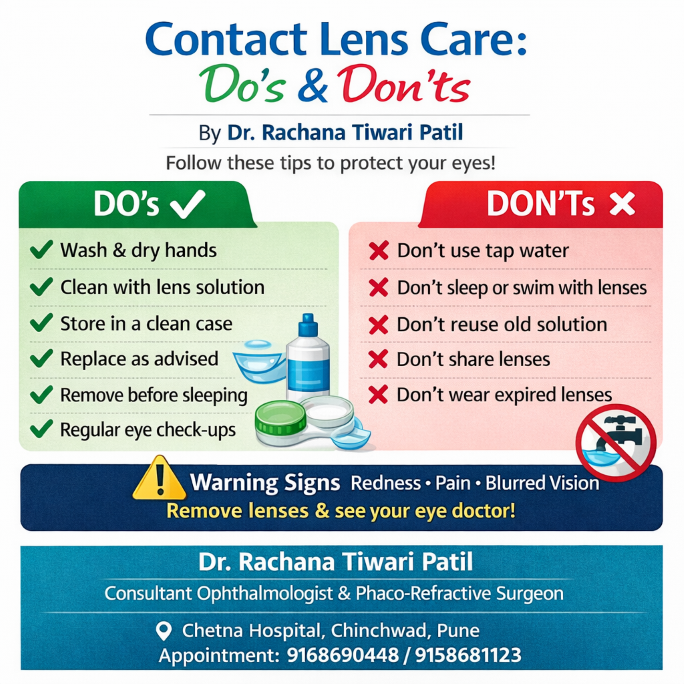
Do’s of Contact Lens Care
1. Wash and Dry Your Hands Before Handling Lenses
Always wash your hands with soap and water before touching your contact lenses. Dry them with a clean, lint-free towel.
Dirty hands are a common way germs reach the eyes of contact lens users.
2. Clean Lenses Only With Recommended Lens Solution
Use only the contact lens solution your eye doctor recommends to clean, rinse and store your lenses.
Never use tap water, bottled water or saliva. These are not sterile and can carry germs that harm your eyes.
3. Clean and Replace the Lens Case Regularly
Your lens case can collect germs if it is not cleaned properly.
Good habits:
- Rub and rinse the case with fresh lens solution (not water)
- Leave it open, upside down, to air dry
- Replace the case at least every 3 months, or straight away if it cracks
4. Follow the Replacement Schedule Strictly
Whether you use daily, monthly or yearly contact lenses, follow the replacement schedule your eye doctor advises.
Wearing lenses longer than recommended can reduce oxygen to the eye and raise the risk of infection.
5. Remove Contact Lenses Before Sleeping
Unless your eye doctor has prescribed lenses made for overnight wear, do not sleep in contact lenses.
Sleeping in lenses can cause:
- Less oxygen reaching the cornea
- Dryness
- A higher risk of corneal infection
6. Remove Lenses Before Swimming or Showering
Water from swimming pools, showers or hot tubs can carry germs into your eyes. Keep your lenses away from all water.
Take your lenses out before you swim or shower. If you must swim in lenses, wear tight-fitting goggles, then remove, clean and disinfect the lenses (or throw away daily lenses) straight afterwards.
7. Go for Regular Eye Check-Ups
Regular eye examinations help detect early signs of infection, dryness or damage to the cornea.
See your eye doctor at least once a year, and sooner if your eyes feel uncomfortable.
Don’ts of Contact Lens Care
1. Don’t Use Tap Water on Contact Lenses
Tap water is not sterile. It may contain germs, including a tiny organism that causes a rare but serious eye infection called Acanthamoeba keratitis.
2. Don’t Reuse or Top-Up Old Lens Solution
Throw away old solution and use fresh solution every time you store your lenses. Topping up old solution lets germs grow.
3. Don’t Share Contact Lenses
Contact lenses are medical devices and should never be shared, even coloured or cosmetic lenses.
4. Don’t Wear Expired or Damaged Lenses
Do not use lenses past their expiry date. Torn or damaged lenses can scratch the cornea and cause pain and infection.
5. Don’t Keep Wearing Lenses If Your Eyes Feel Wrong
Watch for symptoms like:
- Redness
- Pain
- Watering
- Blurred vision
- Sensitivity to light
If you notice any of these, take your lenses out and contact an eye doctor the same day. Do not put the lenses back in until you have been checked.
Warning Signs That Need Immediate Medical Attention
Take your lenses out and get medical help the same day if you notice:
- Redness that does not settle
- Discharge (pus) from the eye
- A feeling that something is stuck in the eye
Go to an emergency department straight away, or call 108 or 112, if you have severe eye pain, a sudden change or loss of vision, or a chemical or injury to the eye.
Early treatment can help prevent long-term damage to vision.
Contact Lens Care for Children and Teenagers
Children and teenagers who use contact lenses need extra supervision. Parents should make sure of:
- Good hygiene
- Limited wearing time
- Regular eye check-ups
- Telling a parent straight away about any discomfort
Common Myths About Contact Lenses
Myth 1: Contact lenses can get lost behind the eye
Fact: This cannot happen. A thin membrane covers the white of the eye and lines the eyelids, so a lens cannot slip behind the eye.
Myth 2: Lenses are unsafe
Fact: Contact lenses are a common and generally safe option when they are fitted by an eye doctor and cared for correctly.
Myth 3: Occasional sleeping with lenses is harmless
Fact: Even occasional overnight wear increases the risk of infection.
Tips for First-Time Contact Lens Users
- Get lenses prescribed and fitted by a qualified eye doctor
- Learn how to put lenses in and take them out properly
- Start with shorter wearing times
- Always carry spectacles as a backup
Why See an Ophthalmologist for Contact Lenses?
An ophthalmologist (eye doctor) can:
- Check your eye health before prescribing lenses
- Suggest a lens type that suits your eyes
- Spot problems early
- Give eye care advice for your needs
Contact Lens Check-Ups at Chetna Hospital
The eye care (ophthalmology) department at Chetna Hospital, Chinchwad, Pune provides eye check-ups and contact lens advice.
Location: Chetna Hospital, Chinchwad, Pune
Appointments: Call 91686 90442 / 9158681123 to book a check-up.
General health information, not a diagnosis. Reviewed and updated by Chetna Hospital’s content team with the help of AI writing tools, November 2026.