Have you ever woken up with crusty, red eyes that feel like there’s sand in them? Or noticed someone at work rubbing their pink, watery eyes? Chances are, that was conjunctivitis, commonly known as “pink eye.” It is a very common eye condition, yet many people don’t know how to handle it properly.
Conjunctivitis can be uncomfortable, but it usually clears up on its own. The key is knowing what to do and what not to do when the symptoms appear. Good habits can ease discomfort and stop it spreading to others.
In this guide, we’ll walk through what you need to know about managing conjunctivitis. We cover the first signs, simple self-care, and when you must see a doctor. We’ll also clear up some common mistakes. Whether you’re dealing with viral, bacterial or allergic conjunctivitis, this practical advice can help you feel more comfortable and protect the people around you.
What Exactly Is Conjunctivitis?
Conjunctivitis is inflammation of the conjunctiva, the thin, clear layer covering the white part of your eye and the inside of your eyelids. When it is irritated and swollen, tiny blood vessels become more visible, giving your eyes a pink or red look.
There are three main types of conjunctivitis. Viral conjunctivitis is the most common type and often comes with a cold, runny nose or sore throat. It is very contagious and usually clears up on its own within 1 to 2 weeks, though it can sometimes take longer. Bacterial conjunctivitis often produces thicker, yellow or green, sticky discharge and can affect one or both eyes. Mild cases often clear without treatment, but a doctor may prescribe antibiotic eye drops if needed. Antibiotics do not work for viral or allergic conjunctivitis. Allergic conjunctivitis happens when your eyes react to allergens like pollen, pet dander or dust mites. It is not contagious, but it can keep coming back.
The symptoms often overlap between types. Common signs include redness, itching, a burning or gritty feeling, watering, and discharge that may make your eyelids stick together, especially after sleeping. Because the types can look alike, an eye check helps when you are not sure which type you have.
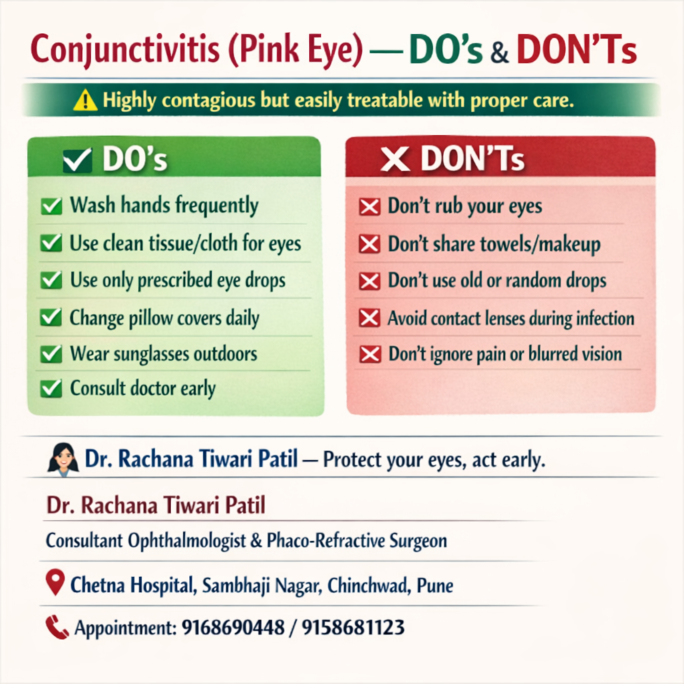
The DO’S: Your Self-Care Plan
When conjunctivitis starts, try not to rub your eyes. Wash your hands often with soap and water for at least 20 seconds, especially after touching your eyes. This simple step helps stop the infection spreading to your other eye or to family members.
Hold a cool, clean, damp cloth over your closed eyes for a few minutes, several times a day, to soothe itching and swelling. Use a clean cloth each time, and use a separate cloth for each eye if only one is affected.
Gently clean crusts from your eyelids and lashes with clean cotton wool soaked in boiled water that has cooled. Use a fresh pad for each wipe and for each eye, wiping from the inner corner outwards. If you wear contact lenses, stop wearing them and switch to glasses until your eyes have fully recovered.
Throw away eye make-up, especially mascara and eyeliner, that you used while infected, as it can carry germs back to your eyes. Also wash pillowcases, towels and anything else that touched your face in hot water.
The DON’TS: Mistakes That Can Make Things Worse
Don’t touch or rub your eyes, especially with unwashed hands. When your eyes are itchy, the urge to rub can be strong. Rubbing spreads infection and can irritate the eyes further.
Don’t share personal items like towels, washcloths, pillowcases or make-up while you’re infected. Family members should use separate items until your symptoms are gone. Conjunctivitis spreads easily through shared objects, so families can pass it back and forth.
Avoid swimming while you have infectious conjunctivitis. Pool water can irritate sore eyes, and you could spread the infection to other swimmers.
Don’t use medicated eye drops without advice from a pharmacist or doctor. Lubricating drops (artificial tears) may ease discomfort, but medicated drops may not suit your type of conjunctivitis and some can hide signs of a more serious problem. Leftover drops from a previous illness or from someone else should not be used.
When to Seek Medical Help: Warning Signs
Most cases of conjunctivitis get better on their own. But some symptoms need prompt care. See an eye doctor urgently, the same day, if you have eye pain, changes in your vision, sensitivity to light, or one or both eyes are very red. These can be signs of a more serious eye problem.
Go to an emergency department straight away, or call 108 or 112, if you have severe eye pain, sudden loss of vision, or a chemical in the eye or an eye injury.
See a doctor if your symptoms get worse, or have not cleared up within 7 days. Thick yellow or green discharge may mean a bacterial infection, and a doctor can decide whether antibiotic treatment is needed.
People with a weak immune system, contact lens wearers, and people with other eye conditions should see a doctor sooner. A newborn baby (under 30 days old) with red, sticky eyes needs to be seen by a doctor urgently.
Also get medical help quickly if the eyelids or the skin around the eye become very swollen, red or painful, or if you feel very unwell with a fever.
Your Path to Clear, Healthy Eyes
Managing conjunctivitis doesn’t have to be complicated. Most cases clear up with simple care and good hygiene. The key is to act early, follow the advice above, and know when to get medical help.
Prevention is the simplest way to avoid future episodes. Wash your hands regularly, avoid touching your eyes, and don’t share personal items that come into contact with your face. If you get allergic conjunctivitis, work with your doctor to find your triggers and plan how to manage them.
Don’t let embarrassment or inconvenience stop you from seeking help when you need it. Conjunctivitis is very common, and doctors see it every day.
Keep this guide handy and share it with family members. When it comes to your eyes, it’s always better to be safe than sorry.
The eye care (ophthalmology) department at Chetna Hospital, Chinchwad, Pune can check red or sore eyes. Call 91686 90442 to book a check-up.
General health information, not a diagnosis. Reviewed and updated by Chetna Hospital’s content team with the help of AI writing tools, November 2026.