Heart disease has become one of the leading causes of illness and death in India. Alarmingly, Indians tend to develop heart-related problems 10–15 years earlier than people in Western countries. Rapid urbanization, lifestyle changes, stress, diabetes, and genetic predisposition have significantly increased the burden of cardiovascular diseases.
At Chetna Hospital, Pimpri-Chinchwad, Pune, expert cardiology care is provided under the guidance of experienced doctors like Dr. Mahesh Kharade and Dr. Pritam Titar, focusing on early diagnosis, preventive cardiology, and long-term heart health.
This blog explores the most common heart diseases in Indians, their causes, symptoms, and how timely treatment and preventive care can save lives.
Why Are Indians at Higher Risk of Heart Disease?
Indians are genetically predisposed to cardiovascular diseases due to a combination of metabolic and lifestyle factors. Some key reasons include:
- High prevalence of diabetes and insulin resistance
- Increased levels of bad cholesterol (LDL) and triglycerides
- Central obesity (fat accumulation around the abdomen)
- Sedentary lifestyle and lack of regular exercise
- High stress levels due to work-life imbalance
- Smoking, tobacco use, and unhealthy dietary habits
- Strong family history of heart disease
Urban areas like Pimpri, Chinchwad, Akurdi, Nigdi, Bhosari, Wakad, Ravet, Hinjewadi, Moshi, and PCMC have seen a rising number of young and middle-aged patients reporting cardiac problems.
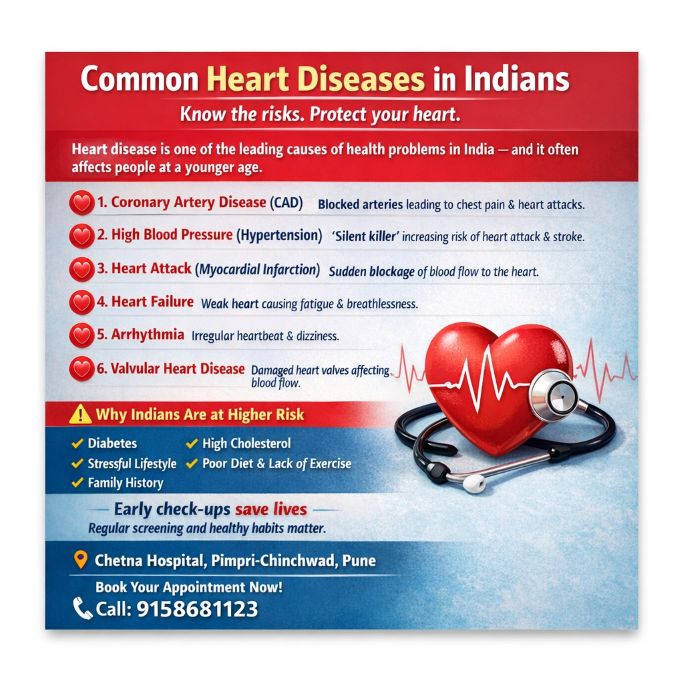
1. Coronary Artery Disease (CAD)
What is Coronary Artery Disease?
Coronary Artery Disease is the most common heart disease in Indians. It occurs when the coronary arteries supplying blood to the heart become narrowed or blocked due to plaque buildup (atherosclerosis).
Symptoms of CAD:
- Chest pain or discomfort (angina)
- Shortness of breath
- Fatigue
- Pain radiating to the left arm, neck, or jaw
- Sweating or nausea
Why CAD is common in Indians:
- Early onset diabetes
- High cholesterol
- Poor dietary habits
- Lack of regular heart check-ups
At Chetna Hospital, Pimpri-Chinchwad, CAD is diagnosed through ECG, 2D Echo, TMT, blood tests, and cardiac risk assessment, guided by specialists like Dr. Mahesh Kharade and Dr. Pritam Titar.
2. High Blood Pressure (Hypertension)
Why Hypertension is Called the “Silent Killer”
High blood pressure often shows no symptoms until it causes serious damage to the heart, brain, or kidneys.
Effects of uncontrolled hypertension:
- Increased risk of heart attack
- Stroke
- Heart failure
- Kidney disease
Common symptoms (when present):
- Headaches
- Dizziness
- Chest discomfort
- Blurred vision
In rapidly growing areas like Wakad, Hinjewadi, and PCMC, hypertension is increasingly seen in patients under 40 due to stress and sedentary lifestyles.
Regular BP monitoring and lifestyle counseling at Chetna Hospital, Pune help patients manage hypertension effectively.
3. Heart Attack (Myocardial Infarction)
What Happens During a Heart Attack?
A heart attack occurs when blood flow to a part of the heart muscle is suddenly blocked, usually due to a clot in a coronary artery.
Warning signs:
- Severe chest pain or pressure
- Pain spreading to arm, back, or jaw
- Sudden sweating
- Breathlessness
- Nausea or vomiting
Early medical intervention is critical. Immediate treatment can prevent permanent heart damage and save lives.
Doctors at Chetna Hospital, Pimpri-Chinchwad, emphasize early recognition of symptoms and timely hospital care, especially for patients from nearby areas like Nigdi, Akurdi, Ravet, and Bhosari.
4. Heart Failure
Understanding Heart Failure
Heart failure does not mean the heart stops working. It means the heart is unable to pump blood efficiently to meet the body’s needs.
Causes:
- Previous heart attack
- Long-standing hypertension
- Cardiomyopathy
- Valve diseases
Symptoms:
- Shortness of breath
- Swelling of legs and ankles
- Persistent cough
- Fatigue
- Rapid heartbeat
Heart failure requires long-term medical management, lifestyle changes, and regular follow-ups. Under expert supervision by Dr. Mahesh Kharade and Dr. Pritam Titar, patients receive comprehensive care plans at Chetna Hospital.
5. Arrhythmias (Irregular Heartbeat)
What Are Arrhythmias?
Arrhythmias are conditions where the heart beats too fast, too slow, or irregularly.
Common symptoms:
- Palpitations
- Dizziness or fainting
- Fatigue
- Shortness of breath
Some arrhythmias can be life-threatening if not treated on time. Advanced diagnostic tools available at Chetna Hospital, PCMC help identify rhythm disorders early.
6. Valvular Heart Disease
Causes in Indians:
- Rheumatic fever (still common in India)
- Age-related degeneration
- Congenital heart defects
Symptoms:
- Breathlessness
- Chest pain
- Swelling of feet
- Irregular heartbeat
Early diagnosis through 2D Echo and clinical evaluation can prevent complications and improve quality of life.
Importance of Preventive Cardiology
Prevention is the most effective way to combat heart disease. Preventive cardiology focuses on identifying risk factors early and managing them proactively.
Key preventive measures:
- Regular heart check-ups
- Blood pressure and sugar control
- Cholesterol monitoring
- Healthy diet and exercise
- Stress management
- Avoiding tobacco and excessive alcohol
Residents of Pimpri-Chinchwad, Wakad, Moshi, and surrounding PCMC areas are encouraged to undergo routine cardiac screening, especially if they have a family history of heart disease.
Role of Chetna Hospital in Cardiac Care
Chetna Hospital, Pimpri-Chinchwad, Pune, is committed to delivering accessible and reliable cardiac care to the local community.
Why patients trust Chetna Hospital:
- Experienced doctors like Dr. Mahesh Kharade and Dr. Pritam Titar
- Focus on early diagnosis and preventive care
- Patient-centric treatment approach
- Convenient location for PCMC residents
- Ethical and transparent medical practices
From heart disease screening to long-term cardiac management, the hospital plays a vital role in improving heart health across Pune’s growing suburbs.
When Should You See a Cardiologist?
You should consult a heart specialist if you:
- Have chest pain or breathlessness
- Have diabetes or hypertension
- Have a family history of heart disease
- Experience palpitations or dizziness
- Are above 40 and haven’t had a heart check-up
Early consultation can prevent serious complications and improve outcomes.