Our eyes are among the most delicate and vital organs of the body, and any change in vision can directly affect our daily life. While most people associate eye problems with aging, glasses, or common conditions like cataract and glaucoma, there is another condition that can affect vision and is linked to stress: Central Serous Retinopathy (CSR).
This article explains what CSR is, how stress is linked to it, symptoms to watch out for, risk factors, and how to protect your eyes from this condition.
What is Central Serous Retinopathy (CSR)?
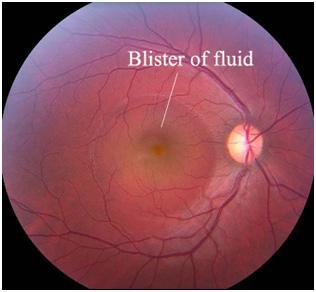
Central Serous Retinopathy (CSR) is an eye disease where fluid leaks and collects under the retina—the light-sensitive layer at the back of the eye. The macula, which is responsible for sharp central vision, is especially affected.
When fluid collects beneath the macula, it lifts the retina slightly and distorts vision. This often results in blurry, dim, or distorted central vision, while peripheral vision usually remains unaffected.
CSR can affect one eye at a time, though in some cases, both eyes may be involved.
The Stress Connection – How Mental Pressure Affects the Eyes
The exact cause of CSR is not fully understood, but high physical or emotional stress is a well-known risk factor.
- When you are under stress, your body releases a hormone called cortisol, often referred to as the “stress hormone.”
- Cortisol and similar hormones (corticosteroids) are thought to affect the layers under the retina.
- This may let fluid leak and collect under the retina, causing CSR.
CSR is seen more often in people going through stressful periods, but it can also happen without any obvious stress.
Symptoms of CSR
The onset of CSR is usually sudden and noticeable. Some common symptoms include:
- Blurred or dim central vision – objects may appear less sharp.
- Dark or gray spot in the center of vision.
- Straight lines may appear bent or wavy (a symptom called metamorphopsia).
- Colours may appear dull or washed out, and objects may look smaller or farther away.
- Difficulty focusing or reading, especially small print.
If you notice any of these symptoms, see an eye doctor the same day. Other conditions can cause similar symptoms and need to be ruled out.
Who is at Risk?
CSR is more common in certain groups of people due to lifestyle, occupation, or biological factors. Some major risk factors include:
- Stressful lifestyle – people in high-stress jobs or undergoing emotional stress are more vulnerable.
- Age and Gender – CSR most often affects adults between about 20 and 50, and it is several times more common in men than in women.
- Sleep problems – obstructive sleep apnoea (breathing pauses during sleep) is linked with CSR.
- Steroid use – corticosteroid medicines in any form (tablets, inhalers, skin creams, injections or eye drops) can trigger CSR.
- Type A personality – competitive, driven or anxious people seem to be more prone.
- Medical conditions and pregnancy – high blood pressure, Cushing syndrome, some autoimmune conditions and pregnancy are also linked with CSR.
How is CSR Diagnosed?
If you visit an eye specialist with the above symptoms, the doctor may perform tests like:
- Dilated eye examination – to check for fluid under the retina.
- Optical Coherence Tomography (OCT) – a special scan that provides detailed images of the retina and confirms fluid accumulation.
- Fluorescein Angiography – a test where a dye is injected into the bloodstream to highlight leakage points in the retina.
Treatment & Recovery
In most cases, CSR settles on its own within about 3 to 6 months, and most people get good vision back, though it may not be quite as sharp as before. Follow-up with an eye doctor is still important.
1. Observation and Rest
- Many people recover without treatment, as the fluid under the retina is slowly reabsorbed.
- During this time, regular follow-up with the eye doctor is essential.
2. Lifestyle Modification
- Managing stress through meditation, yoga, breathing exercises, or counseling.
- Ensuring proper sleep and balanced diet.
- Reducing caffeine and alcohol intake.
3. Medication
- No medicine has yet been clearly shown to work for CSR. Some are tried in selected cases, only under an eye doctor’s care.
4. Laser or Photodynamic Therapy
- If the fluid does not clear after a few months, or vision is badly affected, an eye doctor may suggest laser treatment or photodynamic therapy (a light treatment) to reduce the leak.
5. Avoiding Steroids
- Tell your doctors if you use any steroid medicine. Do not stop a prescribed steroid on your own, as that can be harmful; ask your doctor whether it can be changed.
Can CSR Come Back?
Yes. About a third to a half of people have another episode, in the same or the other eye. Repeated or long-lasting episodes can cause permanent vision loss, so regular follow-up matters.
Tips to Prevent CSR
- Manage stress through relaxation techniques, hobbies, or professional counseling.
- Maintain a healthy lifestyle – regular exercise, balanced diet, and hydration.
- Prioritize sleep – at least 7–8 hours of quality sleep daily.
- Use steroids only as prescribed – and remind your doctor if you have had CSR before.
- Regular eye check-ups – especially after an episode of CSR.
When to See an Eye Specialist?
See an ophthalmologist the same day if you notice:
- Sudden blurring or distortion in central vision.
- A dark spot or gray area in your line of sight.
- Difficulty reading or recognizing faces.
- Recurrence of CSR symptoms even after recovery.
Go to the nearest emergency department straight away, or call 108 or 112, if you suddenly lose vision, or see a dark curtain or shadow over your vision or many new flashes or floaters.
Conclusion
Central Serous Retinopathy (CSR) is a unique eye condition that reminds us how closely our mental health and physical health are connected. It often settles on its own, but it can come back, and long-lasting fluid can affect vision, so follow-up is important.
Managing stress, treating sleep problems, using steroids only when prescribed, and having regular eye check-ups can help look after your vision. Call 91686 90442 (eye department, Chetna Hospital) to book a check-up.
General health information, not a diagnosis. Reviewed and updated by Chetna Hospital’s content team with the help of AI writing tools, November 2026.