Sudden blurring of vision, distortion of straight lines, or a dark spot appearing in the center of vision can be worrying, even when there is no pain. One such condition responsible for these symptoms is Central Serous Retinopathy (CSR). CSR is linked with stress and with steroid medicines, and it most often affects adults aged about 35 to 55. Understanding its causes, symptoms, tests and treatment can help you get it checked early.
This blog explains CSR and why stress management and timely eye check-ups matter.
What Is Central Serous Retinopathy?
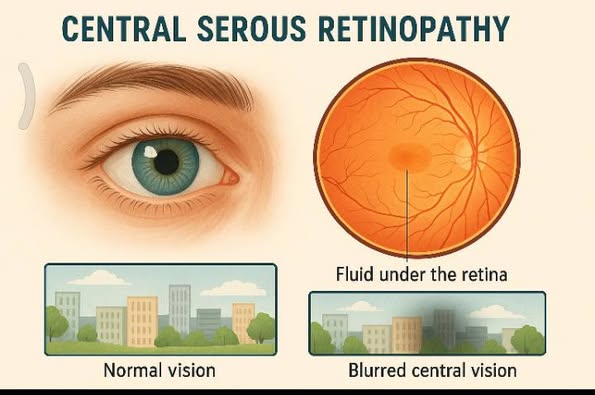
Central Serous Retinopathy, also known as Central Serous Chorioretinopathy, is an eye condition in which fluid accumulates under the retina, specifically beneath the macula. The macula is responsible for sharp, central vision needed for reading, driving, and recognizing faces.
The fluid leaks from the choroid, the layer of blood vessels under the retina. When fluid builds up, it causes the retina to lift slightly, which causes blurred or distorted central vision. Peripheral (side) vision usually remains unaffected, which is why many patients delay seeking medical help.
How Stress Affects Eye Health
The exact cause of CSR is not fully understood, but stress is a well-known trigger. Under stress, the body releases more cortisol, a natural steroid hormone. Steroid hormones, whether made by the body or taken as medicine, are strongly linked with CSR.
These hormonal changes are thought to make the choroidal blood vessels under the retina leaky. Fluid then passes through a weakened layer (the retinal pigment epithelium) and collects under the retina, causing visual symptoms.
Major life pressures, job stress, poor sleep and a driven, competitive personality are all linked with CSR.
Who Is Most at Risk of CSR?
Central Serous Retinopathy is more commonly seen in:
- Adults aged roughly 35 to 55
- People under a lot of stress at work or at home
- People with poor sleep or obstructive sleep apnoea
- People with high blood pressure
- Pregnant women
- People using steroids in any form (tablets, injections, inhalers, creams), or with Cushing syndrome
- People with anxiety or stress-related disorders
Men are affected more frequently than women, though CSR can occur in anyone.
Common Symptoms of Central Serous Retinopathy
The symptoms of CSR may develop suddenly and usually affect one eye, though both eyes can be involved.
Common symptoms include:
- Blurred or hazy central vision
- A dark or grey spot in the center of vision
- Straight lines appearing bent or wavy
- Objects appearing smaller or distorted
- Difficulty reading or focusing on fine details
- Colours looking washed out, and poor vision in dim light
These symptoms may come and go, and can get worse with stress or tiredness.
When Should You See an Eye Specialist?
Any sudden change in vision needs an eye check. See an ophthalmologist (eye doctor) soon, ideally within a day or two, if:
- Blurred or distorted central vision appears or lasts more than a day or two
- You notice a dark patch in the center of vision
- Straight lines appear wavy or bent
- Vision problems interfere with daily activities
Go to an emergency department straight away, or call 108 or 112, if you have sudden loss of vision, a curtain or shadow over your vision, or new flashes or floaters. These can be signs of other urgent eye problems.
An early diagnosis lets your eye doctor confirm it is CSR and not another condition, and track whether the fluid clears.
How Is CSR Diagnosed?
Central Serous Retinopathy is diagnosed through a dilated eye examination and special imaging tests.
Key diagnostic tests include:
- Optical Coherence Tomography (OCT): This scan provides a cross-sectional image of the retina and clearly shows fluid accumulation under the macula.
- Fundus Examination: Allows direct visualization of the retina.
- Fluorescein or ICG Angiography (in selected cases): A dye is injected into an arm vein and photos of the retina show where the fluid is leaking from.
OCT is the most commonly used and essential test for confirming CSR.
Treatment Options for Central Serous Retinopathy
Most cases clear on their own within about 3 to 6 months. Treatment is considered when the fluid lasts longer than this, keeps coming back, or vision loss is severe.
Observation and Lifestyle Modification
- Stress reduction
- Adequate sleep
- Avoidance of steroids (unless medically necessary)
- Regular follow-up with an eye specialist
Medical Management
Some tablets have been tried to reduce the fluid, but research has not shown that they work well, so they are not routinely recommended. Your doctor may also look at other medicines you take, such as steroids, and at conditions like high blood pressure.
Laser and Light Treatments
- Photodynamic therapy (PDT): a light-sensitive dye and a low-energy laser, used for CSR that does not settle
- Focal laser: sometimes used when the leak is away from the very centre of vision
- Micropulse laser: offered in some centres, but trials have not shown a clear benefit
Your ophthalmologist will decide the most appropriate treatment based on individual evaluation.
Can CSR Cause Permanent Vision Loss?
Most people regain good vision, often without treatment, though it may not be quite as sharp as before. CSR comes back in up to about half of people, and some develop it in the other eye. Long-lasting or repeated CSR can lead to permanent retinal damage, thinning of the retina and lasting blurred or distorted vision. Rarely, abnormal new blood vessels grow under the retina; these can be treated if found early.
This is why regular follow-up and lifestyle changes matter.
Preventing Recurrence of CSR
Although CSR cannot always be prevented, these steps may help lower the risk of it coming back:
- Managing stress effectively through relaxation techniques
- Maintaining regular sleep patterns
- Getting high blood pressure or sleep apnoea treated, if you have them
- Avoiding unnecessary steroid use (do not stop prescribed steroids without asking your doctor)
- Regular eye check-ups, especially after a previous episode
Importance of Regular Eye Check-Ups
Many retinal conditions, including CSR, may not cause pain or obvious symptoms initially. Regular eye examinations help detect subtle changes early and prevent complications.
If you have a stressful lifestyle or a history of CSR, routine eye check-ups are essential for maintaining healthy vision.
Eye Care at Chetna Hospital, Chinchwad
The eye care (ophthalmology) department at Chetna Hospital, Chinchwad has OCT scanning to help diagnose and monitor retinal conditions such as CSR.
The department provides full eye examinations and treatment plans for Central Serous Retinopathy and other retinal disorders. Contact Chetna Hospital for details.
Conclusion
Central Serous Retinopathy is a retinal condition linked with stress and steroid use. Most cases clear on their own, but early diagnosis, stress control and regular follow-up help protect long-term vision.
If you notice sudden blurred or distorted vision, see an eye doctor promptly.
Your eyes reflect your lifestyle—protect them with timely care and healthy habits.
To book an eye check-up with the eye care (ophthalmology) department at Chetna Hospital, Chinchwad, call 91686 90442.
General health information, not a diagnosis. Reviewed and updated by Chetna Hospital’s content team with the help of AI writing tools, November 2026.