Sudden blurring of vision, distortion of straight lines, or a dark spot appearing in the center of vision can be alarming—especially when it happens without pain. One such condition responsible for these symptoms is Central Serous Retinopathy (CSR). Often linked with stress and lifestyle factors, CSR commonly affects working professionals and individuals with high-pressure routines. Understanding this condition, its causes, symptoms, diagnosis, and treatment options can help in early detection and better visual outcomes.
This blog explains CSR in detail and highlights why stress management and timely consultation with an eye specialist are crucial for protecting vision.
What Is Central Serous Retinopathy?
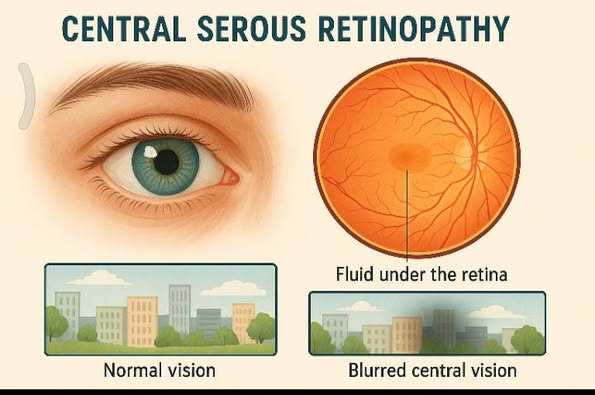
Central Serous Retinopathy, also known as Central Serous Chorioretinopathy, is an eye condition in which fluid accumulates under the retina, specifically beneath the macula. The macula is responsible for sharp, central vision needed for reading, driving, and recognizing faces.
When fluid builds up under this area, it causes the retina to lift slightly, leading to blurred or distorted central vision. Peripheral (side) vision usually remains unaffected, which is why many patients delay seeking medical help.
How Stress Affects Eye Health
Stress plays a significant role in the development of CSR. When the body is under constant mental or physical stress, it releases higher levels of cortisol, commonly known as the stress hormone. Elevated cortisol levels can affect blood vessels throughout the body, including those supplying the eye.
In CSR, stress-related hormonal changes can increase permeability in the choroidal blood vessels beneath the retina. This allows fluid to leak and collect under the retina, leading to visual symptoms.
People working in high-pressure environments, facing job stress, irregular sleep patterns, or emotional strain are more prone to developing CSR.
Who Is Most at Risk of CSR?
Central Serous Retinopathy is more commonly seen in:
- Young and middle-aged adults
- Individuals with high-stress occupations (IT professionals, businessmen, corporate employees)
- People working long hours or night shifts
- Individuals with poor sleep patterns
- Patients using steroids (oral, injectable, inhaled, or topical)
- People with anxiety or stress-related disorders
Men are affected more frequently than women, though CSR can occur in anyone.
Common Symptoms of Central Serous Retinopathy
The symptoms of CSR may develop suddenly and usually affect one eye, though both eyes can be involved.
Common symptoms include:
- Blurred or hazy central vision
- A dark or grey spot in the center of vision
- Straight lines appearing bent or wavy
- Objects appearing smaller or distorted
- Difficulty reading or focusing on fine details
- Reduced contrast sensitivity
These symptoms may fluctuate and sometimes improve temporarily, leading patients to ignore the condition.
When Should You See an Eye Specialist?
Any sudden change in vision should never be ignored. You should consult an ophthalmologist if:
- Blurred or distorted vision persists for more than a few days
- You notice a dark patch in the center of vision
- Straight lines appear wavy or bent
- Vision problems interfere with daily activities
Early diagnosis helps prevent long-term retinal damage and reduces the risk of recurrence.
How Is CSR Diagnosed?
Central Serous Retinopathy is diagnosed through a detailed eye examination and advanced imaging tests.
Key diagnostic tests include:
- Optical Coherence Tomography (OCT): This scan provides a cross-sectional image of the retina and clearly shows fluid accumulation under the macula.
- Fundus Examination: Allows direct visualization of the retina.
- Fluorescein Angiography (in selected cases): Helps identify the source of leakage.
OCT is the most commonly used and essential test for confirming CSR.
Treatment Options for Central Serous Retinopathy
In many cases, CSR resolves on its own within a few weeks to months. However, treatment depends on the duration, severity, and recurrence of the condition.
Observation and Lifestyle Modification
- Stress reduction
- Adequate sleep
- Avoidance of steroids (unless medically necessary)
- Regular follow-up with an eye specialist
Medical Management
In persistent cases, medications may be prescribed to reduce fluid leakage or control underlying risk factors.
Laser and Advanced Treatments
- Focal laser therapy
- Micropulse laser treatment
- Photodynamic therapy (PDT) in selected cases
Your ophthalmologist will decide the most appropriate treatment based on individual evaluation.
Can CSR Cause Permanent Vision Loss?
Most patients recover good vision if CSR is detected early and managed properly. However, chronic or recurrent CSR can lead to permanent retinal damage, thinning of the retina, and lasting vision distortion.
This makes timely diagnosis, regular monitoring, and lifestyle correction extremely important.
Preventing Recurrence of CSR
Although CSR cannot always be prevented, the risk of recurrence can be reduced by:
- Managing stress effectively through relaxation techniques
- Maintaining regular sleep patterns
- Limiting screen time and taking frequent breaks
- Avoiding unnecessary steroid use
- Regular eye check-ups, especially after a previous episode
Importance of Regular Eye Check-Ups
Many retinal conditions, including CSR, may not cause pain or obvious symptoms initially. Regular eye examinations help detect subtle changes early and prevent complications.
If you have a stressful lifestyle or a history of CSR, routine eye check-ups are essential for maintaining healthy vision.
Expert Eye Care at Chetna Hospital, Chinchwad
At Chetna Hospital, Chinchwad, advanced diagnostic facilities like OCT and expert ophthalmology care ensure accurate diagnosis and effective management of retinal conditions.
Dr. Rachana Tiwari Patil, Consultant Ophthalmologist and Phaco-Refractive Surgeon, provides comprehensive evaluation and personalized treatment plans for patients with Central Serous Retinopathy and other retinal disorders.
Conclusion
Central Serous Retinopathy is a stress-related retinal condition that can significantly impact vision if ignored. While many cases resolve naturally, early diagnosis, stress control, and expert guidance play a vital role in protecting long-term vision.
If you experience sudden blurred or distorted vision, do not delay. Consult an eye specialist promptly and take proactive steps to safeguard your eye health.
Your eyes reflect your lifestyle—protect them with timely care and healthy habits.