From the eye care (ophthalmology) department at Chetna Hospital
As we age, our eyes go through natural changes that can affect vision. Some changes are normal. Others may point to an eye condition that needs medical attention. Age-related vision problems are common, but with proper care many can be prevented, slowed or managed. This article looks at the most common age-related eye problems, their symptoms and practical steps you can take.
Understanding Age-Related Vision Problems
Good vision helps us read, move around safely and stay independent. Common vision problems that arise with age include:
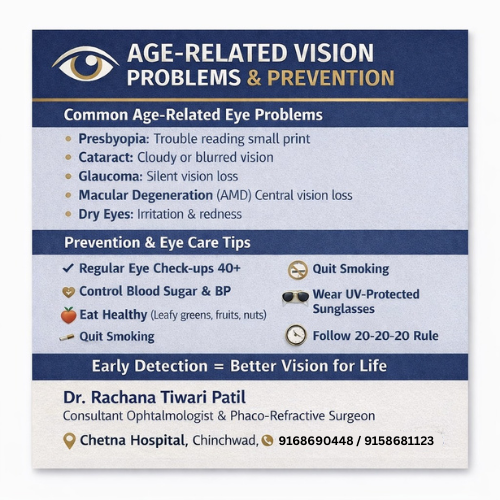
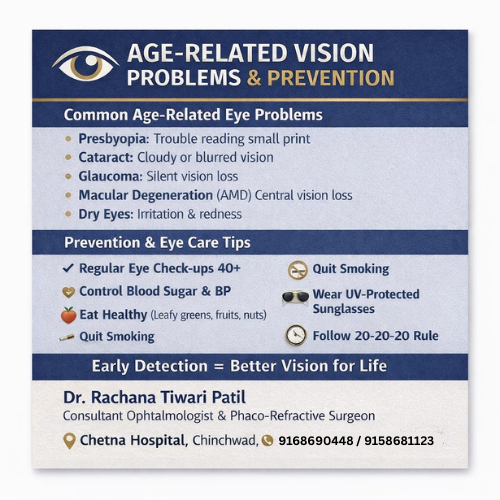
- Presbyopia – Difficulty focusing on close objects, usually starting in the 40s.
- Cataracts – Clouding of the eye’s lens, causing blurry vision, faded colours and glare.
- Glaucoma – A group of conditions that damage the optic nerve. It is often linked to raised pressure inside the eye, but it can happen with normal pressure too. Vision lost to glaucoma cannot be restored.
- Age-Related Macular Degeneration (AMD) – Damage to the central part of the retina (the macula), affecting sharp central vision.
- Diabetic Retinopathy – Damage to blood vessels in the retina caused by diabetes. Without treatment it can lead to serious vision loss.
These conditions can affect quality of life, so early detection and regular eye care matter.
Signs and Symptoms to Watch For
Early detection of vision problems is important. Watch for warning signs such as:
- Blurred or hazy vision
- Difficulty reading small print
- Colours looking faded
- Eye strain or headaches while reading
- Straight lines looking wavy, or dark or empty areas in your vision
- Glare or more sensitivity to light
If you notice any of these, see an eye doctor soon. Many eye conditions cause no symptoms early on, so regular eye check-ups can find problems before you notice them.
Go to an emergency department straight away, or call 108 or 112, if you have sudden loss of vision, a shadow or curtain across your vision, a sudden shower of new floaters or flashes, or a painful red eye with nausea.
Common Age-Related Vision Problems
1. Presbyopia
Presbyopia happens when the eye’s lens becomes less flexible, making it hard to focus on nearby objects. People often find they need to hold reading material further away, or they get eye strain.
Management:
- Use reading glasses, bifocals or varifocals as prescribed
- Use good lighting while reading
- Take regular breaks from close work to ease strain
2. Cataracts
Cataracts develop slowly, causing blurred or dim vision. They can also make colours look faded, cause glare or halos around lights, and make seeing at night harder.
Prevention & Management:
- Protect eyes from UV light with sunglasses and a brimmed hat
- Eat plenty of fruits, vegetables and leafy greens
- Avoid smoking and limit alcohol
- Early on, brighter lighting or new glasses may help. Surgery, which replaces the cloudy lens, is usually advised when the cataract affects daily activities such as reading or driving
3. Glaucoma
The most common type of glaucoma often has no symptoms at first. Side (peripheral) vision is usually affected first, so many people do not notice it until damage is done. Risk is higher over 60 and if a close family member has glaucoma.
Detection & Management:
- Regular eye checks, including eye pressure and optic nerve tests
- Treatment prescribed by an eye doctor, usually eye drops to lower eye pressure
- Laser treatment or surgery when drops are not enough
- Treatment can slow or stop further damage but cannot bring back lost vision
4. Age-Related Macular Degeneration (AMD)
AMD affects the macula, the part of the retina responsible for sharp central vision. It is a common cause of vision loss in older adults. It does not affect side vision.
Prevention & Management:
- Eat leafy greens, fish and a varied, healthy diet
- Avoid smoking
- Regular eye exams to monitor retinal health
- For the “wet” type, injections into the eye can help slow vision loss. There is no treatment yet that reverses the “dry” type
5. Diabetic Retinopathy
This condition is a complication of diabetes and can cause vision loss if left untreated. It damages retinal blood vessels and may lead to bleeding or swelling.
Prevention & Management:
- Keep blood sugar, blood pressure and cholesterol under control
- Have a diabetic eye screening at least once a year
- Laser treatment, eye injections or surgery when an eye doctor finds damage that needs treatment
Lifestyle Habits for Eye Health
A healthy lifestyle can lower the risk of some age-related vision problems:
- Balanced Diet: Include fruits, vegetables, nuts and fish.
- Eye Protection: Wear sunglasses with UV protection when outdoors.
- Regular Exercise: Staying active supports your general health and helps control diabetes and blood pressure, which affect the eyes.
- Avoid Smoking: Smoking raises the risk of cataracts and AMD.
- Proper Screen Habits: Follow the 20-20-20 rule: every 20 minutes, look at something 20 feet away for 20 seconds.
Importance of Regular Eye Check-Ups
Many age-related eye problems develop without early symptoms. Regular eye examinations can find them early, when treatment can help protect vision. The eye care department at Chetna Hospital suggests:
- A full eye check by age 40, then every 1–2 years (or as your eye doctor advises), and every 1–2 years after 60
- More frequent checks for people with diabetes, high blood pressure, or a family history of eye disease
- A full exam can include a vision test, eye pressure measurement, a dilated check of the retina, retinal imaging and slit-lamp examination
Early detection allows timely treatment, which can reduce complications and help protect vision.
Eye Exercises for Eye Comfort
Simple eye exercises may ease tired eyes during long reading or screen sessions:
- Focus Shifts: Switch focus between near and far objects.
- Palming: Rest closed eyes under your palms for a short break.
- Blinking: Blink fully and often, especially at screens, to keep the eyes moist.
Eye exercises do not improve eyesight and cannot prevent or reverse cataracts, glaucoma, AMD or presbyopia. They only help with comfort.
Role of Technology in Eye Care
Modern tests and treatments help find and manage vision problems:
- Retinal Imaging & OCT: Can show early signs of glaucoma, AMD and diabetic retinopathy.
- Laser Treatments: Used for some types of glaucoma and diabetic retinopathy.
- Telemedicine: Remote consultations can help with some follow-ups, but they do not replace an in-person eye exam.
The eye care department at Chetna Hospital provides eye tests and treatment for these conditions.
Choosing an Eye Specialist
Look for a qualified ophthalmologist (eye doctor) and keep up with regular care. Good eye care usually includes:
- Care planned around your own eye health
- Regular follow-ups to monitor any condition
- Lifestyle changes, medical treatment and surgery when needed
Preventive Tips at a Glance
Here’s a quick checklist for keeping your eyes healthy as you age:
- Get full eye exams regularly
- Eat a healthy, varied diet
- Protect eyes from UV rays with sunglasses
- Avoid smoking and manage long-term conditions like diabetes
- Take screen breaks and follow the 20-20-20 rule
- Stay physically active
- Take supplements only on a doctor’s advice
These simple steps can help protect your vision. To book an eye check-up, call 91686 90442.
General health information, not a diagnosis. Reviewed and updated by Chetna Hospital’s content team with the help of AI writing tools, November 2026.