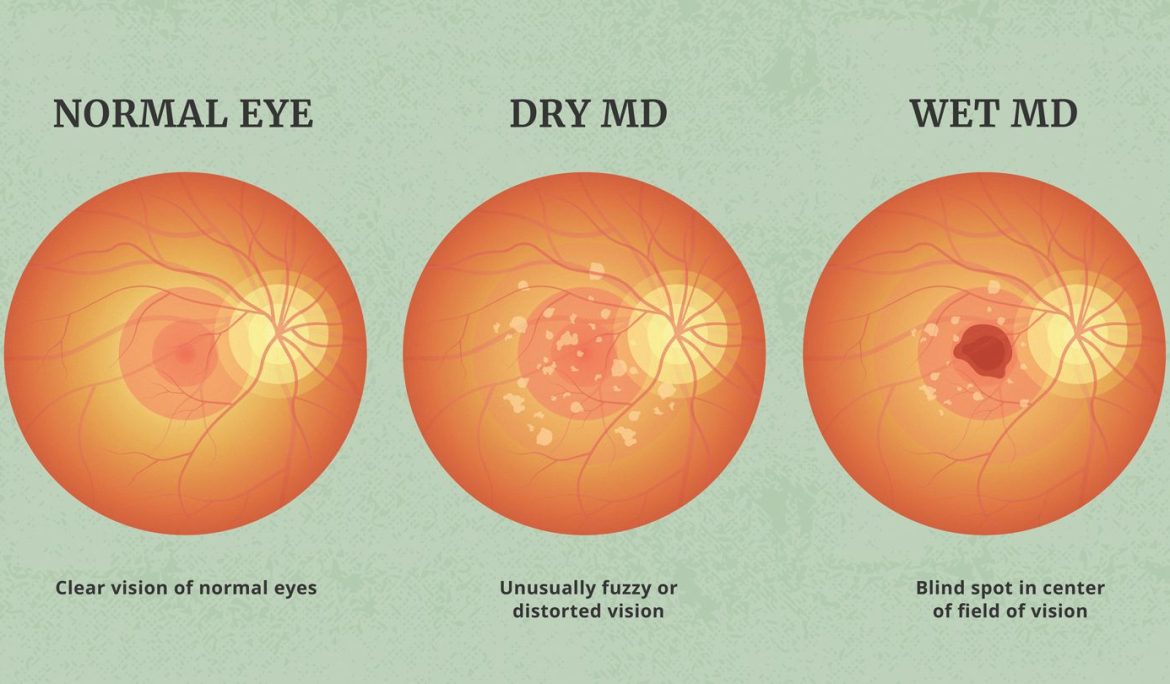
Age-related macular degeneration (AMD) is a long-term eye condition and a common cause of sight loss in people over 50. It affects the macula, the central part of the retina that gives sharp, detailed vision. AMD affects central vision. It does not cause total blindness, but it can make reading and recognising faces hard. Healthy habits and, for some types, treatment can help slow it down. Here is a guide to managing AMD and lowering your risk.
What Is Age-Related Macular Degeneration?
AMD comes in two forms: dry and wet. The dry form is more common and progresses slowly, causing gradual vision loss. Wet AMD, while less common, leads to faster deterioration due to abnormal blood vessel growth under the retina. There is no treatment that reverses AMD, but treatment for wet AMD and healthy lifestyle changes can help.
Prevention Strategies for AMD
1. Maintain a Healthy Diet
A balanced diet is part of a healthy lifestyle that may lower your risk of AMD. Include green leafy vegetables, fruit, nuts and fish. Supplements have not been shown to prevent AMD from starting.
2. Quit Smoking
Smoking raises the risk of AMD. Stopping smoking is one of the most useful things you can do for your eyes as you age. High blood pressure and being overweight are also linked to AMD, so regular exercise and a healthy weight help too.
3. Protect Your Eyes from UV Light
Sunlight (UV light) exposure has been linked to AMD, and some evidence suggests sunglasses may help protect the eyes once AMD is found. Sunglasses that block UVA and UVB light and a hat with a brim reduce the sunlight reaching your eyes.
4. Regular Eye Checkups
Early AMD often has no symptoms, so regular eye tests matter, especially after 50. An eye test can find AMD before you notice changes. Ask your eye doctor how often you should be checked.
Treatment Options for AMD
1. Anti-VEGF Injections
Wet AMD is usually treated with anti-VEGF injections into the eye. VEGF (vascular endothelial growth factor) makes abnormal blood vessels grow. Blocking it helps stop these vessels growing and leaking. The injections are usually repeated every 1 to 2 months at first.
According to the NHS, these injections stop vision getting worse in most people, and improve it in some.
2. Laser Therapy
Laser treatment to seal leaking blood vessels was used for wet AMD in the past. Today it is used only rarely, in a few specific cases, because injections are the main treatment.
3. Photodynamic Therapy
This treatment uses a light-sensitive medicine that is activated by a special light to close abnormal blood vessels. It may be used alongside injections for some people. It does not usually bring back sight that has been lost.
4. Supplements and Medications
There is no treatment for dry AMD itself. Large studies (AREDS and AREDS2) found that a specific vitamin and mineral combination can slow AMD in people who already have intermediate AMD, or late-stage AMD in one eye. It does not help early AMD and does not prevent AMD. Some versions are not suitable for people who smoke or used to smoke. Do not start supplements without asking your eye doctor.
Lifestyle Changes to Manage AMD
1. Regular Exercise
Regular exercise, such as walking, is part of the healthy lifestyle linked with a lower risk of AMD.
2. Monitor Your Vision
People with AMD may be asked to check their vision at home with an Amsler grid (a square grid of lines). It helps you notice changes such as wavy or missing lines. If your vision suddenly gets worse, straight lines look wavy, or you see a dark shadow or curtain over your vision, get your eyes checked the same day. If you cannot, go to an emergency department straight away or call 108 or 112.
3. Manage Other Health Conditions
High blood pressure is linked to AMD. Keeping conditions like high blood pressure and diabetes under control is good for your eyes and your general health.
Conclusion
AMD affects central vision but does not cause total blindness. Healthy habits, regular eye tests and quick treatment for wet AMD can help protect your sight. Low vision aids can help with daily tasks. If you or a loved one is worried about AMD, the eye care (ophthalmology) department at Chetna Hospital can check your eyes. Call 91686 90442 to book a check-up.
General health information, not a diagnosis. Reviewed and updated by Chetna Hospital’s content team with the help of AI writing tools, November 2026.