Diabetic foot treatment in Chinchwad, PCMC starts with one habit: look at both feet every day, because a wound in diabetes often does not hurt. Get a same-day check for any foot wound with spreading redness, swelling, pus, a change in skin colour or fever.
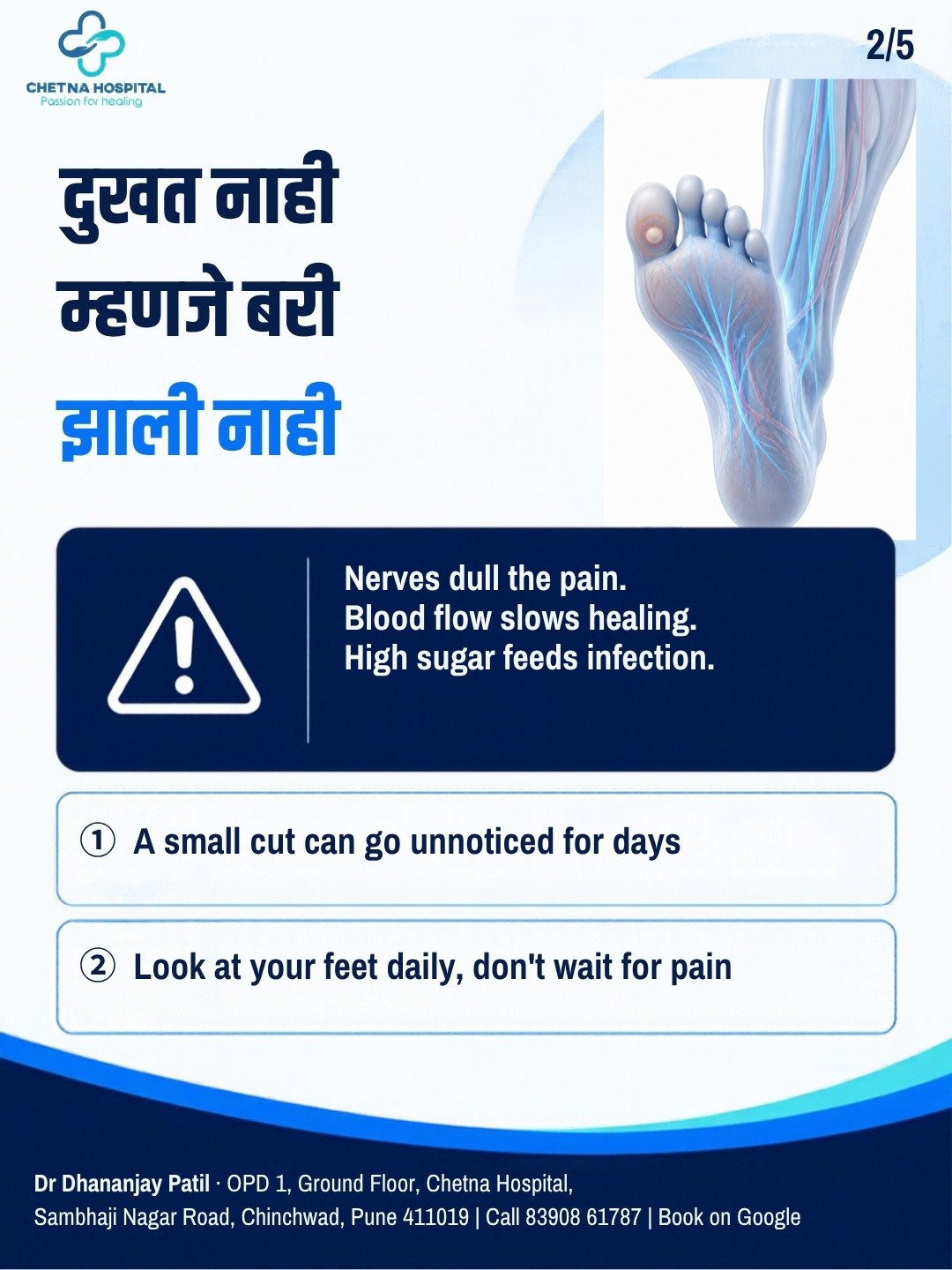
“But it doesn’t even hurt.” Many people with diabetes say this when they show a foot wound. The lack of pain is the reason the wound was ignored, and it is also the warning sign. In diabetes, pain is not a reliable alarm for the feet.
Diwali falls on 8 November this year, and many families buy new chappals and shoes for it. World Diabetes Day follows on 14 November, with the theme “Early action on diabetes” (WHO). Both are a good reason to start a daily foot check at home.
OPD 1, Ground Floor, Chetna Hospital, Sambhaji Nagar Road, next to Pimpri Chinchwad Sahakari Bank, Sambhajinagar, Chinchwad, Pune 411019
Three reasons a diabetic foot wound stays quiet
The nerves stop warning you
Long-standing high sugar can damage the nerves in the feet (peripheral neuropathy). The foot may feel numb, tingly or “like walking on cotton”. A stone in the chappal or a hot floor may not be felt at all. The CDC notes that loss of feeling means a cut, blister or sore can go unnoticed.
Blood flow slows healing
Diabetes can also reduce the blood flow to the feet. The CDC notes that less blood flow and numbness can slow healing, so a small cut takes longer to close.
Slow healing lets infection in
With less blood and oxygen reaching the feet, wounds may not heal and can get infected much more easily, says the NHS (My Diabetes My Way). The Cardiff and Vale NHS podiatry team lists poor blood sugar control, infection and smoking among the things that slow healing. My Diabetes My Way advises checking, washing and moisturising your feet every day so problems are caught early.
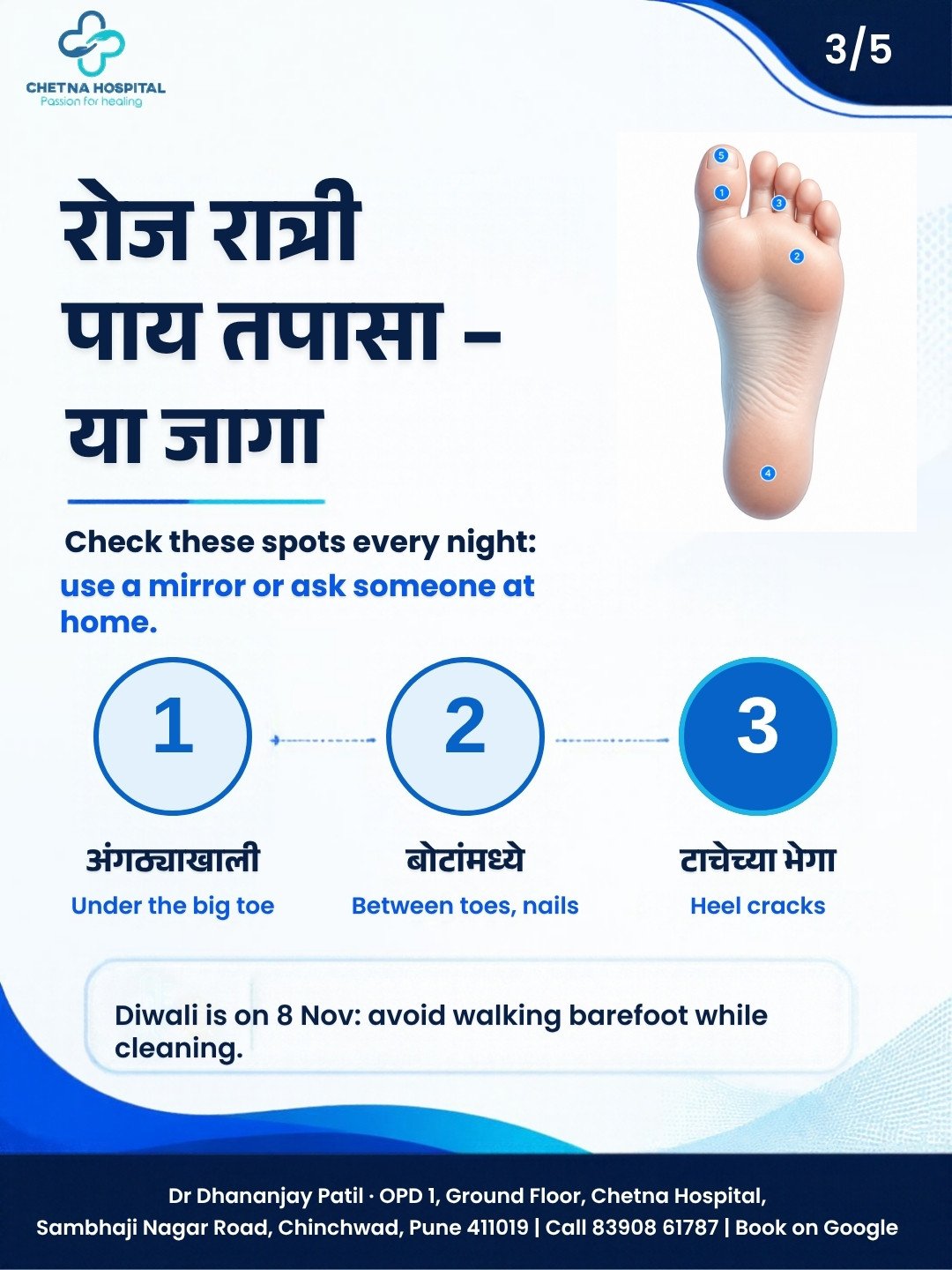
The two-minute foot check, every day
- Under the big toe and the ball of the foot.
- Between the toes: look for cracks or soft, broken skin, and dry well here after washing.
- The heels: deep cracks can open into wounds.
- Nail corners: look for redness or a nail edge pressing into the skin.
- Any change in skin colour, especially under hard skin, and any blister or break in the skin.
- Use a mirror or ask someone at home if bending is hard or eyesight is weak.
Wash the feet in warm, not hot, water and test the water with your elbow first, because the feet may not feel heat well. Do not soak the feet for long. Dry them carefully, especially between the toes, and avoid walking barefoot, even inside the house. The Kent Community Health NHS footcare advice and the Royal Devon NHS footcare page both ask people with diabetes to inspect their feet daily.
New footwear for Diwali
New chappals and shoes can rub before they soften. The ICMR Guidelines for Management of Type 2 Diabetes advise people with diabetes not to wear new footwear for more than a few hours a day, to check footwear daily for defects or anything inside, and not to walk barefoot. NHS footcare advice suggests wearing new footwear at home first and checking for rubs after half an hour.
Save these slides
These are slides from our Instagram post. Share them with anyone at home who has diabetes.
Routine check or same-day visit?
| Ask for a routine foot check | Come the same day |
|---|---|
| Dry, cracked heels | Redness or swelling that is spreading |
| Tingling, burning or numb toes | Pus, a new smell, or fluid or blood staining the sock |
| A corn or thick hard skin | A change in skin colour |
| Shoes or chappals that leave red marks | Fever, chills, feeling unwell, or sugar high for no clear reason |
| Toenails that are hard to reach or cut | Any new wound, blister or break in the skin |
A change on the foot needs a prompt check even if there is no pain at all. The Queen Elizabeth Hospital King’s Lynn NHS diabetes team notes that foot problems in diabetes can get worse within hours. The Royal Devon NHS podiatry team says a foot injury with reduced feeling or blood flow can be a medical emergency, and advises going to the nearest emergency department out of hours. In an emergency, call 108 or 112.
What happens at the first visit
The ICMR guidelines describe a foot check that looks at the skin, nails and shape of the foot and at the footwear, feels the pulses in both feet, and tests the feeling in the foot. Foot ulcer care can include pressure relief on the ulcer, dressings, infection control and advice on blood sugar control, says the Cardiff and Vale NHS podiatry team. The ICMR guidelines advise that a foot ulcer is referred to a foot care team within 24 hours, and that antibiotics are started straight away if there are signs of infection. A severe infection needs urgent admission to hospital, the guidelines add.
Other surgical care at Chetna Hospital
The general surgery OPD covers general surgery at Chetna Hospital, including laparoscopic surgery in Chinchwad. Recent guides on this site cover hernia treatment in Chinchwad, anal fistula treatment in Chinchwad, piles and fissure during festival fasting and when a kidney stone needs a procedure.
Where can you get diabetic foot care in Chinchwad, PCMC?
The general surgery department sees patients at OPD 1, Ground Floor, Chetna Hospital, Sambhaji Nagar Road, next to Pimpri Chinchwad Sahakari Bank, Sambhajinagar, Chinchwad, Pune 411019. Please call before you come to confirm OPD timings. Patients come from Chinchwad, Pimpri, Akurdi, Nigdi, Ravet, Wakad, Hinjewadi, Pimple Saudagar, Thergaon, Tathawade, Punawale, Moshi and Bhosari.
Frequently asked questions
Why does a diabetic foot wound not hurt?
Diabetes can damage the nerves in the feet, which dulls the feeling of pain. Poor blood flow also slows healing. So a blister, crack or cut can grow or get infected without hurting much.
How often should a person with diabetes check their feet?
Every day. Look under the big toe, the ball of the foot, between the toes, the heels and the nail corners. Use a mirror or ask a family member if bending is hard.
When does a diabetic foot wound need a doctor the same day?
Come the same day if redness or swelling is spreading, there is pus or a new smell, the skin changes colour, you have fever or feel unwell, or your sugar is high for no clear reason. Any new wound, blister or break in the skin also needs a check, even if it does not hurt.
Can I remove a corn at home if I have diabetes?
No. Do not cut corns or hard skin with a blade and avoid corn plasters or very hot water. Small injuries from home treatment can turn into wounds that heal slowly in diabetes. Ask a doctor or podiatrist about corns.
Where can I get diabetic foot treatment in Chinchwad, PCMC?
The general surgery department at Chetna Hospital sees patients at OPD 1, Ground Floor, Chetna Hospital, Sambhaji Nagar Road, Chinchwad, Pune 411019. The same OPD also sees hernia, piles, fistula, gallbladder and kidney stone problems. Call or WhatsApp 83908 61787.
OPD 1, Ground Floor, Chetna Hospital, Sambhaji Nagar Road, next to Pimpri Chinchwad Sahakari Bank, Sambhajinagar, Chinchwad, Pune 411019
Sources
- Indian Council of Medical Research. ICMR Guidelines for Management of Type 2 Diabetes 2018 (section 8.7, diabetic foot).
- World Health Organization. World Diabetes Day 2026: Early action on diabetes.
- Centers for Disease Control and Prevention. Diabetes and healthy feet.
- NHS Scotland, My Diabetes My Way. Feet.
- Kent Community Health NHS Foundation Trust. Diabetes footcare advice.
- The Queen Elizabeth Hospital King’s Lynn NHS Foundation Trust. I’m worried about my foot: is it serious?
- Cardiff and Vale University Health Board (NHS Wales). Podiatry: foot ulcer.
- Royal Devon University Healthcare NHS Foundation Trust. Footcare and diabetes.
How this article was prepared: Chetna Hospital’s content team wrote it with the help of AI writing tools and checked it against the sources listed. It is general health information, not personal medical advice.