A black mehendi allergy is a skin reaction to PPD, a hair-dye chemical added to “black” or “instant” mehendi. The first signs are itching or burning along the design, then redness, swelling or blisters, often within one to two days. See a dermatologist the same day if blisters, oozing or face swelling appear.
Dermatology, Chetna Hospital, Chinchwad
Ground Floor, OPD 1, Chetna Hospital, Plot No GP 116, Sambhaji Nagar Road, near Rotary Club, G Block, MIDC, Chinchwad, Pimpri-Chinchwad, Pune 411019
Key takeaways
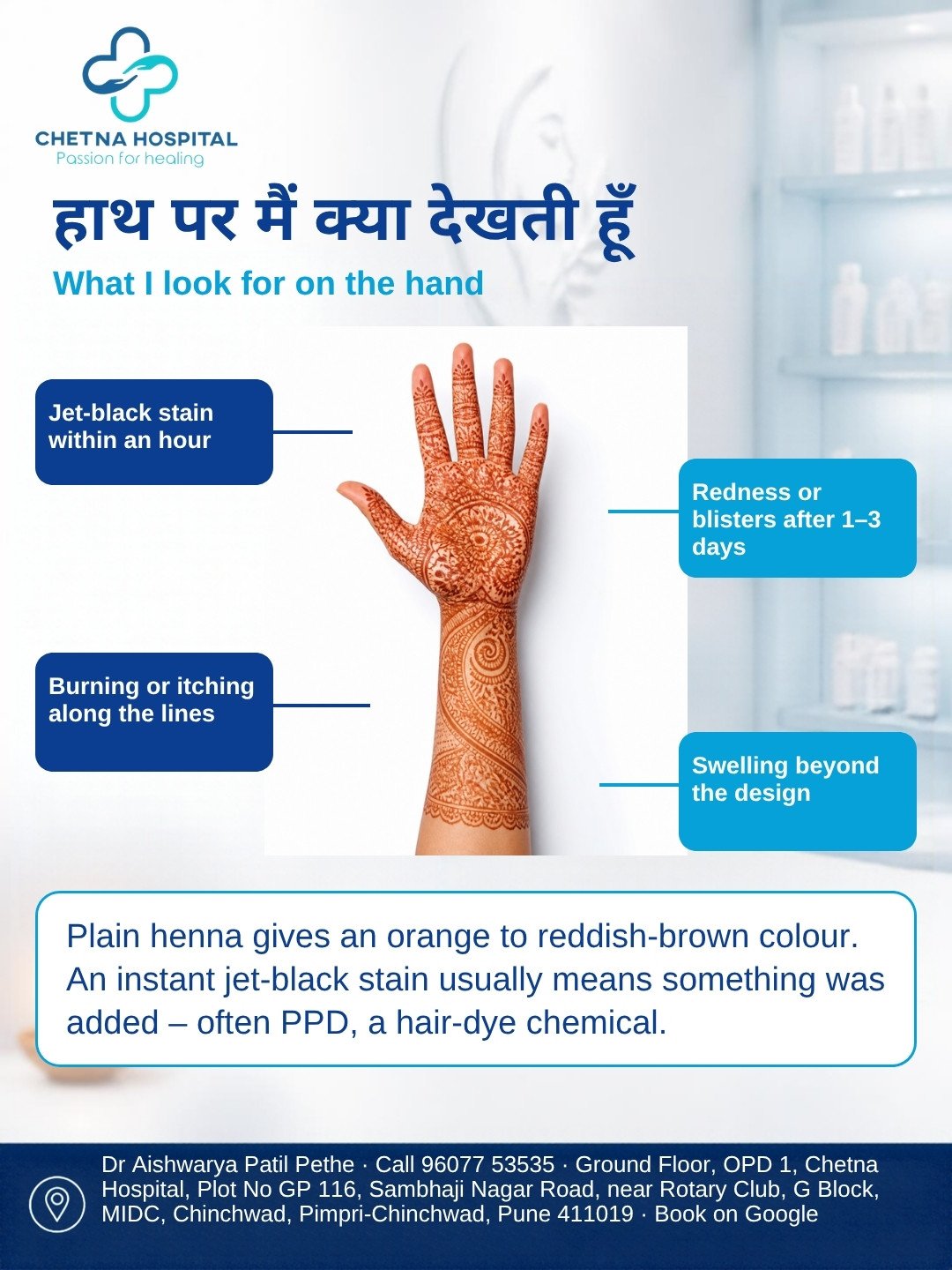
- Plain henna stains orange-brown to reddish-brown and takes hours to darken. A very dark black paste that sets very quickly is a warning sign.
- Itching or burning along the lines is often the first sign of a black mehendi allergy.
- Wash off any paste with plain water and a mild soap. Skip lemon, toothpaste and home pastes.
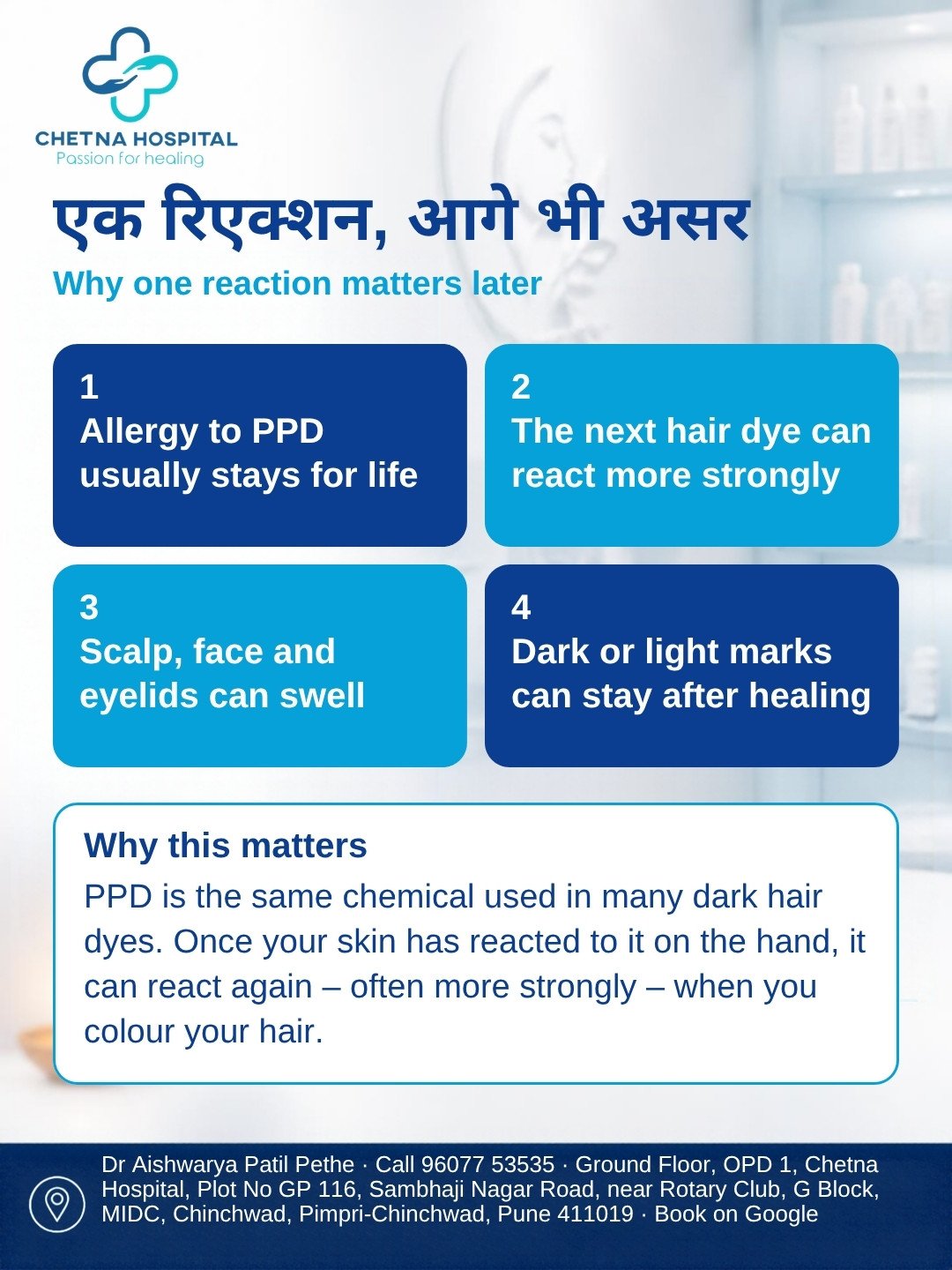
- One reaction can make dark hair dyes unsafe for you later.
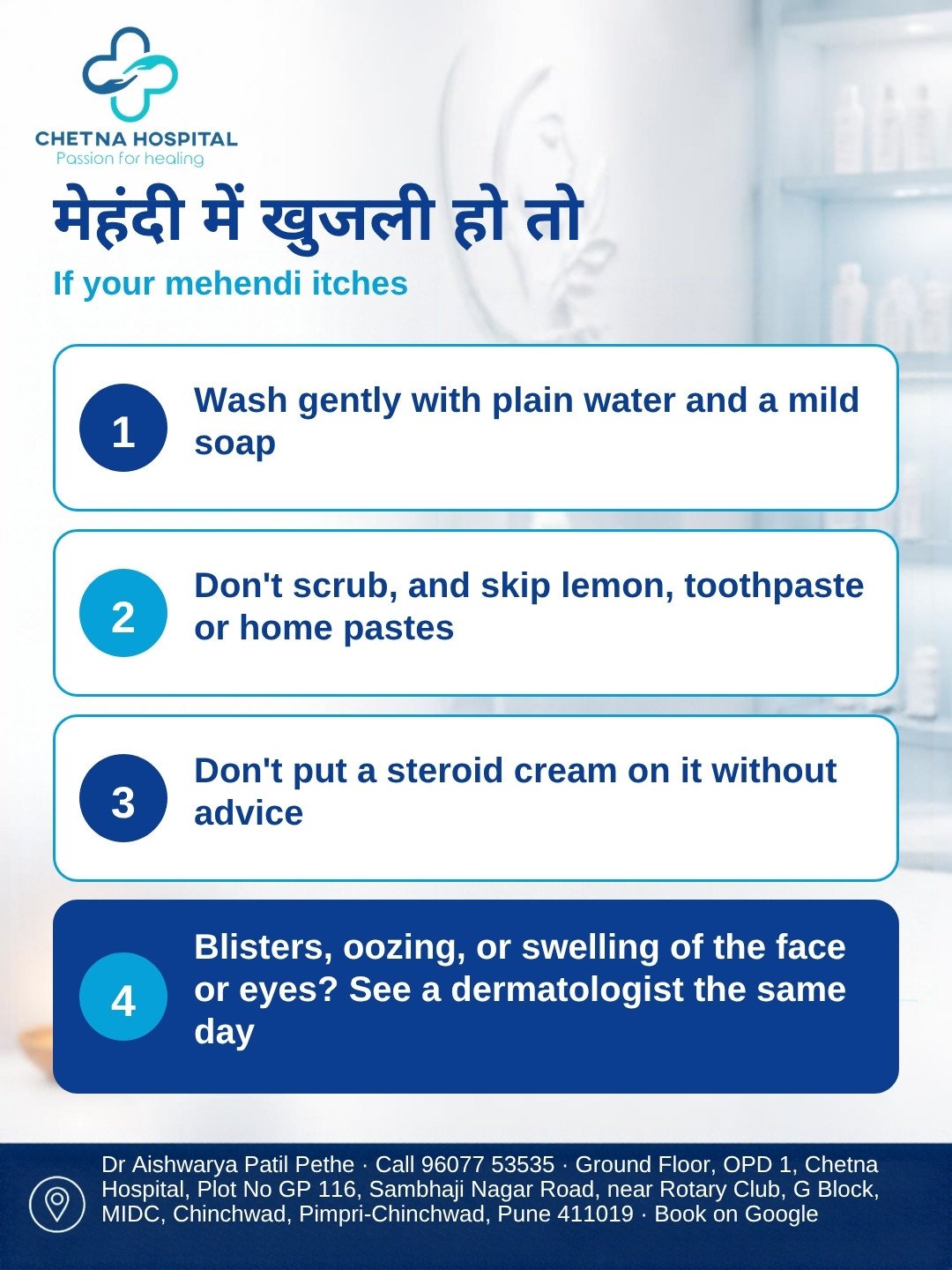
- Blisters, oozing or face swelling need a dermatologist the same day.
In this article
- What it looks like
- Why black mehendi reacts
- The first 48 hours
- Hair dye later
- Safer mehendi for festivals and weddings
- Slides to save and share
- When it is urgent
- Questions patients ask
Last updated 6 November 2026
During festivals and weddings, many people say the same thing about their mehendi: it is “just a little itchy”. The design looks lovely and very dark. However, the skin under it may be red and raised along every line.
The dermatology department at Chetna Hospital, Chinchwad, sees this kind of reaction. The itch is worth taking seriously, because a black mehendi allergy does not always stay on the hand, and it can affect how your skin reacts to hair dye later.
Diwali falls on 8 November this year, and mehendi is part of many celebrations and weddings in the weeks around it.
What does a black mehendi allergy look like?
Natural henna is a plant dye. It stains the skin orange-brown to reddish-brown, and Health Canada notes that natural henna paste must set for many hours to darken fully. The US FDA notes that “black henna” often contains PPD, a coal-tar hair dye that US law does not allow in cosmetics meant for the skin. As a result, a paste that is very dark black, sets very quickly or has little smell should make you pause.
Watch for these signs:
- Itching, stinging or burning that follows the exact lines of the design.
- Raised, red skin under the pattern.
- Blisters or oozing, often within one to two days.
- Swelling or pain that spreads past the edge of the design.
Why does black mehendi react when plain henna usually doesn’t?
PPD can cause serious allergic reactions on the skin. The first contact can quietly sensitise the skin without any rash. Then, on a later contact, the reaction shows up and can be stronger. DermNet describes intense blistering within one to two days after a black henna tattoo. Health Canada says reactions to PPD can appear 1 to 14 days after it touches the skin. That is why someone who used the same kind of cone last year without trouble can react this year.
Indian dermatologists have described the same pattern. A report in the Indian Journal of Dermatology, Venereology and Leprology notes that PPD is added to henna to give a darker colour, and that people sensitised this way may later react to hair colour too.
What should you do in the first 48 hours of a black mehendi allergy?
- Wash off any paste left on the skin gently with plain water and a mild soap.
- Do not scrub, and skip lemon, toothpaste, sugar or home pastes.
- Do not put a steroid cream on it without a doctor’s advice.
- Take a clear photo, and keep the cone or its packet if you have it.
At the clinic, the dermatologist first checks how deep and how wide the reaction goes, and then decides on the treatment.
Does a black mehendi allergy affect hair dye later?
Yes, it can. After a PPD reaction, DermNet says lifelong sensitisation is likely. So the next dark hair dye can cause swelling of the scalp, face and eyelids. The NHS says you may be more at risk of a hair dye reaction if you have ever had a black henna tattoo. A 2017 paper on PPD allergy also names temporary henna tattoos as an important source of this sensitisation, particularly in children. Tell your hairdresser, and ask a dermatologist before you colour your hair again.
How can you enjoy mehendi safely during the festive and wedding season?
- Choose plain henna that stains orange-brown to reddish-brown.
- Ask the artist what is in the cone, and skip anything sold as “black” or “instant”.
- If you reacted before, tell the artist before the design starts, and avoid black mehendi completely.
- Keep children away from black mehendi.
Slides to save and share
When is a black mehendi allergy an emergency?
See a dermatologist the same day if you notice any of these:
- Blisters that keep spreading, or skin that oozes.
- Pus or fever, which can mean the skin has become infected.
- Swelling of the face or eyelids.
Trouble breathing, a tight throat, or sudden swelling of the lips, mouth or tongue needs the emergency department straight away. Also read why self-treating acne often backfires, and our guide to early vitiligo signs.
Where can you get black mehendi allergy care in Chinchwad?
Chinchwad: the dermatology department, Ground Floor, OPD 1, Chetna Hospital, Plot No GP 116, Sambhaji Nagar Road, near Rotary Club, G Block, MIDC, Chinchwad, Pimpri-Chinchwad, Pune 411019. Call 96077 53535. Directions
Patients visit from Chinchwad, Pimpri, Akurdi, Nigdi, Ravet and Wakad. Others come from Hinjewadi, Pimple Saudagar, Thergaon, Tathawade, Punawale, Moshi and Bhosari.
Black mehendi allergy: questions patients ask
How soon does a black mehendi allergy show?
It can show anywhere from one day to about two weeks after the paste touches the skin. Strong reactions often blister within one to two days.
Is natural henna safe for most people?
Plain henna is a plant dye, and allergic reactions to it are uncommon, although they do happen. Products sold as henna can still have added chemicals, so skip any cone sold as black or instant, and stop if the skin starts to itch.
Can I put toothpaste or lemon on a mehendi reaction?
No. Do not put toothpaste, lemon or home pastes on the reaction. Instead, wash off any paste gently with plain water and a mild soap, and see a dermatologist.
Will a black mehendi allergy leave marks?
Sometimes. Darker or lighter patches can follow once the skin heals, especially where blisters formed, and lighter patches can take more than six months to fade. A dermatologist can advise on care of the healing skin.
Where can I consult a dermatologist for a black mehendi allergy in Chinchwad?
The dermatology department at Chetna Hospital sees patients at Ground Floor, OPD 1, Chetna Hospital, Sambhaji Nagar Road, Chinchwad. Call 96077 53535.
Have a question about a skin reaction? Talk to the dermatology department.
Ground Floor, OPD 1, Chetna Hospital, Plot No GP 116, Sambhaji Nagar Road, near Rotary Club, G Block, MIDC, Chinchwad, Pimpri-Chinchwad, Pune 411019
Sources
- US FDA: Temporary tattoos, henna/mehndi and black henna fact sheet
- Health Canada: Black henna temporary tattoos
- NHS: Hair dye reactions
- DermNet: Allergy to paraphenylenediamine
- Mukkanna KS, Stone NM, Ingram JR. Para-phenylenediamine allergy: current perspectives on diagnosis and management. Journal of Asthma and Allergy, 2017
- Rai VM, Shenoi SD. Pseudo-tattoo dermatitis. Indian Journal of Dermatology, Venereology and Leprology, 2006
Disclaimer: This article is for general awareness. It does not replace a medical consultation. Please see a doctor for advice about your own skin.
How this article was prepared: Chetna Hospital’s content team wrote it with the help of AI writing tools and checked it against the sources listed. It is general health information, not personal medical advice.