Ringworm not going away is usually not bad luck. It often follows a mixed cream with a steroid, or stopping the medicine once the itch settles. So see a dermatologist if the patch is still there after two weeks of cream, or if it keeps spreading.
Dermatology, Chetna Hospital, Chinchwad, PCMC
Ground Floor, OPD 1, Chetna Hospital, Plot GP 116, Sambhaji Nagar Road, near Rotary Club, G Block, MIDC, Chinchwad, Pune 411019
Key takeaways
- A cream that mixes a steroid with an antifungal can hide ringworm and help it spread.
- The itch settles before the fungus is gone, so finish the full course.
- Family members, towels and clothes often carry it back.
- Lemon, toothpaste or bleach only burn the skin.
- See a dermatologist if a patch lasts beyond two weeks of cream.
In this article
- Why it keeps coming back
- Four common myths about daad
- What actually helps
- Slides to save and share
- When to worry
- Questions patients ask
Last updated 16 November 2026
“I have used three creams. It goes for a week, then it comes back bigger.” Skin specialists hear this often. Sweat, layered winter clothes, long hours in tight clothes at the gym or during the wedding season all help ringworm, or daad, spread fast in homes and hostels.
Below are four common beliefs, and the facts behind them, from the dermatology team in Chinchwad at Chetna Hospital.
Why is my ringworm not going away?
Ringworm is a fungal infection of the top skin layer, not a worm. It looks like a red, itchy ring with a clearer centre, often on the groin, waist or thighs.
In most cases, ringworm not going away has a simple reason. For example, the cream was wrong, the course was too short, or the fungus came back from someone at home. However, there is a newer problem too. A strain called Trichophyton indotineae has spread in South Asia, and doctors find it often does not respond to a commonly used antifungal tablet. So getting the plan right matters.
Four myths behind ringworm not going away
Myth 1: A mixed cream works faster
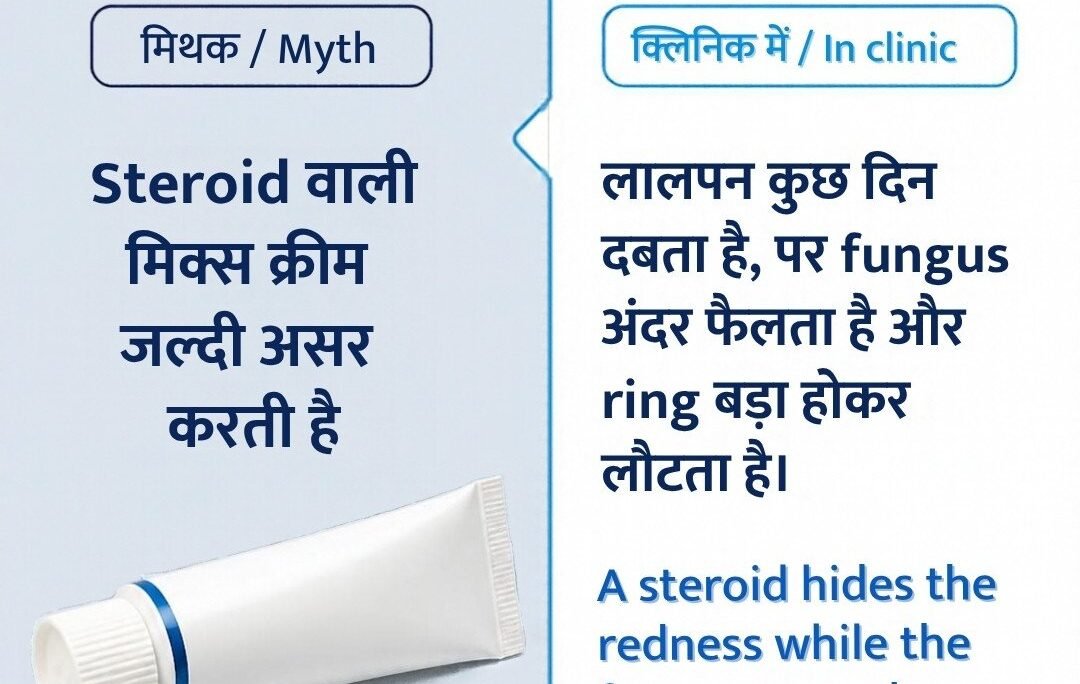
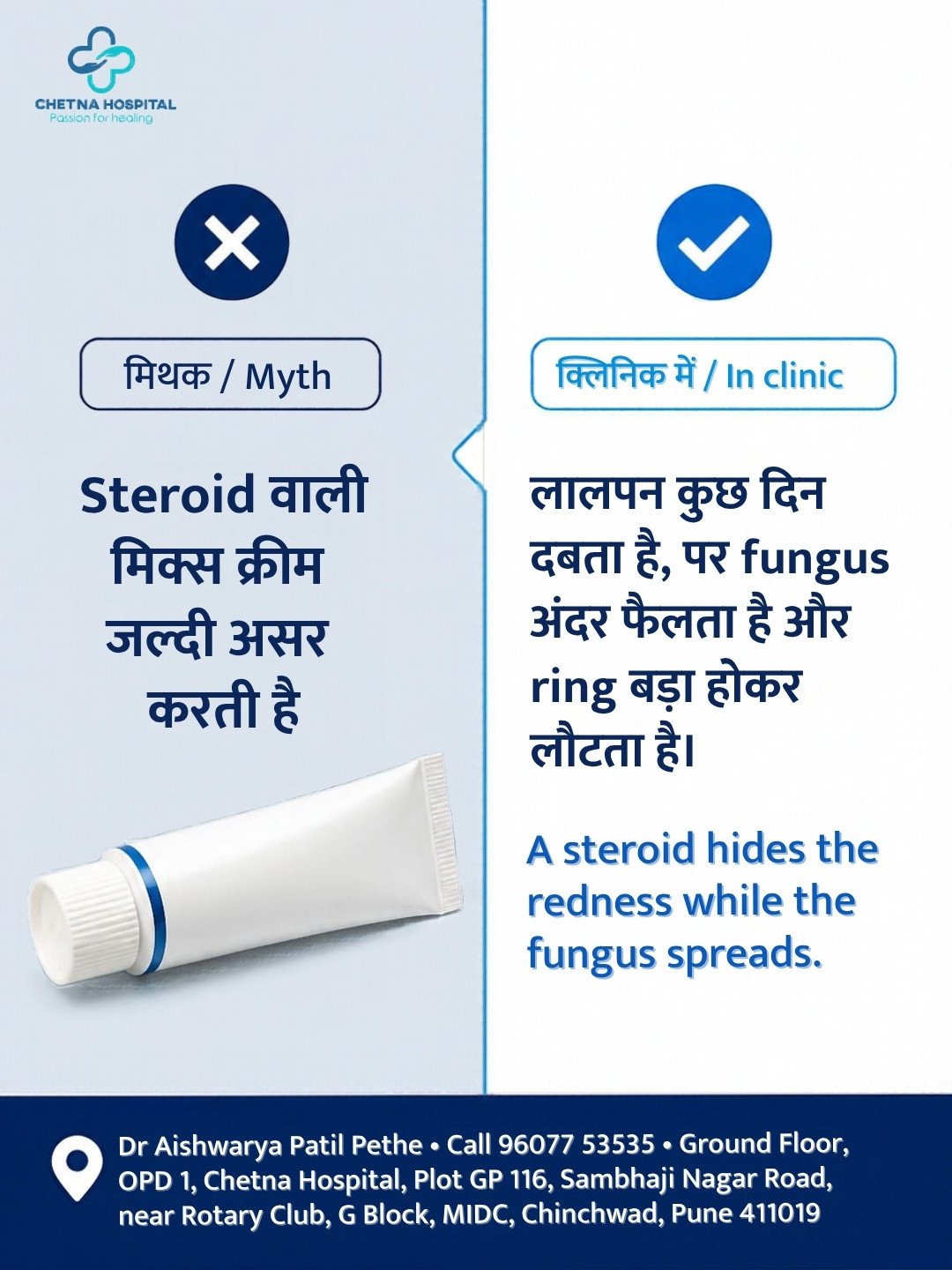
Many chemist creams combine a steroid, an antifungal and an antibiotic. The steroid calms the redness, so the skin looks better within days. Meanwhile, the fungus keeps growing under it. Then the ring returns wider and the skin becomes thin. This is a common reason for ringworm not going away.
Myth 2: Stop when the itch stops
The itch goes first. The fungus goes later. The NHS advises patients to use the treatment for the right amount of time, even if the rash has gone. So ask your doctor for a clear stop date, not a “use till better” note.
Myth 3: Only I need treatment
Daad spreads through shared towels, bedsheets, gym mats and tight clothes. If a brother or a roommate has an itchy patch too, both need care at the same time. Otherwise, the infection simply passes back and forth.
Myth 4: Home remedies are safer
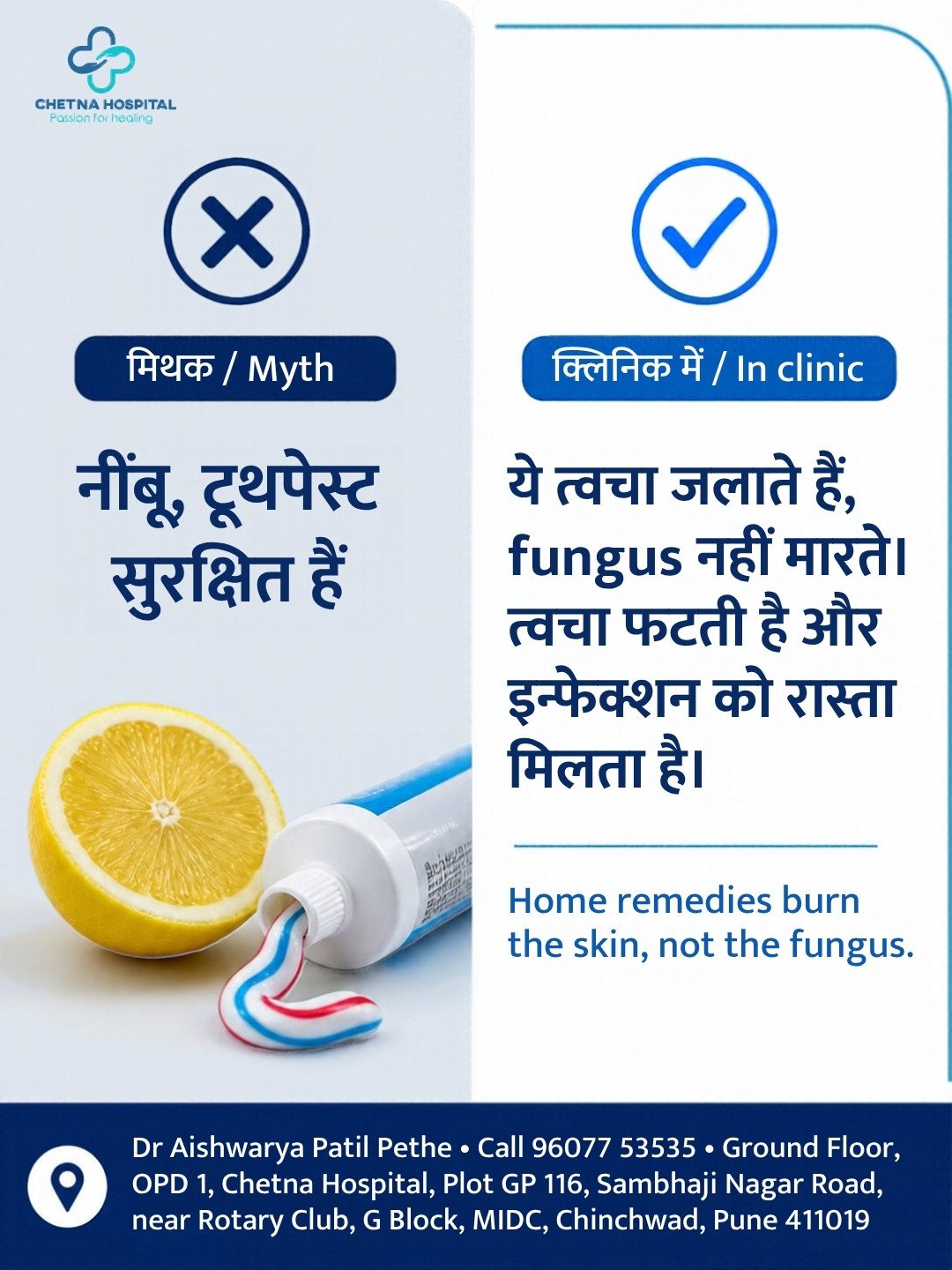
Lemon, toothpaste and bleach do not kill the fungus. Instead, they burn the skin. Then the skin cracks, and the infection gets an easier path.
What helps when ringworm is not going away?
First, doctors usually stop every steroid cream. Next, they check whether it is really ringworm, because eczema and psoriasis can look similar. When the picture is unclear, a skin scraping test helps.
Then the plan usually includes:
- The right antifungal cream, for a fixed number of weeks.
- Tablets when the patches are large, many or keep coming back.
- Treatment for family members with similar patches.
- Hot-water washing of towels, innerwear and bedsheets, then drying in the sun.
- Loose cotton clothes, and a quick change after the gym or any sweaty activity.
The American Academy of Dermatology notes that most skin creams are used twice a day for two to four weeks. Also, stubborn cases need stronger medicine. Above all, take tablets exactly as prescribed.
Slides to save and share


When should ringworm not going away worry you?
See a dermatologist soon if you notice any of these:
- The patch is still there after two weeks of an antifungal cream.
- New rings keep appearing on other parts of the body.
- The skin oozes, swells or turns very painful.
- You have diabetes, or you take steroids for another illness.
- The scalp, nails or a child’s skin is affected.
Also read about why self-treating acne often backfires, and our guide to early vitiligo signs, another patch that people often treat at home first.
Where can you see a dermatologist near you?
Chinchwad: Dermatology, Ground Floor, OPD 1, Chetna Hospital, Plot GP 116, Sambhaji Nagar Road, near Rotary Club, G Block, MIDC, Chinchwad, Pune 411019. Call 96077 53535. Directions
Patients visit from Chinchwad, Pimpri, Akurdi, Nigdi, Ravet and Wakad. Others come from Hinjewadi, Pimple Saudagar, Thergaon, Tathawade, Punawale, Moshi and Bhosari.
Ringworm not going away: questions patients ask
Why is my ringworm not going away even after cream?
The cream may contain a steroid, the course may be too short, or someone at home may pass it back. Also, some strains now respond slowly to common medicines. So a dermatologist needs to check the skin and set a fixed plan.
Can a steroid cream make ringworm worse?
Yes. A steroid calms the redness for a few days. However, it also lets the fungus spread under the skin. Then the ring comes back wider, and the skin can turn thin.
How long does ringworm treatment take?
Most skin creams are used for two to four weeks. Large or repeated patches may need tablets for longer. Always finish the course your doctor gives, even when the itch has stopped.
Is ringworm not going away still contagious?
Yes. As long as the fungus is active, it can spread through towels, clothes, bedsheets and close contact. So treat family members together and wash these items in hot water.
Where can you see a dermatologist for ringworm not going away in Chinchwad?
The dermatology team sees patients at Ground Floor, OPD 1, Chetna Hospital, Sambhaji Nagar Road, Chinchwad. Call 96077 53535.
Dermatology, Chetna Hospital, Chinchwad, PCMC
Ground Floor, OPD 1, Chetna Hospital, Plot GP 116, Sambhaji Nagar Road, near Rotary Club, G Block, MIDC, Chinchwad, Pune 411019
Sources
- NHS: Ringworm
- American Academy of Dermatology: Ringworm – diagnosis and treatment
- CIDRAP: Drug-resistant Trichophyton fungus represents emerging threat
Disclaimer: This article is for general awareness. It does not replace a medical consultation. Please see a doctor for advice about your own skin.