Expert Insights by Dr. Ashpak Bangi, Consultant Physician & Intensivist
Sepsis is one of the most serious and life-threatening medical emergencies seen in hospitals today. Despite advances in modern medicine, sepsis continues to be a leading cause of mortality worldwide—especially when diagnosis and treatment are delayed. Early recognition and prompt critical care can significantly improve survival rates.
Dr. Ashpak Bangi, Consultant Physician and Intensivist at Chetna Superspeciality Hospital, specializes in the early diagnosis and advanced ICU management of sepsis and other critical illnesses. With extensive experience in critical care medicine, Dr. Bangi emphasizes the importance of awareness, early intervention, and expert ICU support.
What Is Sepsis?
Sepsis is a life-threatening condition that occurs when the body’s response to an infection causes widespread inflammation, leading to organ dysfunction. Instead of fighting the infection locally, the immune system triggers a chain reaction throughout the body, damaging tissues and vital organs such as the lungs, kidneys, heart, and brain.
If not treated early, sepsis can progress to septic shock, a severe form marked by dangerously low blood pressure and multi-organ failure.
Common infections that can lead to sepsis include:
- Lung infections (pneumonia)
- Urinary tract infections
- Abdominal infections
- Skin and soft tissue infections
- Bloodstream infections
Why Early Detection of Sepsis Is Critical
Sepsis progresses rapidly. Every hour of delay in treatment increases the risk of complications and death. According to critical care studies, early administration of antibiotics, fluids, and organ support can dramatically reduce mortality.
As a senior intensivist, Dr. Ashpak Bangi highlights that recognizing early warning signs—both at home and in hospital settings—is the most effective way to save lives.
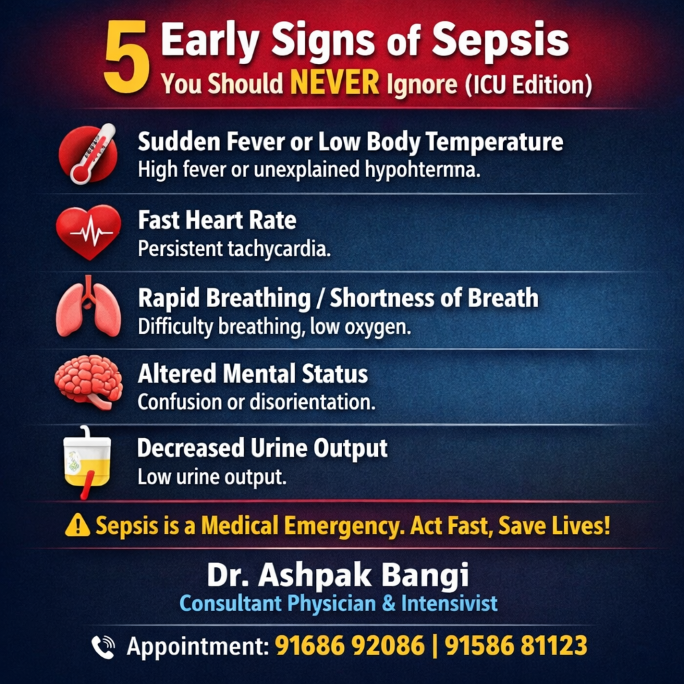
5 Early Signs of Sepsis You Should Never Ignore
1. Sudden Fever or Low Body Temperature
A high fever is often the first sign of infection, but in sepsis, some patients—especially elderly or critically ill individuals—may develop abnormally low body temperature (hypothermia). Both extremes are red flags and require immediate medical evaluation.
2. Fast Heart Rate (Tachycardia)
An unusually rapid heart rate may indicate that the body is under severe stress. Persistent tachycardia, even at rest, is commonly seen in early sepsis and signals the need for urgent medical attention.
3. Rapid Breathing or Shortness of Breath
Sepsis can affect lung function, leading to fast breathing, breathlessness, or low oxygen levels. This is often a sign of worsening infection and impending respiratory failure, requiring ICU monitoring.
4. Altered Mental Status
Confusion, disorientation, excessive sleepiness, or sudden behavioral changes are alarming signs. Sepsis can reduce blood flow and oxygen supply to the brain, leading to acute delirium or altered consciousness.
5. Decreased Urine Output
Reduced urine output indicates poor kidney perfusion and early kidney dysfunction. This is a serious sign of organ involvement and should never be ignored.
Who Is at Higher Risk of Sepsis?
Certain individuals are more vulnerable to developing sepsis:
- Elderly patients
- People with diabetes, cancer, or chronic kidney disease
- Patients with weakened immune systems
- Individuals with recent surgery or hospitalization
- Patients with indwelling catheters or medical devices
At Chetna Superspeciality Hospital, high-risk patients are closely monitored under the guidance of Dr. Ashpak Bangi to detect sepsis at the earliest stage.
Role of an Intensivist in Sepsis Management
Sepsis management requires a multidisciplinary ICU approach, led by a trained intensivist. An intensivist is a doctor specialized in treating critically ill patients who require continuous monitoring and organ support.
Dr. Ashpak Bangi, as a Consultant Physician and Intensivist, plays a crucial role in:
- Early sepsis recognition and diagnosis
- Initiating rapid antibiotic therapy
- Managing fluids and blood pressure
- Providing ventilator and oxygen support
- Monitoring kidney, heart, and brain function
- Coordinating ICU care with other specialists
Advanced ICU Care at Chetna Superspeciality Hospital
Chetna Superspeciality Hospital is equipped with modern ICU facilities designed to manage severe infections and critical illnesses. The hospital follows evidence-based sepsis protocols to ensure timely and effective treatment.
Key ICU features include:
- Advanced patient monitoring systems
- Ventilator and respiratory support
- Continuous cardiac and hemodynamic monitoring
- Renal support for kidney failure
- Infection control and antibiotic stewardship
Under the leadership of Dr. Ashpak Bangi, the ICU team focuses on early intervention, patient safety, and outcome-driven care.
Importance of Timely Hospital Admission
One of the biggest challenges in sepsis care is late presentation. Many patients delay seeking medical help, assuming symptoms are minor or temporary. Unfortunately, sepsis worsens rapidly.
Dr. Ashpak Bangi strongly advises that any suspected infection with worsening symptoms should be evaluated immediately. Early hospital admission can prevent progression to septic shock and multi-organ failure.
Recovery and Follow-Up After Sepsis
Surviving sepsis is only the first step. Many patients require:
- Long-term follow-up
- Nutritional support
- Rehabilitation
- Monitoring for organ recovery
At Chetna Superspeciality Hospital, post-ICU care plans are customized for each patient, ensuring safe recovery and reduced risk of recurrence.
Why Choose Dr. Ashpak Bangi for Critical Care?
Patients and families trust Dr. Ashpak Bangi for his:
- Extensive experience in internal medicine and critical care
- Expertise in sepsis and emergency management
- Patient-centered and ethical medical approach
- Strong focus on early diagnosis and prevention
- Leadership in ICU decision-making
His commitment to excellence makes him a reliable choice for managing complex and life-threatening medical conditions.