Expert Advice by Dr. Rachana Tiwari Patil, Chetna Hospital
As we age, our eyes undergo natural changes that can impact our vision. While some changes are normal, others may indicate underlying eye conditions that require medical attention. Age-related vision problems are common, but with proper care, many can be prevented or managed effectively. In this blog, we explore the most prevalent age-related vision issues, their symptoms, and practical preventive measures.
Understanding Age-Related Vision Problems
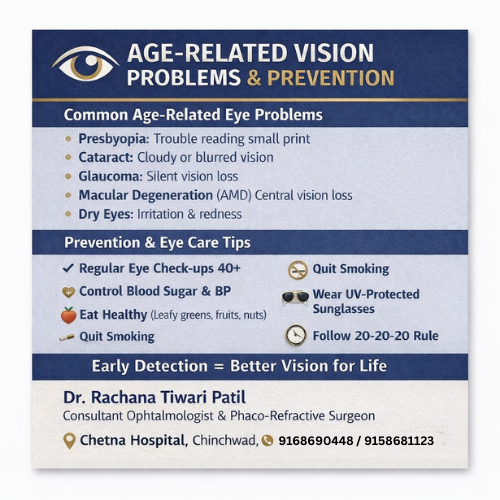
Vision is one of the most important senses, allowing us to interact with the world. Unfortunately, age-related changes can compromise eye health. According to ophthalmologists, common vision problems that arise with age include:
- Presbyopia – Difficulty focusing on close objects, usually starting after age 40.
- Cataracts – Clouding of the eye lens leading to blurry vision and sensitivity to light.
- Glaucoma – Increased pressure inside the eye, which can damage the optic nerve and cause permanent vision loss.
- Age-Related Macular Degeneration (AMD) – Deterioration of the central part of the retina, affecting detailed vision.
- Diabetic Retinopathy – Damage to blood vessels in the retina caused by diabetes, leading to blurred vision or blindness.
These conditions can significantly affect the quality of life, making early detection and preventive care crucial.
Signs and Symptoms to Watch For
Early detection of vision problems is key. Dr. Rachana Tiwari Patil of Chetna Hospital emphasizes recognizing warning signs such as:
- Blurred or hazy vision
- Difficulty reading small print
- Trouble distinguishing colors
- Eye strain or headaches while reading
- Dark or empty areas in your field of vision
- Increased sensitivity to light
If you experience any of these symptoms, consult an eye specialist promptly. Regular eye check-ups can detect issues before they become severe.
Common Age-Related Vision Problems
1. Presbyopia
Presbyopia occurs when the eye’s lens becomes less flexible, making it hard to focus on nearby objects. People often notice the need to hold reading materials further away or experiencing eye strain.
Prevention & Management:
- Use reading glasses or bifocals
- Ensure proper lighting while reading
- Practice eye exercises to reduce strain
2. Cataracts
Cataracts develop gradually, causing blurred or dim vision. They can also make colors appear faded and night vision difficult.
Prevention & Management:
- Protect eyes from UV light with sunglasses
- Maintain a diet rich in antioxidants (vitamins C and E)
- Avoid smoking and excessive alcohol consumption
- Cataract surgery is highly effective for advanced cases
3. Glaucoma
Glaucoma is often called the “silent thief of sight” because it progresses without obvious symptoms. Peripheral vision is usually affected first.
Prevention & Management:
- Regular eye pressure tests
- Eye drops or medications prescribed by an ophthalmologist
- Surgery in advanced cases to prevent optic nerve damage
4. Age-Related Macular Degeneration (AMD)
AMD affects the macula, the part of the retina responsible for sharp central vision. It is a leading cause of vision loss in older adults.
Prevention & Management:
- Eat foods rich in leafy greens, omega-3 fatty acids, and antioxidants
- Avoid smoking
- Regular eye exams to monitor retinal health
- Laser therapy or injections may slow progression in some cases
5. Diabetic Retinopathy
This condition is a complication of diabetes and can cause vision loss if left untreated. It damages retinal blood vessels and may lead to bleeding or swelling.
Prevention & Management:
- Keep blood sugar levels under control
- Regular eye screenings for diabetics
- Laser treatment or medication to manage retinal damage
Lifestyle Habits for Eye Health
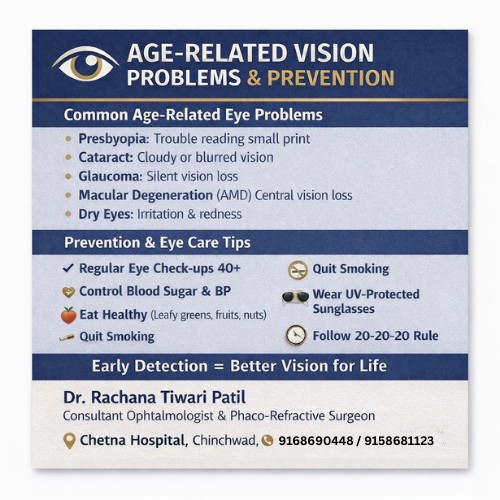
Maintaining a healthy lifestyle can reduce the risk of age-related vision problems. Dr. Rachana Tiwari Patil recommends:
- Balanced Diet: Include fruits, vegetables, nuts, and fish rich in omega-3 fatty acids.
- Eye Protection: Wear sunglasses with UV protection when outdoors.
- Regular Exercise: Physical activity improves blood circulation, reducing the risk of eye diseases like glaucoma.
- Avoid Smoking: Smoking increases the risk of cataracts, AMD, and optic nerve damage.
- Proper Screen Habits: Follow the 20-20-20 rule: every 20 minutes, look at an object 20 feet away for 20 seconds.
Importance of Regular Eye Check-Ups
Many age-related eye problems develop silently. Regular eye examinations can detect conditions early, preventing severe vision loss. At Chetna Hospital, Dr. Rachana Tiwari Patil emphasizes:
- Eye check-ups every 1–2 years after age 40
- More frequent checks for those with diabetes, high blood pressure, or a family history of eye diseases
- Comprehensive exams include visual acuity tests, eye pressure measurement, retinal imaging, and slit-lamp examinations
Early detection allows timely treatment, reducing complications and preserving vision.
Eye Exercises for Healthy Vision
Simple eye exercises can help relieve eye strain and improve focus flexibility:
- Focus Shifts: Alternate focus between near and far objects.
- Palming: Cover closed eyes with palms to relax eye muscles.
- Blinking Exercises: Helps moisten eyes and prevent dryness.
- Eye Rolling: Gentle circular movements improve blood flow to the eyes.
While exercises cannot reverse age-related conditions, they support overall eye comfort and health.
Role of Technology in Eye Care
Modern technology plays a vital role in preventing and managing vision problems:
- Retinal Imaging & OCT: Detects early signs of glaucoma, AMD, and diabetic retinopathy.
- Laser Treatments: Effective for certain types of glaucoma, diabetic retinopathy, and AMD.
- Telemedicine: Remote eye consultations for early detection and follow-ups.
Chetna Hospital is equipped with advanced eye care technology, ensuring patients receive precise diagnoses and treatments.
Choosing the Right Eye Specialist
Finding a skilled ophthalmologist is critical. Dr. Rachana Tiwari Patil, a renowned eye specialist at Chetna Hospital, has extensive experience in managing age-related vision problems. She emphasizes:
- Seeking personalized care based on individual eye health
- Regular follow-ups to monitor disease progression
- Combining lifestyle changes, medical treatment, and surgical interventions when necessary
Preventive Tips at a Glance
Here’s a quick checklist for maintaining healthy eyes as you age:
- Get comprehensive eye exams regularly
- Maintain a healthy diet rich in eye-friendly nutrients
- Protect eyes from UV rays with quality sunglasses
- Avoid smoking and manage chronic conditions like diabetes
- Limit prolonged screen exposure and practice the 20-20-20 rule
- Stay physically active
- Take supplements only under a doctor’s guidance
Following these simple measures can go a long way in preserving vision and preventing complications.