
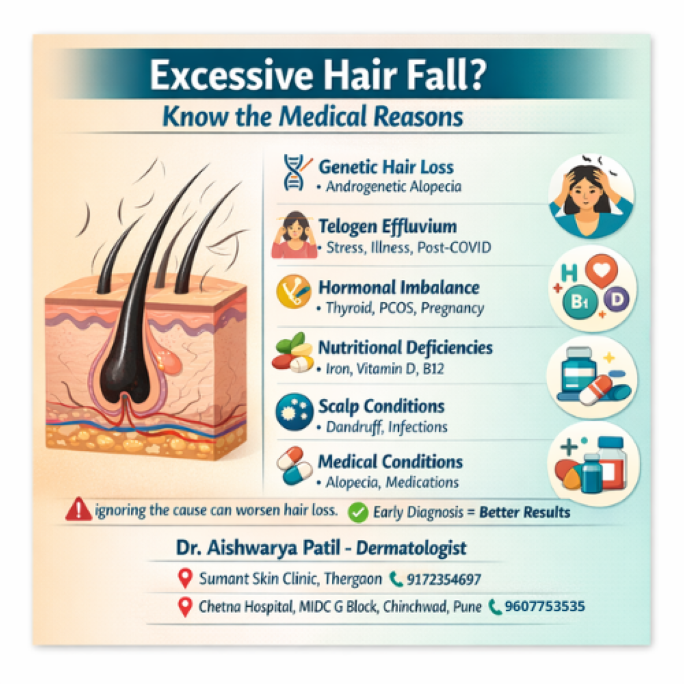
Hair fall is one of the most common concerns among men and women today. While losing a few strands of hair daily is normal, excessive or persistent hair fall is a sign of an underlying medical issue. Many patients try home remedies or over-the-counter products without understanding the root cause, which often leads to worsening hair loss.
According to Dr. Aishwarya Patil, Consultant Dermatologist, early diagnosis and proper dermatological treatment are essential for controlling hair fall and promoting healthy hair regrowth.
This blog explains the medical reasons for hair fall, when to consult a dermatologist, and how expert care can help.
What Is Normal Hair Fall?
On average, a healthy person may lose 50–100 hair strands per day as part of the natural hair growth cycle. Hair grows, rests, sheds, and regrows continuously.
However, hair fall becomes abnormal when you notice:
- Excessive hair on the pillow or bathroom floor
- Hair thinning or widening of the hair part
- Visible scalp or reduced hair volume
- Sudden hair shedding in clumps
If hair fall continues for more than a few weeks, it requires dermatological evaluation.
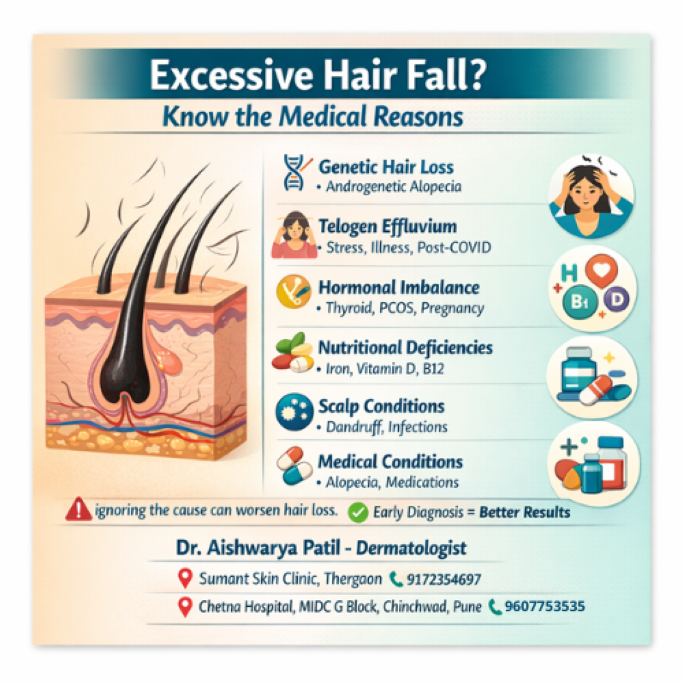
Common Medical Reasons for Hair Fall
1. Genetic Hair Loss (Androgenetic Alopecia)
Genetic hair loss is the most common cause of chronic hair thinning in both men and women.
In men:
- Receding hairline
- Thinning at the crown
In women:
- Diffuse thinning over the scalp
- Widening of the central hair part
This condition is influenced by genetics and hormones. Early treatment by a dermatologist can slow progression and preserve existing hair.
2. Telogen Effluvium (Stress-Related Hair Fall)
Telogen effluvium is a common cause of sudden and excessive hair fall.
Triggers include:
- Physical or emotional stress
- High fever or viral infections (including post-COVID hair fall)
- Surgery or hospitalization
- Sudden weight loss
- Childbirth
Hair fall usually starts 2–3 months after the triggering event. With correct diagnosis and treatment, this condition is usually reversible.
3. Hormonal Imbalance
Hormonal changes significantly affect hair growth.
Common hormonal causes include:
- Thyroid disorders (hypothyroidism or hyperthyroidism)
- Polycystic Ovary Syndrome (PCOS)
- Post-pregnancy hormonal changes
- Menopause
Women experiencing irregular periods, acne, weight gain, or facial hair along with hair fall should consult a dermatologist for evaluation and necessary investigations.
4. Nutritional Deficiencies
Hair follicles require adequate nutrition for growth. Deficiencies can lead to weak, brittle hair and increased shedding.
Common deficiencies include:
- Iron deficiency (very common in women)
- Vitamin D deficiency
- Vitamin B12 deficiency
- Protein deficiency
Self-supplementation without testing is not recommended. A dermatologist can advise appropriate blood tests and supplements based on individual needs.
5. Scalp Conditions
An unhealthy scalp directly affects hair growth.
Common scalp conditions include:
- Dandruff and seborrheic dermatitis
- Fungal infections of the scalp
- Psoriasis
- Chronic scalp inflammation
Symptoms may include itching, flaking, redness, and hair breakage. Treating the scalp condition is essential for controlling hair fall.
6. Alopecia Areata (Autoimmune Hair Loss)
Alopecia areata is an autoimmune condition where the body attacks its own hair follicles.
Features include:
- Sudden round or oval bald patches
- Hair fall from eyebrows or beard in some cases
Early dermatological treatment can help stimulate regrowth and prevent spread.
7. Medical Conditions and Medications
Certain systemic illnesses and medications can cause hair fall, such as:
- Chronic illnesses
- Autoimmune disorders
- Chemotherapy or long-term medications
A dermatologist evaluates the medical history to identify drug-induced or disease-related hair loss.
Why Self-Treatment Often Fails
Many patients try oils, shampoos, home remedies, or online products without medical guidance. Hair fall is not a single disease, and treatment varies based on the cause.
Using the wrong products can:
- Delay proper treatment
- Worsen scalp conditions
- Lead to irreversible hair thinning
This is why expert consultation is important.
Importance of Early Diagnosis
According to Dr. Aishwarya Patil, early diagnosis is the most crucial factor in hair fall management.
Benefits of early consultation:
- Identification of the exact cause
- Prevention of permanent hair loss
- Better response to treatment
- Reduced need for advanced procedures
Hair follicles that are completely damaged cannot be revived, which is why timely treatment matters.
Dermatological Evaluation for Hair Fall
A dermatologist may perform:
- Detailed medical history and examination
- Scalp examination
- Blood tests if required
- Dermoscopy for hair and scalp assessment
Treatment plans are personalized and may include:
- Medical therapy
- Nutritional correction
- Scalp treatments
- Lifestyle guidance
Hair Fall Treatment in Chinchwad, Pimpri-Chinchwad, Pune
If you are experiencing hair fall and live near Chinchwad or Pimpri-Chinchwad, consulting a qualified dermatologist is recommended.
Dr. Aishwarya Patil provides dermatology services at:
📍 Chetna Hospital, MIDC G Block, Near Rotary Club, Sambhajinagar, Chinchwad, Pune – 411019
Convenient for patients from:
- Chinchwad
- Pimpri
- MIDC
- Sambhajinagar
- Nigdi
- Akurdi
- Thergaon
- Wakad
- Bhosari
She also consults at Sumant Skin Clinic, Thergaon, making care accessible for nearby residential areas.
About Dr. Aishwarya Patil
Dr. Aishwarya Patil is a qualified dermatologist with experience in treating skin, hair, and nail disorders. She focuses on evidence-based dermatology, accurate diagnosis, and patient education.
Her areas of expertise include:
- Hair fall and hair loss disorders
- Acne and pigmentation
- Scalp and fungal infections
- Eczema, psoriasis, and allergic skin conditions
When Should You See a Dermatologist for Hair Fall?
Consult a dermatologist if:
- Hair fall persists for more than 3–4 weeks
- You notice visible thinning or bald patches
- Hair fall is sudden or severe
- There is associated itching, dandruff, or scalp pain
- Home remedies are not helping