Early Detection Can Save Your Eyesight
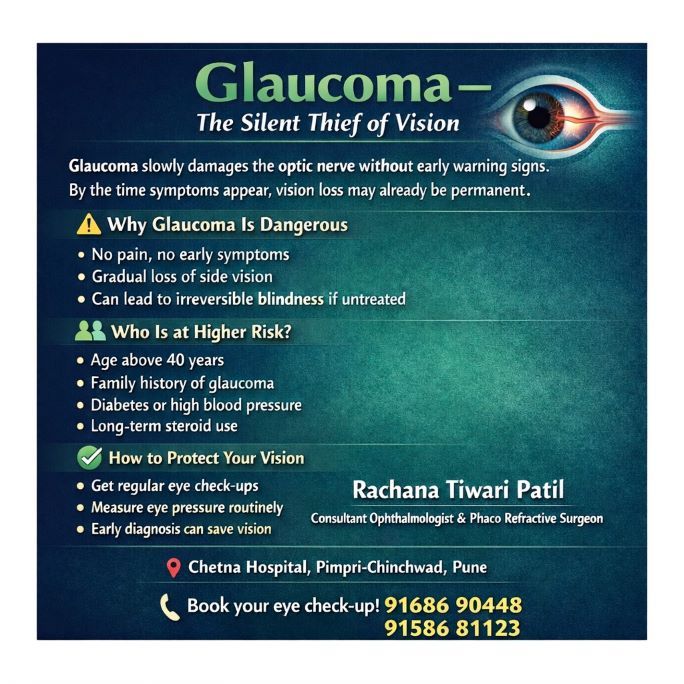
Glaucoma is one of the leading causes of irreversible blindness worldwide, yet it often progresses silently without noticeable symptoms. Because of this, glaucoma is commonly referred to as the “Silent Thief of Vision.” Many patients are unaware they have the condition until significant vision loss has already occurred.
At Chetna Speciality Hospital, Pimpri-Chinchwad, Pune, Dr. Rachana Tiwari Patil, Consultant Ophthalmologist and Phaco Refractive Surgeon, emphasizes the importance of regular eye check-ups and early glaucoma screening to protect long-term vision.
What Is Glaucoma?
Glaucoma is a group of eye diseases that damage the optic nerve, which is essential for transmitting visual information from the eye to the brain. This damage is most commonly caused by increased intraocular pressure (IOP), although glaucoma can also occur with normal eye pressure.
The optic nerve damage caused by glaucoma is permanent, meaning lost vision cannot be restored. However, with early diagnosis and proper treatment, further vision loss can be prevented.
Why Is Glaucoma Called the Silent Thief of Vision?
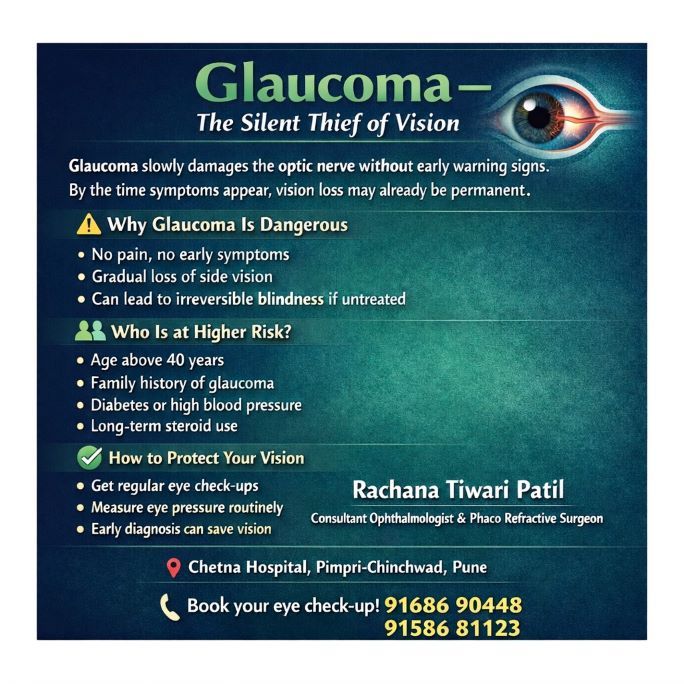
Unlike many eye conditions, glaucoma often has no pain and no early warning signs. Vision loss usually starts from the peripheral (side) vision, which many people do not notice initially. By the time central vision is affected, the disease is often advanced.
Key reasons glaucoma is dangerous:
- No early symptoms in most cases
- Gradual and painless vision loss
- Damage is irreversible
- Often detected late without routine eye exams
This makes routine eye examinations crucial, especially for individuals above 40 years of ag
Types of Glaucoma
1. Primary Open-Angle Glaucoma
This is the most common type of glaucoma. It develops slowly and painlessly due to gradual blockage of eye drainage channels, leading to increased eye pressure.
2. Angle-Closure Glaucoma
This type can occur suddenly and is considered a medical emergency. Symptoms may include severe eye pain, headache, blurred vision, nausea, and halos around lights.
3. Normal-Tension Glaucoma
Optic nerve damage occurs even though eye pressure remains within the normal range.
4. Secondary Glaucoma
Develops due to other conditions such as diabetes, eye injury, inflammation, or long-term steroid use.
Who Is at Higher Risk of Glaucoma?
You may be at higher risk if you:
- Are above 40 years of age
- Have a family history of glaucoma
- Have diabetes or high blood pressure
- Use steroids for a long time
- Have high myopia (minus power)
- Have had eye injuries or surgeries
Residents of Pimpri, Chinchwad, Nigdi, Akurdi, Wakad, Ravet, Bhosari, Pimple Saudagar, Pimple Gurav, and PCMC areas are encouraged to undergo routine eye screening, as early detection plays a critical role.
Symptoms of Glaucoma
In early stages:
- Usually no symptoms
- Slow loss of peripheral vision
In advanced stages:
- Tunnel vision
- Difficulty seeing in low light
- Frequent change in glasses
- Sudden vision loss (in angle-closure glaucoma)
Because symptoms often appear late, regular eye check-ups with an ophthalmologist are the only reliable way to detect glaucoma early.
How Is Glaucoma Diagnosed?
At Chetna Speciality Hospital, Pimpri-Chinchwad, Dr. Rachana Tiwari Patil uses comprehensive eye evaluation methods to diagnose glaucoma, including:
- Eye pressure measurement (tonometry)
- Optic nerve examination
- Visual field testing
- OCT (Optical Coherence Tomography)
- Gonioscopy
These tests help detect glaucoma even before noticeable vision loss occurs.
Glaucoma Treatment Options
While glaucoma cannot be cured, its progression can be controlled with timely treatment.
1. Medications (Eye Drops)
Glaucoma eye drops help lower eye pressure by reducing fluid production or improving drainage.
2. Laser Treatment
Laser procedures help improve fluid drainage and reduce eye pressure.
3. Surgical Management
In advanced cases, surgery may be required to control eye pressure and prevent further optic nerve damage.
Dr. Rachana Tiwari Patil, an experienced ophthalmologist in Pimpri-Chinchwad, tailors glaucoma treatment plans based on the type and severity of the disease.
Importance of Regular Eye Check-Ups
Many patients believe eye exams are only needed when vision problems arise. However, glaucoma proves this belief wrong. A routine eye examination once a year after 40 can help detect glaucoma at an early stage.
Early diagnosis means:
- Slowing disease progression
- Preserving useful vision
- Preventing blindness
- Better quality of life
Along with medical treatment, patients are advised to:
- Take prescribed eye drops regularly
- Avoid skipping follow-ups
- Maintain good blood sugar and blood pressure control
- Avoid self-medication with steroids
- Follow a healthy lifestyle
Consistency in treatment is essential, as glaucoma is a lifelong condition.
Why Choose Dr. Rachana Tiwari Patil for Glaucoma Care?
Dr. Rachana Tiwari Patil, Consultant Ophthalmologist and Phaco Refractive Surgeon at Chetna Speciality Hospital, Pimpri-Chinchwad, Pune, provides patient-centered, ethical, and evidence-based eye care.
Key highlights:
- Expertise in glaucoma diagnosis and management
- Advanced diagnostic equipment
- Personalized treatment approach
- Convenient location for PCMC residents
- Comprehensive eye care under one roof
Patients from Wakad, Nigdi, Akurdi, Bhosari, Ravet, Pimple Saudagar, and nearby areas trust her for accurate diagnosis and long-term glaucoma management.
Final Thoughts
Glaucoma may be silent, but its impact can be devastating if ignored. The good news is that vision loss from glaucoma can be prevented with early detection and proper treatment.
If you or your loved ones are above 40 years of age, have diabetes, high blood pressure, or a family history of glaucoma, do not wait for symptoms to appear.
📍 Visit Chetna Speciality Hospital, Pimpri-Chinchwad, Pune👩⚕️ Consult Dr. Rachana Tiwari Patil (Ophthalmologist)👁️ Protect your vision today—for a lifetime