
Expert Guidance by Dr. Bharti Patil, Obstetrician & Gynaecologist, Chinchwad Pune
The menstrual cycle is a natural and important indicator of a woman’s overall health. Yet, many women continue to suffer silently with irregular periods, excessive bleeding, or severe pain, often assuming these symptoms are “normal.” Understanding what is normal and what is not can help in early diagnosis and timely treatment of underlying gynecological conditions.
At Chetna Superspeciality Hospital, Chinchwad, Dr. Bharti Patil, a trusted Obstetrician and Gynaecologist in Pune, regularly counsels women on menstrual health, hormonal balance, and reproductive wellbeing. This blog aims to create awareness about menstrual cycles and guide women on when to seek medical help.
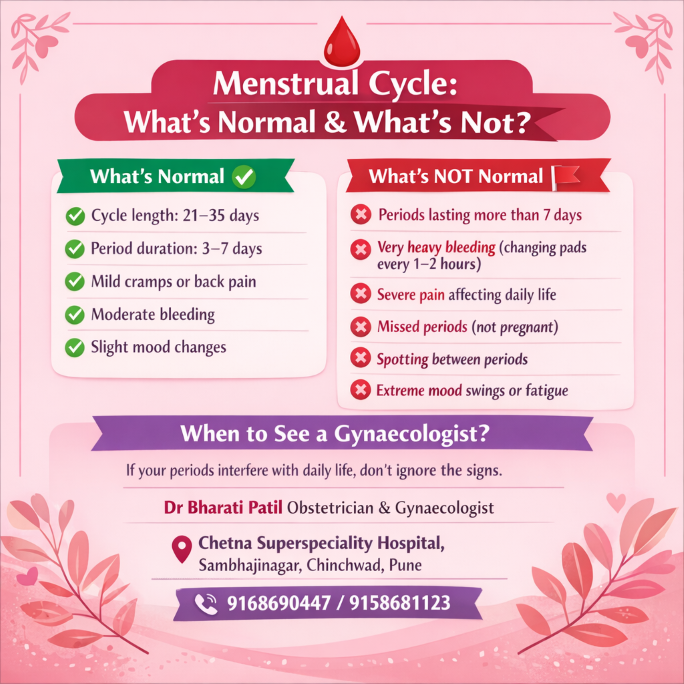
Understanding the Menstrual Cycle
A menstrual cycle is the monthly hormonal cycle a woman’s body goes through to prepare for pregnancy. It begins on the first day of menstruation (period) and ends on the first day of the next period.
A healthy menstrual cycle depends on the proper functioning of the brain, ovaries, uterus, and hormones such as estrogen and progesterone. Any imbalance can lead to irregularities.
According to Dr. Bharti Patil, Gynaecologist in Chinchwad Pune, menstrual patterns may vary slightly from woman to woman, but there are certain medical standards used to define what is considered normal.
What Is Considered a Normal Menstrual Cycle?
1. Cycle Length
A normal menstrual cycle usually ranges between 21 to 35 days. Some women may have shorter or longer cycles, especially during adolescence or approaching menopause.
2. Duration of Periods
Menstrual bleeding typically lasts between 3 to 7 days. The flow may be heavier during the first two days and gradually reduce.
3. Amount of Bleeding
Moderate bleeding is normal. Using around 3–5 sanitary pads per day is generally considered healthy.
4. Mild Pain or Discomfort
Mild abdominal cramps, lower back pain, or slight fatigue during periods is common. These symptoms should not interfere significantly with daily activities.
5. Emotional Changes
Hormonal changes can cause mild mood swings, irritability, or food cravings, especially before periods (PMS).
According to Dr. Bharti Patil, if periods are regular, manageable, and not affecting quality of life, they are usually considered normal.
What Is NOT Normal in a Menstrual Cycle?
Many women ignore warning signs, delaying diagnosis and treatment. The following symptoms should not be considered normal:
1. Very Heavy Bleeding
If you need to change pads or tampons every 1–2 hours, or if you pass large blood clots, it could indicate conditions like fibroids, hormonal imbalance, or adenomyosis.
2. Periods Lasting More Than 7 Days
Prolonged bleeding may lead to anemia and weakness and needs medical evaluation by a gynecologist near Chinchwad.
3. Severe Pain Affecting Daily Life
If menstrual pain forces you to miss work, school, or daily activities, it may be due to endometriosis, pelvic infections, or fibroids.
4. Missed or Irregular Periods
Skipping periods frequently (when not pregnant) can be a sign of PCOS, thyroid disorders, stress, or hormonal imbalance.
5. Spotting Between Periods
Bleeding between cycles is not normal and may indicate hormonal issues, infections, or cervical problems.
6. Extreme Mood Swings or Fatigue
Severe emotional changes, depression, or extreme tiredness during cycles may require medical attention.
At Chetna Superspeciality Hospital, Sambhajinagar Chinchwad, women experiencing these symptoms are advised to consult a specialist early.
Common Causes of Menstrual Irregularities
Menstrual problems can arise due to various medical and lifestyle factors:
- Hormonal imbalance
- Polycystic Ovary Syndrome (PCOS)
- Thyroid disorders
- Stress and sudden weight changes
- Uterine fibroids
- Endometriosis
- Pelvic inflammatory disease (PID)
- Excessive physical exertion
- Poor nutrition or anemia
A proper diagnosis by an experienced obstetrician and gynaecologist in Pune is essential to identify the root cause.
When Should You See a Gynaecologist?
You should consult a gynecologist if:
- Periods are extremely painful or heavy
- Cycles are irregular or absent
- Bleeding occurs between periods
- Periods interfere with daily life
- You feel weak, dizzy, or fatigued during periods
- You are planning pregnancy and have irregular cycles
Dr. Bharti Patil, known for her patient-centric approach, emphasizes that early consultation prevents complications and improves long-term reproductive health.
Role of a Gynaecologist in Menstrual Health
A qualified gynaecologist in Chinchwad Pune will:
- Take a detailed medical and menstrual history
- Perform clinical examination if required
- Recommend blood tests or ultrasound
- Diagnose hormonal or structural problems
- Provide personalized treatment plans
Treatment may include lifestyle changes, medications, hormonal therapy, or minimally invasive procedures depending on the condition.
Menstrual Health Care at Chetna Superspeciality Hospital
Chetna Superspeciality Hospital, located in Sambhajinagar, Chinchwad, Pune, offers comprehensive women’s healthcare services including:
- Menstrual disorder treatment
- PCOS/PCOD management
- Pregnancy and antenatal care
- High-risk pregnancy management
- Infertility evaluation
- Menopause care
- Preventive gynecological check-ups
Under the expert care of Dr. Bharti Patil, Obstetrician & Gynaecologist, patients receive ethical, compassionate, and evidence-based treatment.
Why Choose Dr. Bharti Patil?
- Experienced Obstetrician and Gynaecologist in Pune
- Trusted women’s health specialist in Chinchwad
- Patient-focused and transparent approach
- Modern diagnostic and treatment facilities
- Convenient location near residential areas of Pimpri-Chinchwad
Women from nearby areas such as Akurdi, Nigdi, Wakad, Pimpri, and PCMC trust Chetna Superspeciality Hospital for reliable gynecological care.