
When it comes to skincare, one of the most common and damaging misconceptions is that oily skin does not need moisturizer. Many patients visiting dermatology clinics in Chinchwad, Sambhajinagar, MIDC G Block, Thergaon, and Pune believe that skipping moisturizer will help control oil and prevent acne. Unfortunately, this myth often leads to worsening oiliness, frequent breakouts, and dull-looking skin.
In this blog, Dr. Aishwarya Patil, Consultant Dermatologist at Chetna Hospital, explains the science behind oily skin, hydration, and why choosing the right moisturizer is essential for healthy, balanced skin.
Understanding Oily Skin
Oily skin is characterized by overactive sebaceous glands that produce excess sebum. While sebum is essential to protect and lubricate the skin, overproduction can lead to:
- Shiny appearance
- Enlarged pores
- Blackheads and whiteheads
- Acne and pimples
People with oily skin often assume that adding a moisturizer will make their skin worse. However, oil and hydration are not the same—and confusing the two causes many skin problems.
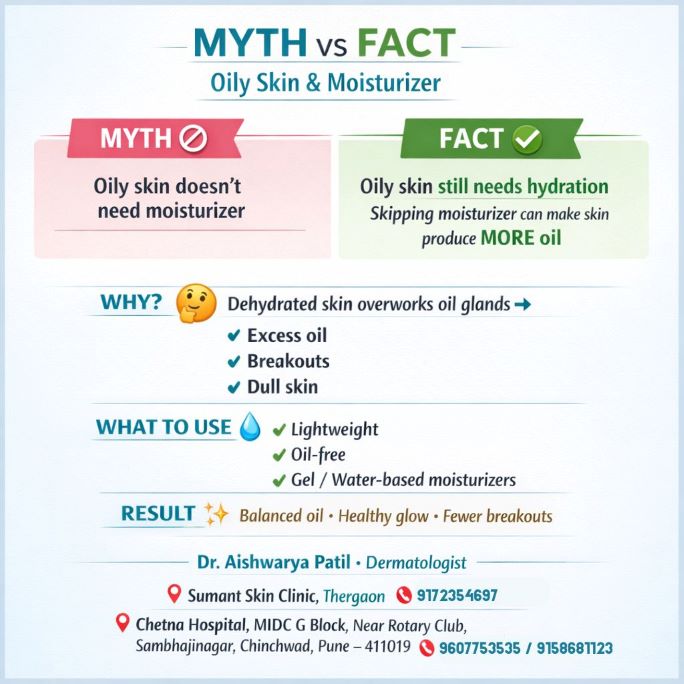
MYTH 🚫: If You Have Oily Skin, You Don’t Need Moisturizer
This is one of the most widespread skincare myths encountered by dermatologists in Pune and surrounding areas.
Patients often say:
- “My skin is already oily.”
- “Moisturizer causes pimples.”
- “I only use face wash.”
While these concerns are understandable, completely avoiding moisturizer actually harms oily skin.
FACT ✅: Oily Skin Still Needs Hydration
According to Dr. Aishwarya Patil, oily skin still requires adequate hydration to maintain a healthy skin barrier.
When moisturizer is skipped:
- Skin becomes dehydrated (lacking water)
- The skin senses dryness
- Sebaceous glands are triggered to produce even more oil
This creates a vicious cycle of excess oil, clogged pores, and acne.
Why Dehydrated Oily Skin Produces More Oil 🤔
The skin’s natural defense mechanism is to protect itself. When it lacks moisture:
- The outer skin barrier weakens
- Water loss increases
- Oil glands become overactive
- Excess sebum clogs pores
This leads to:
- Excess oil production
- Frequent breakouts and acne
- Dull, tired-looking skin
- Increased sensitivity
Many patients visiting Chetna Hospital, Chinchwad, experience worsening acne simply because they are using harsh cleansers and avoiding moisturizers altogether.
Difference Between Oil and Hydration
One of the key concepts emphasized by dermatologists is:
- Oil = Sebum (produced by glands)
- Hydration = Water content in the skin
Your skin can be oily yet dehydrated at the same time. In fact, dehydrated oily skin is one of the most common skin types seen in dermatology clinics in Pune.