
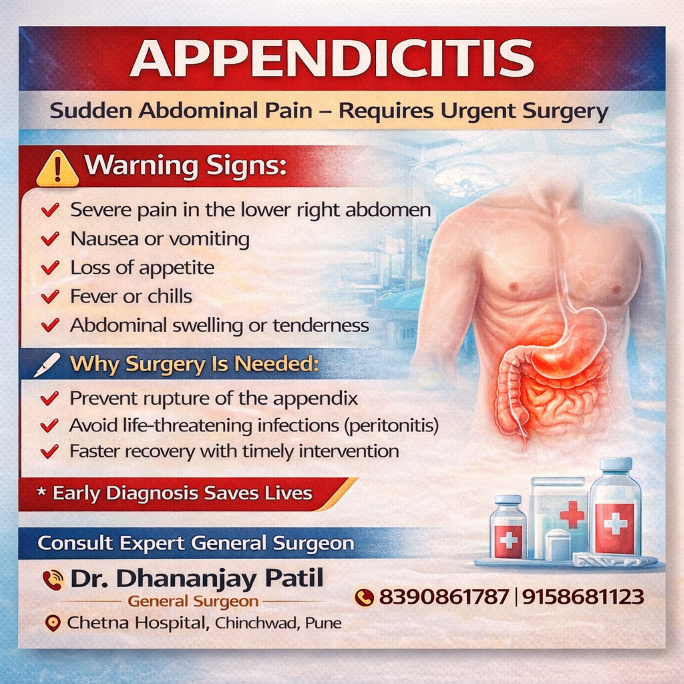
Appendicitis is one of the most common surgical emergencies worldwide. It occurs when the appendix, a small finger-shaped pouch attached to the large intestine, becomes inflamed and filled with pus. If left untreated, appendicitis can lead to a ruptured appendix, causing severe infections such as peritonitis, which can be life-threatening.
Early diagnosis and prompt surgical intervention are crucial for preventing complications. Dr. Dhananjay Patil, General Surgeon at Chetna Hospital, Chinchwad, Pune, has vast experience in managing appendicitis cases across Chinchwad, Pimpri, Wakad, Thergaon, and surrounding Pune areas.
This blog will guide you through the causes, symptoms, diagnosis, treatment options, and post-surgical care for appendicitis, emphasizing the importance of consulting an experienced general surgeon.
Understanding Appendicitis
Appendicitis occurs when the appendix becomes blocked due to:
- Fecal matter or hardened stool (fecalith)
- Infection in the digestive tract
- Inflammation from tumors or intestinal swelling
Blockage leads to bacterial overgrowth inside the appendix, causing swelling, pain, and infection. Without prompt treatment, the appendix can rupture, spreading infection throughout the abdominal cavity.
Who Can Get Appendicitis?
Appendicitis can affect anyone but is more common in:
- Teenagers and young adults (ages 10–30)
- Individuals with low-fiber diets
- People with family history of appendicitis
In Pune, Chinchwad, Pimpri, Wakad, and Thergaon, appendicitis is frequently reported among young adults and working professionals who may delay seeking care, increasing the risk of complications.
Symptoms of Appendicitis
Early recognition of symptoms is key to preventing severe outcomes. Common signs include:
- Sudden pain in the lower right abdomen (first symptom in most cases)
- Nausea and vomiting
- Loss of appetite
- Fever and chills
- Abdominal swelling or tenderness
- Constipation or diarrhea
It is important to note that symptoms may vary slightly depending on age, sex, and individual health conditions. Pregnant women and children may experience atypical symptoms, so consultation with a qualified general surgeon is vital.
Why Appendicitis Requires Urgent Surgery
Appendicitis is considered a surgical emergency. Reasons include:
- Prevent Rupture: A ruptured appendix can release bacteria into the abdominal cavity, leading to peritonitis, a serious infection.
- Reduce Risk of Abscess Formation: Untreated appendicitis may lead to localized abscesses, requiring more complex treatment.
- Faster Recovery: Timely surgery reduces the overall recovery period.
- Minimize Complications: Early intervention decreases the risk of sepsis and other life-threatening conditions.
Dr. Dhananjay Patil emphasizes that prompt surgical intervention in Pune, Chinchwad, Pimpri, Wakad, and Thergaon patients ensures safer outcomes and quicker recovery.
Diagnosis of Appendicitis
Accurate diagnosis is essential for effective treatment. Common diagnostic procedures include:
1. Physical Examination
- Surgeons check for tenderness in the lower right abdomen, rigidity, and rebound pain.
2. Laboratory Tests
- Blood tests may reveal elevated white blood cell count, indicating infection.
- Urine tests help rule out urinary tract infections or kidney stones.
3. Imaging Tests
- Ultrasound can detect an inflamed appendix, abscess, or fluid collection.
- CT scan offers a detailed view, especially in complicated cases or atypical presentations.
Accurate diagnosis by an experienced general surgeon, such as Dr. Dhananjay Patil, is critical to avoid misdiagnosis and prevent complications in patients from Chinchwad, Pimpri, Wakad, Thergaon, and Pune.
Surgical Treatment Options
Appendectomy, the surgical removal of the appendix, is the standard treatment for appendicitis. Two main surgical approaches include:
1. Open Appendectomy
- Traditional surgery with a small incision in the lower right abdomen.
- Used in complicated cases or ruptured appendix.
- Requires longer recovery than minimally invasive procedures.
2. Laparoscopic Appendectomy
- Minimally invasive procedure with 2–3 small incisions.
- Faster recovery and less post-operative pain.
- Shorter hospital stay; patients often resume daily activities within a few days.
Dr. Dhananjay Patil specializes in both open and laparoscopic appendectomy, ensuring optimal treatment for patients in Chinchwad, Pimpri, Wakad, Thergaon, and Pune.
Post-Surgery Care and Recovery
After appendectomy, proper post-operative care is essential:
- Wound Care: Keep surgical site clean and dry; follow dressing instructions.
- Medication: Take prescribed antibiotics and pain relievers.
- Diet: Start with liquids and gradually return to normal diet.
- Activity: Avoid heavy lifting and strenuous activity for 2–4 weeks (depending on procedure type).
- Follow-Up: Regular check-ups with the surgeon ensure proper healing.
Patients who adhere to post-surgical care instructions experience faster recovery and minimal complications.
Complications of Untreated Appendicitis
Failure to treat appendicitis promptly can lead to severe complications:
- Ruptured Appendix: Leads to widespread infection (peritonitis).
- Abscess Formation: Pus collection may require drainage or extended treatment.
- Sepsis: Life-threatening systemic infection.
- Prolonged Hospitalization: Recovery may take longer with more intensive care.
Consulting Dr. Dhananjay Patil, a skilled general surgeon, ensures early intervention and reduces these risks.
Preventive Measures
While appendicitis cannot always be prevented, certain measures may help:
- Eat a high-fiber diet with fruits, vegetables, and whole grains
- Avoid excessive processed food
- Seek immediate medical attention for persistent abdominal pain
- Maintain good hydration
- Routine check-ups for digestive health
Residents of Chinchwad, Pimpri, Wakad, Thergaon, and Pune are encouraged to be aware of symptoms and not delay consultation with a qualified surgeon.
Why Choose Dr. Dhananjay Patil, General Surgeon?
Dr. Dhananjay Patil is a renowned general surgeon in Pune, known for:
- Expertise in emergency surgical procedures, including appendectomy
- Minimally invasive and modern surgical techniques
- Personalized care and patient education
- Safe, hygienic, and advanced operation theatre facilities
- High success rate with quick recovery for patients
Patients from Chinchwad, Pimpri, Wakad, Thergaon, and Pune trust him for emergency surgical care and routine general surgery.
Patient Experiences
Patients treated by Dr. Dhananjay Patil often report:
- Rapid relief from abdominal pain
- Smooth recovery with minimal complications
- Quick return to work and daily activities
- Excellent post-operative care and guidance
Early intervention and expert surgical care have consistently resulted in successful outcomes for appendicitis patients across Pune and surrounding areas.
Frequently Asked Questions (FAQ)
1. Can appendicitis resolve without surgery?
- Appendicitis rarely resolves on its own; delaying surgery increases the risk of rupture.
2. How long is hospital stay after appendectomy?
- Laparoscopic surgery: 1–2 days; Open surgery: 3–5 days (depending on severity).
3. Is surgery painful?
- Local or general anesthesia ensures minimal pain during surgery. Post-operative discomfort is managed with medications.
4. How quickly can I return to work?
- Laparoscopic surgery: 1 week; Open surgery: 2–4 weeks.
5. Are there dietary restrictions after surgery?
- Start with liquids, progress to soft foods, and eventually resume normal diet as advised by your surgeon.
Conclusion
Appendicitis is a medical emergency that requires prompt surgical intervention. Timely diagnosis and surgery prevent complications such as rupture, abscess formation, peritonitis, and sepsis.
If you experience sudden lower right abdominal pain, nausea, or fever, do not wait—consult Dr. Dhananjay Patil, General Surgeon at Chetna Hospital, Chinchwad, Pune. Early treatment ensures safe surgery, faster recovery, and long-term health.
🏥 Chetna Hospital, Chinchwad, Pune
📞 8390861787 | 9158681123