In today’s fast-paced lifestyle, stress has become a silent but powerful risk factor for heart disease. Whether it is work pressure, financial worries, lack of sleep, or emotional strain, chronic stress can significantly affect your heart health. Many people ignore stress as a normal part of life, but long-term stress can lead to high blood pressure, heart attack, stroke, and irregular heart rhythms.
For residents of Chinchwad, Pune and nearby areas like Wakad, Thergaon, Pimpri, Nigdi, Akurdi, Baner, Hinjewadi, Pimple Saudagar, Ravet, Punawale, Chakan, and Talegaon, understanding the link between stress and heart health is crucial.
The Cardiology Department at Chetna Hospital, Chinchwad focuses on early detection, prevention, and comprehensive treatment of stress-related heart conditions.
🧠 What Is Stress?
Stress is the body’s natural response to challenging or demanding situations. When you are stressed, your body releases stress hormones such as adrenaline and cortisol. These hormones temporarily increase heart rate and blood pressure to help you cope with the situation.
However, when stress becomes chronic, the body stays in a constant state of alert, which puts excessive strain on the heart and blood vessels.
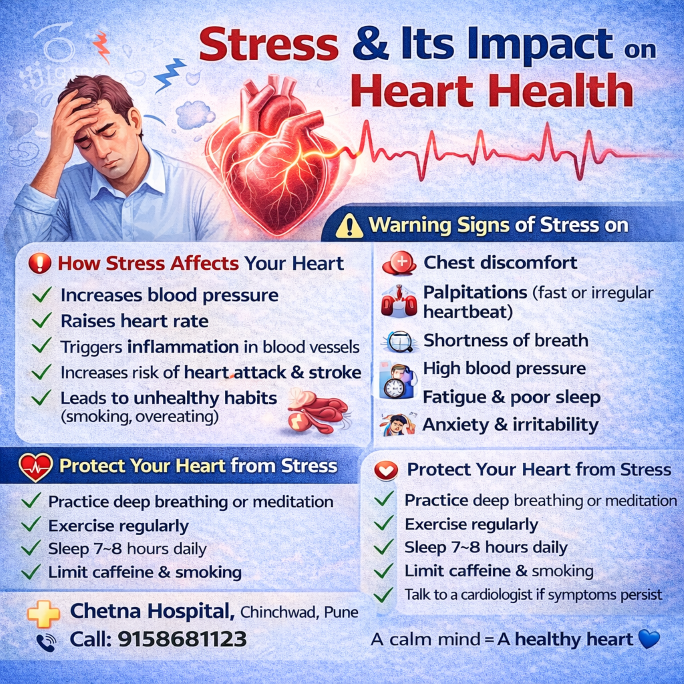
❤️ How Stress Affects Heart Health
🔴 1. Increases Blood Pressure
Chronic stress causes repeated spikes in blood pressure, increasing the risk of hypertension, one of the leading causes of heart disease.
🔴 2. Raises Heart Rate
Stress forces the heart to work harder, leading to palpitations and irregular heartbeat over time.
🔴 3. Damages Blood Vessels
Stress hormones can cause inflammation and narrowing of arteries, increasing the risk of atherosclerosis (plaque buildup).
🔴 4. Triggers Unhealthy Habits
Stress often leads to smoking, overeating, alcohol consumption, and lack of exercise—major risk factors for heart disease.
🔴 5. Increases Risk of Heart Attack & Stroke
Long-term stress is directly linked to heart attacks, strokes, and sudden cardiac events.
At Chetna Hospital’s Cardiology Department, we frequently see patients with stress-induced hypertension and heart symptoms that could have been prevented with early care.
⚠️ Warning Signs: When Stress Is Affecting Your Heart
Stress-related heart problems may present with symptoms such as:
- Chest discomfort or heaviness
- Palpitations or rapid heartbeat
- Shortness of breath
- High blood pressure
- Fatigue and weakness
- Poor sleep or insomnia
- Anxiety, irritability, or panic attacks
- Dizziness or lightheadedness
If you experience these symptoms, especially if you live in high-stress urban areas like Pimpri-Chinchwad or Pune, consult a cardiologist immediately.
🫀 Stress & Common Cardiac Conditions
✔ Stress and High Blood Pressure
Stress contributes significantly to uncontrolled hypertension, increasing the risk of heart attack and kidney damage.
✔ Stress and Heart Attack
Stress can trigger plaque rupture in arteries, leading to sudden heart attacks, even in younger individuals.
✔ Stress and Arrhythmias
Excess stress can cause irregular heart rhythms, leading to palpitations and fainting episodes.
✔ Stress and Heart Failure
Long-term pressure on the heart weakens the heart muscle, increasing the risk of heart failure.
🩺 Diagnosis of Stress-Related Heart Problems at Chetna Hospital
The Cardiology Department at Chetna Hospital, Chinchwad offers advanced diagnostic facilities to assess heart health:
- Blood Pressure Monitoring
- ECG (Electrocardiogram)
- 2D Echo (Echocardiography)
- TMT (Treadmill Stress Test)
- Holter Monitoring
- Blood Tests (Cholesterol, Sugar, Cardiac Markers)
Early diagnosis helps prevent serious cardiac complications and ensures timely treatment.
🏥 Chetna Hospital Cardiology Department – Comprehensive Heart Care
The Cardiology Department at Chetna Hospital, Chinchwad, Pune provides complete cardiac care under one roof, including:
- Stress-related heart condition management
- High blood pressure treatment
- Heart attack prevention & follow-up care
- ECG, 2D Echo & TMT tests
- Personalized lifestyle & stress management guidance
- Preventive heart check-up packages
We serve patients from Chinchwad, Wakad, Thergaon, Pimpri, Nigdi, Akurdi, Baner, Hinjewadi, Pimple Saudagar, Ravet, Punawale, Chakan, and Talegaon.
🧘 How to Reduce Stress for a Healthy Heart
✅ 1. Practice Relaxation Techniques
Meditation, deep breathing, and yoga help lower heart rate and blood pressure.
✅ 2. Exercise Regularly
30–45 minutes of walking, cycling, or swimming improves heart health and reduces stress.
✅ 3. Get Quality Sleep
7–8 hours of sleep daily helps regulate stress hormones.
✅ 4. Eat a Heart-Healthy Diet
Reduce salt, sugar, and oily foods. Include fruits, vegetables, whole grains, and lean protein.
✅ 5. Avoid Smoking & Limit Alcohol
These habits significantly worsen stress-related heart damage.
✅ 6. Seek Medical Help
Persistent stress and heart symptoms should always be evaluated by a cardiologist.
📍 Why Choose Chetna Hospital for Cardiac Care?
✔ Experienced cardiology team
✔ Advanced diagnostic facilities
✔ Personalized treatment plans
✔ Preventive heart health programs
✔ Trusted hospital in Chinchwad, Pune
Whether you are from Wakad, Pimpri, Nigdi, Akurdi, Baner, Hinjewadi, or nearby areas, Chetna Hospital offers reliable and compassionate heart care.
🧠 Who Should Get a Stress-Related Heart Check-up?
- Working professionals with high job stress
- Individuals with high BP or diabetes
- People with family history of heart disease
- Adults above 35–40 years
- Anyone experiencing chest pain or palpitations
Regular heart check-ups can save lives.
🏁 Conclusion: Protect Your Heart by Managing Stress
Stress is unavoidable, but heart disease caused by stress is preventable. Understanding the impact of stress on heart health and taking timely action can significantly reduce the risk of serious cardiac events.
The Cardiology Department at Chetna Hospital, Chinchwad, Pune is committed to helping patients manage stress-related heart conditions through early diagnosis, expert treatment, and preventive care.
📞 Call 9158681123 today to book your heart check-up or cardiology consultation.
💙 A calm mind and a healthy heart go hand in hand.