
Red eyes are a common complaint among patients visiting eye clinics, and they can arise due to multiple causes. While sometimes red eyes are harmless and temporary, they can also indicate serious eye conditions requiring immediate attention. Understanding the difference between allergic and infectious causes of red eyes is crucial to protecting your vision.
If you live in Chinchwad, Wakad, Thergaon, Ravet, Punawale, or surrounding areas, consulting an experienced ophthalmologist like Dr. Rachana Tiwari Patil at Chetna Hospital, Chinchwad, Pune, can help diagnose and treat red eye problems effectively.
What Causes Red Eyes?
Red eyes occur when the tiny blood vessels on the surface of the eye (sclera) become enlarged or irritated. The main causes include:
- Allergies
- Infections (bacterial, viral, or fungal)
- Dry eyes or irritation
- Eye injuries
- Underlying eye diseases
This blog focuses on the two most common causes: allergy-related red eyes and infection-related red eyes.
Red Eyes Due to Allergies
Allergic red eyes occur when the eye reacts to allergens such as pollen, dust, pet dander, or mold. Allergic reactions are the immune system’s response to harmless substances, causing inflammation in the conjunctiva (the thin membrane covering the white part of the eye).
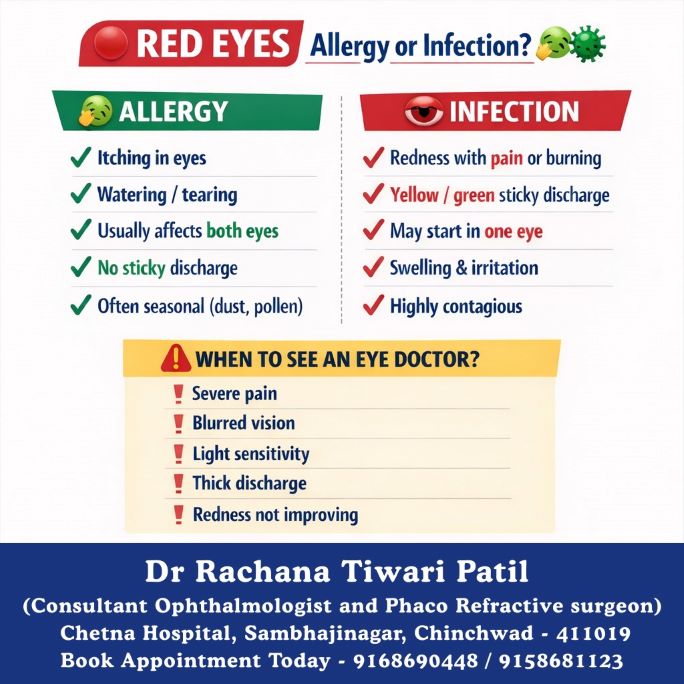
Common Symptoms of Allergic Red Eyes:
- Itching – Often the most prominent symptom
- Watery or teary eyes – Due to irritation
- Both eyes affected – Usually symmetrical
- No thick or colored discharge
- Seasonal or environmental triggers – Such as dust, pollen, or pollution
Allergic red eyes are generally non-contagious. However, if left untreated, they can lead to chronic discomfort and even secondary infections.
Tips to Manage Allergic Red Eyes:
- Avoid exposure to known allergens
- Use preservative-free artificial tears for lubrication
- Cold compresses can reduce swelling and irritation
- Over-the-counter antihistamine eye drops can provide temporary relief
- Consult an ophthalmologist if symptoms persist
Red Eyes Due to Infection
Infection-related red eyes are caused by bacteria, viruses, or fungi, and they can affect one or both eyes. Unlike allergic red eyes, infections often require medical treatment to prevent complications.
Common Symptoms of Infectious Red Eyes:
- Pain or burning sensation
- Yellow or green sticky discharge
- Swelling of eyelids
- May start in one eye
- Highly contagious in bacterial or viral infections
Types of Infectious Red Eyes:
- Bacterial Conjunctivitis – Thick yellow-green discharge, usually starts in one eye, spreads easily
- Viral Conjunctivitis – Redness, watery eyes, often accompanied by cold or flu symptoms
- Fungal Conjunctivitis – Rare, often after trauma or in immunocompromised patients
Treatment:
- Bacterial infections require prescription antibiotic eye drops or ointments
- Viral infections usually resolve on their own, but antiviral medication may be required in some cases
- Fungal infections need antifungal therapy prescribed by an ophthalmologist
How to Distinguish Between Allergy and Infection
Differentiating allergic red eyes from infectious red eyes can be tricky for laypersons. Here are some key differences:
| Feature | Allergy | Infection |
|---|---|---|
| Itching | Severe | Mild or absent |
| Discharge | Watery | Thick yellow/green |
| Eye involvement | Both eyes | Often starts in one eye |
| Contagion | Non-contagious | Contagious (bacterial/viral) |
| Onset | Seasonal or environmental | Can occur any time |
Risk Factors for Red Eyes
Several factors increase the likelihood of developing red eyes:
- Exposure to pollution, dust, and pollen (common in Chinchwad, Wakad, Thergaon)
- Contact lens misuse
- Poor hygiene or eye rubbing
- Pre-existing conditions such as dry eye syndrome or allergies
- Immune-compromised conditions
When to See an Eye Specialist
Red eyes that are accompanied by the following require immediate consultation with an ophthalmologist:
- Severe pain or discomfort
- Sudden decrease in vision
- Light sensitivity
- Thick yellow or green discharge
- Redness not improving after 24–48 hours
Early treatment can prevent complications such as corneal ulcers, vision impairment, or chronic conjunctivitis.
Preventive Measures for Healthy Eyes
- Maintain good eye hygiene – Wash hands before touching eyes
- Avoid rubbing eyes frequently
- Use prescribed eye drops for allergies or dry eyes
- Protect eyes from dust and pollutants using sunglasses
- Follow proper contact lens care
- Schedule regular eye check-ups with a qualified ophthalmologist like Dr. Rachana Tiwari Patil
Expert Eye Care in Chinchwad, Pune
Dr. Rachana Tiwari Patil, Consultant Ophthalmologist & Phaco-Refractive Surgeon, provides comprehensive eye care services for patients in Chinchwad, Wakad, Thergaon, Ravet, Punawale, and surrounding areas. Her expertise includes:
- Diagnosis and management of allergic and infectious conjunctivitis
- Cataract and glaucoma care
- Dry eye management
- Contact lens consultation
- Pediatric and adult eye care solutions
At Chetna Hospital, Chinchwad, Pune, patients receive personalized treatment plans, advanced diagnostic tests, and modern therapeutic procedures to ensure optimal eye health.
Conclusion
Red eyes are a common symptom but can indicate a wide range of eye conditions—from mild allergies to serious infections. Distinguishing between allergic and infectious causes is essential for effective treatment.
If you experience persistent redness, discharge, or pain, consult Dr. Rachana Tiwari Patil, Ophthalmologist at Chetna Hospital, Chinchwad, Pune. Early intervention can prevent complications and protect your vision.
📍 Contact Details
Chetna Hospital, Chinchwad, Pune
Dr. Rachana Tiwari Patil – Consultant Ophthalmologist & Phaco-Refractive Surgeon
📞 9168690448 | 9158681123