
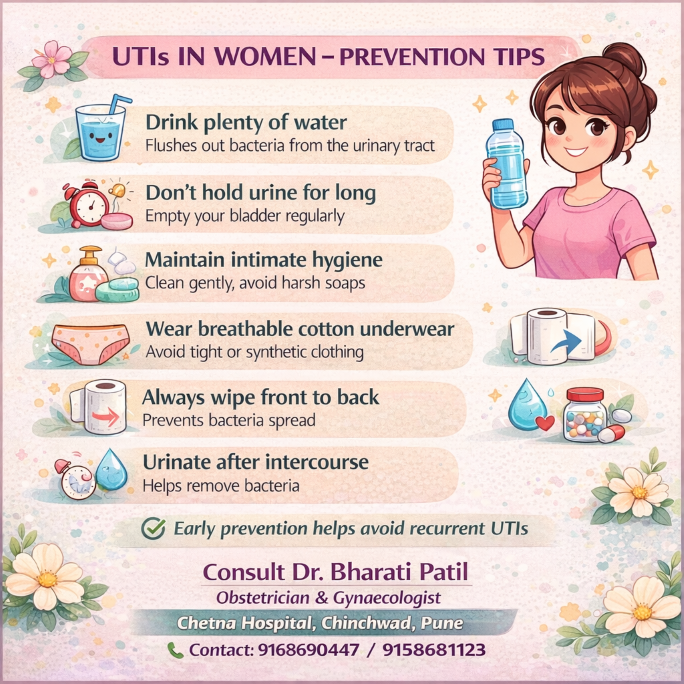
Urinary Tract Infections (UTIs) are among the most common infections affecting women. They can range from mild irritation to serious complications if left untreated. Women in Chinchwad, Pimpri, Wakad, Thergaon, Ravet, and Kiwale often seek guidance from experts like Dr. Bharati Patil, Obstetrician & Gynaecologist at Chetna Hospital, Chinchwad, Pune, for both prevention and treatment of UTIs.
Understanding the causes, symptoms, and preventive measures of UTIs is crucial for maintaining reproductive health, comfort, and overall well-being.
What is a UTI?
A Urinary Tract Infection occurs when bacteria enter the urinary system, which includes the kidneys, ureters, bladder, and urethra. Most UTIs involve the lower urinary tract, affecting the bladder and urethra. Women are more susceptible to UTIs than men due to their shorter urethra, which allows bacteria to reach the bladder more easily.
Common bacteria causing UTIs include Escherichia coli (E. coli), normally found in the gastrointestinal tract. Without proper hygiene or preventive measures, these bacteria can travel into the urinary tract and cause infection.
Common Symptoms of UTIs in Women
Recognizing UTI symptoms early is essential. Dr. Bharati Patil, who treats patients across Chinchwad, Pimpri, Wakad, Thergaon, Ravet, and Kiwale, emphasizes the importance of early consultation. Symptoms include:
- Burning sensation while urinating
- Frequent urge to urinate even when the bladder is not full
- Cloudy, dark, or strong-smelling urine
- Lower abdominal discomfort or pain
- Blood in urine (hematuria) in severe cases
- Fatigue or low-grade fever
Ignoring these signs can lead to kidney infections (pyelonephritis), which are more serious and require urgent medical care.
Why Women are More Prone to UTIs
Women’s anatomy and hormonal fluctuations contribute to their higher susceptibility:
- Shorter urethra: Allows bacteria easier access to the bladder.
- Sexual activity: Increases the risk of bacteria entering the urinary tract.
- Hormonal changes: Pregnancy, menstruation, and menopause affect the urinary tract’s natural defenses.
- Hygiene practices: Wiping incorrectly or using harsh soaps can introduce bacteria.
Women in Chinchwad, Pimpri, Wakad, Thergaon, Ravet, and Kiwale who experience recurrent UTIs often consult Dr. Bharati Patil for preventive strategies tailored to their lifestyle and health.
Prevention Tips for UTIs
Preventing UTIs is easier than treating them, and following simple hygiene and lifestyle measures can significantly reduce the risk. Dr. Bharati Patil recommends the following tips:
1. Stay Hydrated
Drinking plenty of water flushes bacteria from the urinary tract, reducing the likelihood of infection. Aim for at least 6–8 glasses of water daily.
2. Do Not Hold Urine
Regularly emptying your bladder prevents bacterial growth. Avoid delaying urination, especially during busy workdays or travel.
3. Maintain Intimate Hygiene
Clean the genital area gently using mild, unscented soaps. Avoid harsh chemicals and feminine sprays that can disrupt the natural pH balance.
4. Wear Breathable Cotton Underwear
Synthetic or tight-fitting underwear can trap moisture, creating an ideal environment for bacterial growth. Cotton allows proper airflow, keeping the area dry and clean.
5. Wipe Front to Back
Always wipe from front to back after using the toilet. This prevents bacteria from the anal area from entering the urethra.
6. Urinate After Intercourse
Sexual activity can introduce bacteria into the urinary tract. Emptying the bladder soon after intercourse helps flush out bacteria before infection occurs.
7. Avoid Self-Medication
Using leftover antibiotics or incorrect medications can worsen infections and lead to antibiotic resistance. Always consult a qualified gynaecologist like Dr. Bharati Patil for proper diagnosis and treatment.
Lifestyle Factors Affecting UTI Risk
Certain lifestyle habits increase susceptibility to UTIs:
- Poor hydration habits – not drinking enough water
- High sugar diet – excess sugar promotes bacterial growth
- Stress and lack of sleep – weakens the immune system
- Tight or synthetic clothing – promotes moisture and bacterial growth
Dr. Bharati Patil emphasizes combining lifestyle modifications with preventive care for optimal urinary health.
When to Consult a Gynaecologist
Women should not ignore repeated UTI symptoms. Immediate consultation is required if:
- Symptoms persist for more than 2 days
- Fever, chills, or flank pain develops
- Blood appears in urine
- UTIs recur more than twice in six months
Dr. Bharati Patil at Chetna Hospital, Chinchwad, Pune provides comprehensive care for UTI prevention, diagnosis, and treatment for women across Pimpri, Wakad, Thergaon, Ravet, and Kiwale.
Diagnosis and Treatment of UTIs
Upon consultation, Dr. Bharati Patil may recommend:
- Urine Test: Confirms infection and identifies the bacteria.
- Antibiotic Therapy: Targeted treatment based on sensitivity tests.
- Hydration and Diet Guidance: Supports recovery and reduces recurrence.
- Lifestyle Counseling: Personalized recommendations for long-term UTI prevention.
In severe or recurrent cases, further investigations like ultrasound or cystoscopy may be suggested to rule out structural abnormalities.
Recurrent UTIs and Women’s Health
Women experiencing frequent UTIs need comprehensive evaluation. Recurrent infections can affect reproductive health, increase the risk of kidney infections, and impact quality of life. Preventive strategies include:
- Regular follow-ups with a gynaecologist
- Adopting healthy hygiene habits
- Lifestyle modifications, including stress management and diet optimization
Dr. Bharati Patil, a trusted gynaecologist in Chinchwad, Pimpri, Wakad, Thergaon, Ravet, and Kiwale, ensures a personalized approach for women struggling with recurrent UTIs.
UTI Prevention During Pregnancy
Pregnant women are more prone to UTIs due to hormonal changes and pressure on the bladder. UTIs during pregnancy can lead to complications like preterm labor or low birth weight. Prevention tips include:
- Drinking extra water
- Maintaining proper hygiene
- Frequent urination
- Prompt medical consultation at the first sign of infection
Pregnant women in Chinchwad and surrounding areas can consult Dr. Bharati Patil at Chetna Hospital for safe and effective UTI management during pregnancy.
Conclusion
UTIs in women are common but largely preventable. Awareness of hygiene practices, lifestyle habits, and early intervention is key. Drinking water, regular urination, intimate hygiene, wearing breathable underwear, proper wiping techniques, and consulting a qualified gynaecologist can significantly reduce UTI risk.
For women in Chinchwad, Pimpri, Wakad, Thergaon, Ravet, and Kiwale, Dr. Bharati Patil, Obstetrician & Gynaecologist at Chetna Hospital, Chinchwad, Pune, offers expert care for UTI prevention, treatment, and long-term reproductive health management. Early consultation ensures comfort, prevents complications, and promotes overall well-being.
📞 Contact: 9168690447 / 9158681123
📍 Chetna Hospital, Chinchwad, Pune