Heart disease is one of the leading causes of death worldwide, and India is no exception. The World Health Organization (WHO) reports that cardiovascular diseases account for a significant proportion of deaths in the country. Often called the “silent killer,” heart disease can progress unnoticed for years before symptoms become severe. Detecting it early can save lives, reduce complications, and improve the quality of life.
At Chetna Hospital, Chinchwad, Pune, our cardiologists emphasize the importance of regular heart check-ups and awareness of the early warning signs of heart disease. Understanding these signs is crucial for timely intervention and prevention.
Why Early Detection of Heart Disease Matters
Heart disease, also referred to as cardiovascular disease (CVD), includes conditions affecting the heart and blood vessels. Common types include coronary artery disease, arrhythmia, heart failure, and congenital heart defects. Early detection is vital because:
- Prevents Complications: Identifying issues like blocked arteries or high blood pressure early can prevent heart attacks, strokes, and heart failure.
- Allows Lifestyle Modifications: Early detection gives patients time to adopt heart-healthy diets, exercise routines, and stress management practices.
- Enables Timely Medical Intervention: Medications and therapies are more effective when heart disease is detected in its early stages.
Regular cardiac screenings, such as ECG, 2D Echo, TMT (stress test), and cholesterol checks, can detect abnormalities before they become life-threatening.
Common Early Signs of Heart Disease
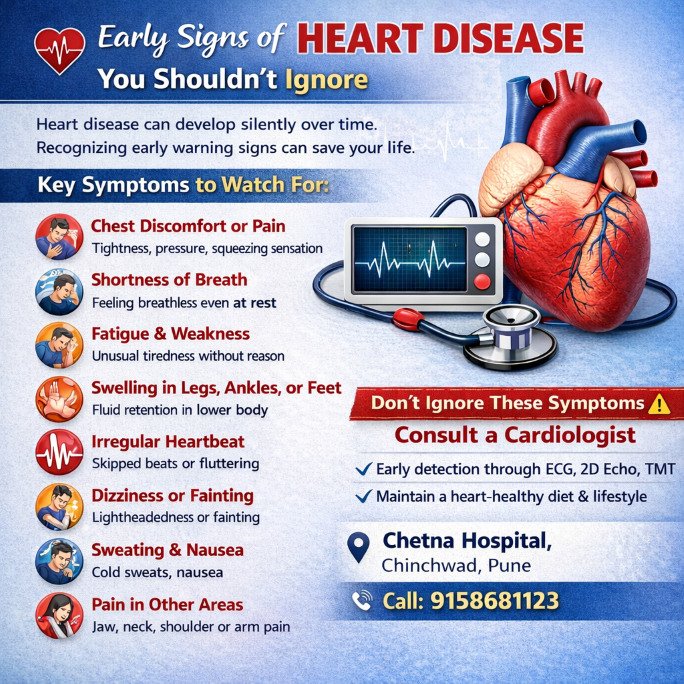
Heart disease does not always present with obvious symptoms initially. Some people may feel perfectly healthy even when significant changes are occurring in their cardiovascular system. Here are the most common early signs of heart disease:
1. Chest Discomfort or Pain
Chest pain or discomfort is one of the most recognized signs of heart disease. Patients may describe it as:
- Tightness or pressure in the chest
- Squeezing sensation
- Mild or severe discomfort that comes and goes
It is essential to differentiate between cardiac-related chest pain and pain due to other causes like indigestion or muscle strain. Women often experience atypical chest pain, which may present as discomfort in the upper back, jaw, or neck.
2. Shortness of Breath
Shortness of breath, especially during physical activity or even at rest, can be an early warning sign. This symptom indicates that the heart is struggling to pump blood efficiently. Conditions like coronary artery disease, heart failure, and arrhythmias often cause this symptom.
3. Fatigue and Weakness
Feeling unusually tired, even after adequate rest, may be linked to heart disease. Reduced blood flow due to blocked arteries or heart inefficiency leads to decreased oxygen supply to the body, causing fatigue and weakness.
4. Swelling in Legs, Ankles, or Feet
Fluid retention, or edema, is common in early heart failure. Patients may notice swelling in the lower extremities, especially after long periods of standing or sitting. Ignoring swelling can lead to complications such as difficulty breathing and worsening heart function.
5. Irregular Heartbeat
Arrhythmia, or irregular heartbeat, is another early sign. Palpitations, skipped beats, or a fluttering sensation in the chest may indicate underlying heart disease. Persistent irregular heartbeat should prompt consultation with a cardiologist.
6. Dizziness or Fainting
Lightheadedness, dizziness, or fainting can result from reduced blood flow to the brain, often due to heart problems like arrhythmia or low blood pressure. These symptoms should never be ignored as they can precede serious cardiac events.
7. Sweating and Nausea
Unexpected cold sweats, nausea, or vomiting may be linked to heart disease, particularly during early stages of a heart attack. These signs are more common in women than men and should prompt immediate medical attention.
8. Pain in Other Areas
Heart-related pain may radiate to other areas, including:
- Jaw
- Neck
- Shoulders
- Arms
- Upper back
This atypical pain is often overlooked but can be an early warning sign, particularly in women and diabetic patients.
Risk Factors That Increase Heart Disease Chances
Understanding the risk factors helps in prevention and early detection. Major risk factors include:
- High Blood Pressure (Hypertension): Increases the workload on the heart and damages arteries.
- High Cholesterol: Leads to plaque buildup in arteries, restricting blood flow.
- Diabetes: High blood sugar damages blood vessels and heart tissues.
- Obesity: Excess weight puts extra strain on the heart.
- Sedentary Lifestyle: Lack of physical activity contributes to heart disease.
- Smoking & Alcohol Consumption: Both damage blood vessels and heart function.
- Stress & Poor Sleep: Chronic stress and inadequate sleep increase heart disease risk.
- Family History: Genetic predisposition significantly increases risk.
When to Consult a Cardiologist
It is crucial to seek professional advice immediately if you notice any of the symptoms listed above, especially if they occur frequently or worsen over time. Early consultation allows for timely diagnostic tests such as:
- ECG (Electrocardiogram): Detects electrical activity abnormalities of the heart.
- 2D Echo (Echocardiography): Provides images of heart structure and function.
- TMT (Treadmill Stress Test): Evaluates how the heart responds to physical exertion.
- Blood Tests: Cholesterol, triglycerides, and blood sugar levels provide insights into cardiovascular risk.
At Chetna Hospital, Chinchwad, Pune, our cardiology department provides comprehensive heart check-ups to ensure early detection and personalized treatment plans.
Preventive Measures to Protect Your Heart
Alongside medical consultation, adopting heart-healthy habits is essential:
- Healthy Diet: Focus on fruits, vegetables, whole grains, lean proteins, and healthy fats. Reduce salt, sugar, and processed foods.
- Regular Exercise: At least 30 minutes of moderate exercise, such as walking, swimming, or cycling, five times a week.
- Quit Smoking & Limit Alcohol: Eliminates major risk factors for heart disease.
- Maintain Healthy Weight: Reduces the strain on the heart and blood vessels.
- Manage Stress: Practices like yoga, meditation, and deep breathing help reduce stress levels.
- Regular Check-ups: Annual or bi-annual heart check-ups are recommended for individuals over 40 or with risk factors.
Women & Heart Disease
Women often experience different and subtler symptoms of heart disease compared to men. Fatigue, nausea, and pain in the back or jaw may precede a heart attack. Awareness and proactive check-ups are particularly important for women over 40.
The Role of Chetna Hospital in Heart Care
Chetna Hospital, Chinchwad, Pune, is committed to providing comprehensive cardiac care. Our cardiology services include:
- Advanced diagnostic tests: ECG, 2D Echo, TMT, Holter monitoring
- Preventive cardiology and lifestyle counseling
- Treatment for hypertension, cholesterol, arrhythmias, and heart failure
- Emergency cardiac care and interventional procedures
Our team of experienced cardiologists works closely with patients to detect heart disease early, provide effective treatment, and educate on preventive care.
Conclusion
Heart disease may develop silently, but early signs are often noticeable if you pay attention. Chest discomfort, shortness of breath, fatigue, swelling, irregular heartbeat, dizziness, sweating, and pain in other areas are all red flags. Recognizing them and consulting a cardiologist promptly can save lives.
Regular heart check-ups, a healthy lifestyle, and awareness of risk factors are the keys to preventing complications. At Chetna Hospital, Chinchwad, Pune, we provide expert cardiac care and guidance to ensure your heart stays healthy.
💙 Don’t wait for symptoms to worsen—prioritize your heart health today!
📍 Chetna Hospital, Chinchwad, Pune
📞 Call: 9158681123 to book your heart check-up