
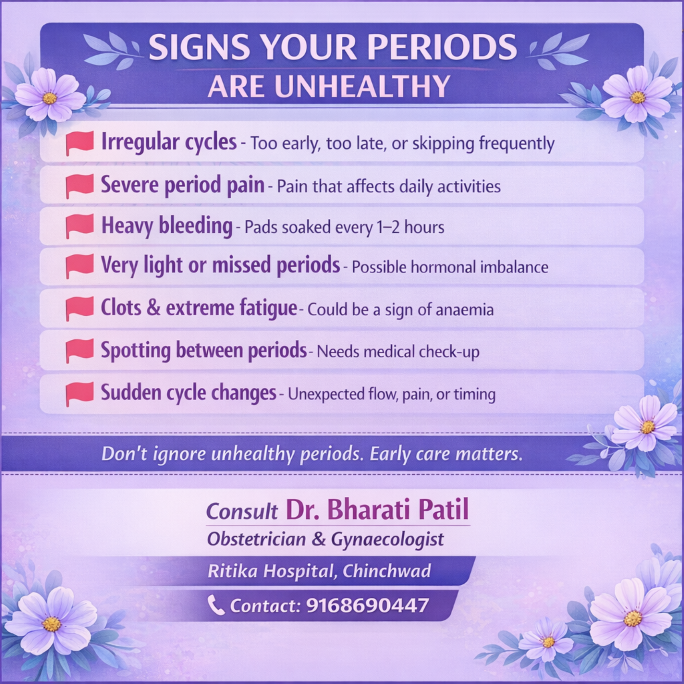
Periods are a natural part of a woman’s life, but irregularities or unusual symptoms can be a warning sign of underlying health issues. Many women experience discomfort during menstruation, but some symptoms indicate that it’s time to consult a specialist. Understanding what constitutes unhealthy periods is crucial for maintaining hormonal balance, reproductive health, and overall wellbeing.
At Chetna Hospital, Chinchwad, Dr. Bharati Patil, a trusted Obstetrician & Gynaecologist, helps women identify and manage menstrual irregularities, PCOS, hormonal imbalances, and other reproductive health concerns across Pimpri, Wakad, Thergaon, Ravet, and Kiwale.
Why Monitoring Your Menstrual Health Matters
Your menstrual cycle is not just a monthly inconvenience; it is a reflection of your overall hormonal and reproductive health. Healthy periods usually occur every 21–35 days and last 3–7 days with moderate bleeding. Any significant deviation from this pattern may indicate hormonal imbalance, reproductive system disorders, or other medical conditions.
Ignoring abnormal symptoms can lead to complications such as:
- Polycystic Ovary Syndrome (PCOS)
- Endometriosis
- Fibroids
- Anaemia
- Fertility issues
Early diagnosis and treatment are essential to prevent long-term complications.
Top Signs Your Periods Are Unhealthy
1. Irregular Cycles
If your periods arrive unpredictably, come too early or too late, or are skipped frequently, it may indicate hormonal imbalance or ovarian dysfunction. Irregular cycles can also be a symptom of PCOS, thyroid disorders, or stress-related hormonal changes.
Tip: Track your cycles using a period calendar or mobile app. Persistent irregularity warrants consultation with a gynaecologist.
2. Severe Period Pain (Dysmenorrhea)
While mild cramps are normal, severe period pain that disrupts daily activities or requires painkillers is a red flag. Conditions like endometriosis, fibroids, or pelvic inflammatory disease (PID) often cause extreme discomfort.
Tip: Keep a record of your pain severity and duration. Dr. Bharati Patil provides personalized treatment options for managing dysmenorrhea effectively.
3. Heavy Bleeding (Menorrhagia)
Bleeding that soaks pads every 1–2 hours, lasts more than 7 days, or is accompanied by clots may indicate menorrhagia. Causes can include fibroids, hormonal imbalance, or clotting disorders.
Tip: Monitor your flow and report sudden changes. Heavy bleeding can lead to anaemia if left untreated.
4. Very Light or Missed Periods
Extremely light periods or skipped cycles are often caused by hormonal imbalance, stress, excessive exercise, or underlying conditions such as PCOS or thyroid disorders. Missed periods, especially over consecutive months, should never be ignored.
Tip: Keep track of any skipped cycles and discuss with your gynaecologist to identify root causes.
5. Spotting Between Periods
Spotting or bleeding between periods is not always normal. Causes can include hormonal imbalance, uterine fibroids, infections, or even early signs of more serious conditions.
Tip: Record the frequency and timing of spotting. Dr. Bharati Patil at Chetna Hospital provides thorough evaluation and treatment for abnormal uterine bleeding.
6. Sudden Changes in Your Cycle
Any abrupt changes in flow, duration, or cycle pattern — especially if accompanied by pain, fatigue, or discomfort — should prompt medical consultation. Sudden changes may be due to hormonal imbalance, stress, or gynecological conditions.
Tip: Never ignore sudden changes in your cycle. Early consultation can prevent progression of underlying conditions.
7. Additional Symptoms to Watch For
- Severe fatigue during periods
- Clots larger than a coin
- Mood swings or depression linked to menstrual cycle
- Digestive issues like bloating or constipation
Persistent symptoms may indicate PCOS, endometriosis, or fibroids, all of which are treatable with timely intervention.
Causes of Unhealthy Periods
Several factors can contribute to unhealthy periods:
- Hormonal Imbalance: The most common cause, often due to elevated androgens, thyroid disorders, or stress.
- Polycystic Ovary Syndrome (PCOS): Leads to irregular cycles, missed periods, and excessive hair growth.
- Endometriosis: Causes severe pain and heavy bleeding.
- Uterine Fibroids: Non-cancerous growths that may result in heavy or prolonged bleeding.
- Lifestyle Factors: Stress, poor diet, excessive exercise, and lack of sleep can impact menstrual health.
How Lifestyle Affects Your Periods
- Stress: High stress increases cortisol, disrupting ovulation and menstrual regularity.
- Diet: Poor nutrition or excessive sugar can worsen hormonal imbalance.
- Exercise: Extreme workouts or sudden weight changes can delay or skip periods.
- Sleep: Poor sleep affects hormone regulation, impacting cycle regularity.
Making lifestyle adjustments can improve menstrual health alongside medical treatment.
When to Consult a Gynaecologist
You should consult a gynaecologist if you experience:
- Severe pain disrupting daily life
- Bleeding that is unusually heavy or prolonged
- Missed periods for more than 3 months
- Persistent spotting between periods
- Sudden or unexplained changes in cycle
At Chetna Hospital, Chinchwad, Dr. Bharati Patil offers comprehensive menstrual health evaluations, hormonal testing, ultrasound scans, and PCOS management. Women across Pimpri, Wakad, Thergaon, Ravet, and Kiwale can benefit from her expertise in diagnosing and treating reproductive health issues.
Diagnosis and Treatment Options
- Medical History & Menstrual Tracking: Helps identify patterns and triggers.
- Hormonal Blood Tests: Checks estrogen, progesterone, thyroid hormones, and androgens.
- Ultrasound & Imaging: Detects cysts, fibroids, or endometrial abnormalities.
- Lifestyle Counseling: Diet, exercise, stress management for long-term cycle regularity.
- Medications: Hormonal therapy, pain management, or fertility support if needed.
- Surgical Interventions: Only in cases of fibroids, severe endometriosis, or structural issues.
Tips for Healthy Menstrual Cycles
- Maintain a balanced diet rich in iron, protein, and fiber.
- Exercise regularly, but avoid extreme workouts.
- Get 7–8 hours of sleep daily.
- Manage stress with yoga, meditation, or deep-breathing exercises.
- Track your menstrual cycles to detect irregularities early.
- Avoid smoking and excessive caffeine.
These steps, combined with regular check-ups, can improve menstrual health and reduce complications.
Conclusion
Monitoring menstrual health is crucial for every woman. Unhealthy periods — characterized by irregular cycles, severe pain, heavy or missed bleeding, spotting, and sudden changes — should never be ignored.
With proper evaluation and timely intervention, conditions like PCOS, hormonal imbalance, fibroids, and endometriosis can be managed effectively.
For women in Chinchwad, Pimpri, Wakad, Thergaon, Ravet, and Kiwale, Dr. Bharati Patil, Obstetrician & Gynaecologist at Chetna Hospital, provides expert care for menstrual health, reproductive wellness, and fertility management. Early consultation ensures better outcomes, improved quality of life, and long-term reproductive health.
📞 Contact Dr. Bharati Patil at Chetna Hospital, Chinchwad: 9168690447