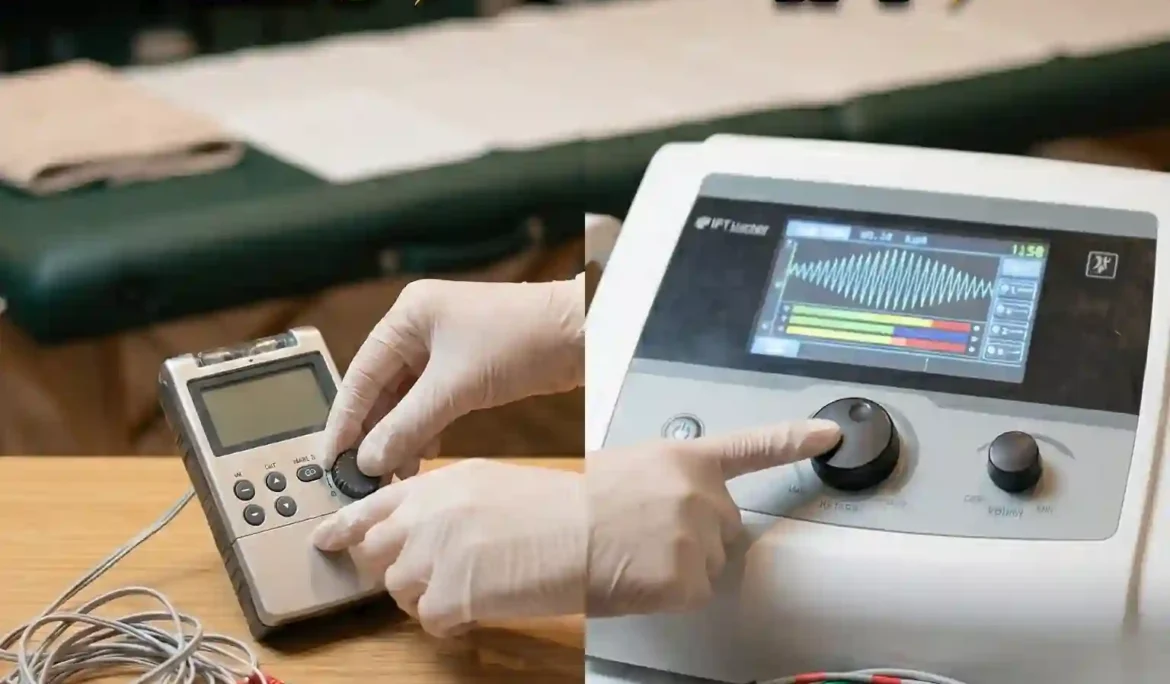
Introduction to TENS and IFT Therapy
When dealing with chronic back pain or joint stiffness in Chinchwad, choosing the right electrotherapy is key. At Next Gen Rehab & Physi Centre (Chetna Hospital), we specialize in advanced pain management. Many patients ask: “What is the difference between TENS and IFT?” While both use electrical stimulation, they serve very different roles in your recovery.
The Technical Advantage: 4000Hz vs. Surface Relief
Unlike home-use devices, clinical Interferential Therapy (IFT) uses a 4000Hz medium-frequency carrier wave. This allows the current to bypass skin impedance (resistance) without the stinging sensation, reaching deep into the joints and muscles to reduce Edema (swelling).
- TENS: Best for quick, surface-level pain masking (“mute button”).
- IFT: Best for deep-tissue healing and chronic conditions like sciatica.
Safety & Contraindications
For our patients in PCMC, we ensure safety by screening for:
- Pacemakers: Absolute contraindication.
- Pregnancy: Avoid abdominal/pelvic placement.
- Open Wounds: Stimulation must only be on intact skin.
Why Choose Next Gen Rehab in Chinchwad?
Located near the HP Petrol Pump on Nigdi-Bhosari Road, our center provides customized electrode placement—such as Quadripolar patterns—to ensure the healing current targets the exact center of your pain. Whether you are recovering from surgery at Chetna Hospital or dealing with a sports injury, our experts ensure you receive the specific frequency your body needs for long-term healing, not just a temporary fix.
Who Should Avoid These Therapies? (Contraindications)
For patient safety in our Sambhajinagar facility, we screen all patients for the following:
Open Wounds: Electrodes must only be placed on intact skin.
Cardiac Pacemakers: Electrical currents can interfere with device function.
Pregnancy: Avoid use over the abdominal or pelvic region.
Epilepsy: Stimulation near the head or neck is restricted.
Next Gen Rehab & Physi centre
Chetna Hospital (room 1, Chetna Hospital, Nigdi Bhosari Rd, near HP petrol Pump, Sambhajinagar, Chinchwad, Pimpri-Chinchwad, Maharashtra 411019
| www.chetnahospital.co.in | CALL FOR APPOINTMENT: 9168690442, TENS is frequently used as part of physiotherapy programs to help patients manage chronic pain. On the other hand, intermittent fasting is widely recommended in nutrition and metabolic health discussions.
Here’s the real deal: these are not competing therapies. They serve entirely different purposes. Trying to pick “which is better” without understanding your health goal is like asking whether a hammer is better than a thermometer—it depends on what you’re trying to fix.
Comparison: IFT vs. TENS Therapy
| Feature | TENS Therapy | IFT (Interferential Therapy) |
| Frequency | Low Frequency (0–200 Hz) | Medium Frequency (4000 Hz) |
| Depth of Action | Superficial (Skin level/Surface nerves) | Deep Tissue (Muscles & Joints) |
| Primary Goal | Immediate Pain Masking (Gate Control) | Reduction of Inflammation & Deep Healing |
| Best For | Acute injury, surface-level soreness | Chronic back pain, Arthritis, Frozen Shoulder |
| Sensation | Tingling or “pins and needles.” | Pleasant, deep rhythmic pulsing |
| Treatment Mode | Portable (Can be used at home) | Clinical Grade (Requires professional setup) |
| Next Gen Rehab Focus | Post-session home maintenance | In-clinic intensive recovery sessions |
Who Should Avoid TENS and IFT?
Malignancy: Avoid areas with known cancerous tumors.
Pacemakers: Patients with cardiac pacemakers or implanted defibrillators.
Pregnancy: Avoid use over the abdominal or pelvic region.
Epilepsy: Consult a doctor before use.
Skin Conditions: Do not apply electrodes over broken skin or open wounds.
Why People Compare These tens and ift therapy Two Approaches of Physiotherapy
The confusion usually stems from the broader goal of “getting healthier.” Many people assume that all health interventions should deliver multiple benefits—pain relief, weight loss, energy, and longevity—all at once. But in reality, most solutions are specialized.
TENS therapy is laser-focused on pain modulation, especially in musculoskeletal conditions. Meanwhile, intermittent fasting targets internal metabolic processes, influencing how your body uses energy, stores fat, and regulates hormones.
Another reason for comparison is misinformation. Some online claims suggest that electrical stimulation can help with fat loss or that fasting can reduce chronic pain to the same extent as physiotherapy. These claims blur the lines and lead to unrealistic expectations.
Understanding the distinction is critical. Once you clearly see what each method actually does, the decision becomes much simpler—and much smarter.
What Is TENS Therapy?
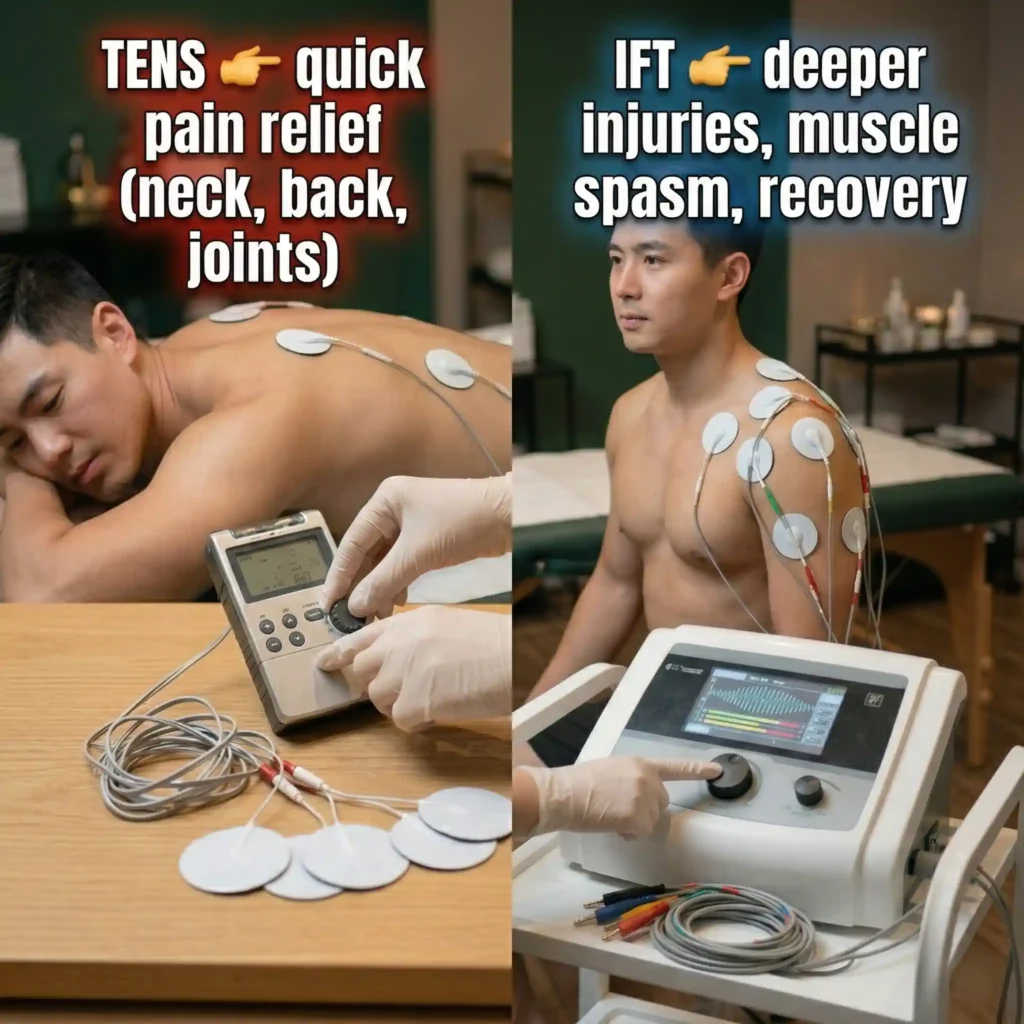
TENS, short for Transcutaneous Electrical Nerve Stimulation, is a therapy that uses low-voltage electrical currents to relieve pain. It might sound a bit futuristic, but it’s been around for decades and is widely used in physiotherapy clinics across the world.
In practical terms, a TENS device is small and portable. It connects to your body through electrodes placed on the skin near the painful area. Once activated, it sends mild electrical pulses that interact with your nerves.
But here’s where it gets interesting: these pulses don’t just “distract” you from pain—they actually interfere with how pain signals travel to your brain.
How TENS Works in the Body
Imagine your nervous system as a highway. Pain signals are like cars traveling from the injury site to your brain. TENS therapy essentially throws up roadblocks along that highway, reducing the number of pain signals that get through.
At the same time, TENS may stimulate the release of endorphins, which are your body’s natural painkillers. This dual action—blocking pain signals and boosting feel-good chemicals—makes it particularly effective for short-term relief.
Scientific Mechanism Behind Pain Blocking
From a clinical perspective, TENS operates based on the gate control theory of pain. This theory suggests that non-painful input (like electrical stimulation) can close the “gates” to painful input, preventing pain sensations from reaching the brain.
Research indicates that TENS can be effective for conditions like:
- Chronic lower back pain
- Osteoarthritis
- Post-surgical discomfort
- Sports injuries
However, results vary from person to person. Some feel immediate relief, while others may need repeated sessions.
Facilities like Chetna Hospital (www.chetnahospital.co.in | 9168690442) often integrate tens and ift physiotherapy into broader rehabilitation programs, combining it with exercises and manual therapy for better outcomes.
Common Medical Uses of TENS
TENS therapy isn’t just for one type of pain—it’s surprisingly versatile. It’s commonly used in both clinical and home settings, making it accessible for a wide range of people.
Patients dealing with chronic pain conditions often rely on TENS as a way to reduce dependence on medication. For example, someone with long-term back pain might use it daily to manage discomfort without constantly taking painkillers.
Athletes and fitness enthusiasts also use TENS for muscle recovery. After an intense workout, those electrical pulses can help reduce soreness and improve circulation in the affected muscles.
Post-injury rehabilitation is another major area where TENS shines. Whether it’s a sprain, strain, or surgical recovery, this therapy can support healing by keeping pain levels manageable—allowing patients to stay active in their recovery process.
At specialized centers like Chetna Hospital, Nigdi Bhosari Rd, Pimpri-Chinchwad, Maharashtra 411019, TENS is often combined with IFT (Interferential Therapy) to enhance effectiveness, offering a comprehensive solution under TENS and IFT physiotherapy protocols.
The Science of IFT: Why 4000Hz Matters
At Next Gen Rehab & Physi Centre, we utilize Interferential Therapy (IFT) specifically for deep-seated pain that standard TENS units cannot reach. Here is the technical breakdown of why IFT is superior for clinical rehabilitation:
1. Overcoming Skin Impedance (The 4000Hz Advantage)
The human skin has high electrical resistance (impedance) to low-frequency currents (like the 100Hz used in TENS).
- TENS: Uses low frequency, which meets high resistance at the skin level, often causing a “stinging” sensation and preventing the current from going deep.
- IFT: Uses a Medium-Frequency Carrier Wave (4000Hz). This high frequency easily bypasses skin resistance with minimal discomfort, allowing the therapeutic current to penetrate deep into muscles, nerves, and joint cavities.
2. The Principle of Interference (Beat Frequency)
IFT works by crossing two medium-frequency currents inside the body (e.g., 4000Hz and 4100Hz). Where these currents intersect, they create a third, lower “Beat Frequency” (typically 1–100Hz).
- This “interference” happens inside the tissue, not on the skin.
- This allows us to target specific deep-tissue areas like the Sciatic nerve or the Lumbar spine with precision.
3. Quadripolar vs. Bipolar Placement
For our patients in Chinchwad, we primarily use Quadripolar Placement (4 electrodes). This creates a “cloverleaf” pattern of interference, ensuring the maximum therapeutic effect is concentrated exactly at the center of the painful area.
4. Physiological Effects: Edema & Healing
Unlike TENS, which primarily “masks” pain, IFT provides:
- Reduction of Edema (Swelling): The 4000Hz frequency produces a “muscle pump” effect, stimulating venous and lymphatic return.
- Vasodilation: Increases local blood flow to accelerate the healing of damaged tissues.
- Muscle Re-education: Helps in recovering muscle function post-surgery at Chetna Hospital.
IFT vs TENS — Which Is Better?
Here’s the straight answer without confusion:
Neither IFT (Interferential Therapy) nor TENS is universally “better.”
The better option depends entirely on your specific condition and treatment goal.
Let’s break it down clearly so you can actually decide.
If You Want Quick Pain Relief (Surface-Level Pain)
Choose: TENS
Why?
TENS works on the surface nerves, blocking pain signals before they reach your brain. It’s ideal for:
- Mild to moderate pain
- Muscle soreness
- Joint stiffness
- Home use and daily management
Think of TENS like a pain “mute button”—fast, simple, and effective for short-term relief.
If You Have Deep Muscle or Chronic Pain
Choose: IFT (Interferential Therapy)
Why?
IFT penetrates deeper tissues using medium-frequency currents, making it more powerful for:
- Chronic back or neck pain
- Sciatica
- Post-injury rehabilitation
- Deep muscle inflammation
IFT is more like a deep tissue treatment, often used in clinics under professional supervision.
Side-by-Side Final Comparison
| Factor | TENS | IFT |
|---|---|---|
| Pain Depth | Surface | Deep tissues |
| Strength | Mild to moderate | Stronger, more intensive |
| Use Location | Home-friendly | Mostly clinical |
| Best For | Quick relief | Chronic/serious conditions |
| Sensation | Tingling | Strong but comfortable |
Final Decision Rule
- Go for TENS if you want easy, daily, at-home pain relief
- Go for IFT if you need deeper, stronger, clinical-level treatment
People also ask ( FAQ) for TENS and IFT Therapy
Neither is universally better. IFT is better for deep, chronic pain because it penetrates deeper tissues, while TENS is better for quick, surface-level pain relief and home use. Choice depends on your condition.
IFT uses medium-frequency currents that reach deeper muscles with less discomfort. This makes it more effective for chronic pain, inflammation, and rehabilitation, especially in clinical settings.
IFT is not portable, usually requires a clinic visit, and can be more expensive than TENS. It’s also not suitable for people with pacemakers, pregnancy, or certain medical conditions.
TENS mainly works on surface nerves, so it may not help with deep pain. Overuse can cause skin irritation, and its effects are often short-term rather than long-lasting.
Avoid TENS if you have:
A pacemaker or heart condition
Epilepsy
Pregnancy (especially abdominal use)
Broken or irritated skin
Expert Insight for TENS and IFT Therapy
Quick Comparison: TENS is best for immediate, surface-level pain relief at home, while IFT (Interferential Therapy) is superior for deep-seated chronic pain and reducing swelling (Edema). At Next Gen Rehab (Chinchwad), we use 4000Hz IFT to reach deep muscle and joint tissue.
In modern tens and ift physiotherapy, both therapies are often used together, not as replacements. Clinics like Next Gen Rehab & Physi centre Chetna Hospital (9168690442, www.chetnahospital.co.in, room 1, Chetna Hospital, Nigdi Bhosari Rd, near HP petrol Pump, Sambhajinagar, Chinchwad, Pimpri-Chinchwad, Maharashtra 411019) frequently combine TENS for immediate relief and IFT for deeper healing.