Finding a breast lump can be concerning, but timely diagnosis is key. If you are searching for a General Surgeon near me in the Pimpri-Chinchwad (PCMC) area, Dr. Dhananjay Patil at Chetna Hospital, Chinchwad, offers expert diagnostic and surgical care.
Serving patients within a 5-15 km radius, including Nigdi, Akurdi, Ravet, and Bhosari, we provide advanced treatment options for both benign (non-cancerous) and malignant lumps in a trusted hospital environment.
At a Glance: Breast Care at Chetna Hospital
- Specialist: Dr. Dhananjay Patil (Senior General Surgeon)
- Location: Sambhaji Nagar Road, Chinchwad, Pune 411019.
- Primary Service Area: 5km focus (Akurdi, Nigdi, Pradhikaran, Thermax Chowk).
- Extended Service Area: 15km radius (Ravet, Kiwale, Wakad, Bhosari, Moshi).
- Procedures: FNAC, Core Biopsy, Lumpectomy, and Mastectomy.
What Is a Breast Lump?
A breast lump is an abnormal swelling, bump, or thickened area within the breast tissue. Sometimes, the lump may feel soft and movable, while in other cases it may feel firm or hard. Similarly, some lumps appear suddenly, whereas others develop slowly over several weeks or months. A few women experience pain and tenderness, but many notice no discomfort at all.
Types of Breast Lumps
There are several different types of breast lumps. Some are benign, meaning non-cancerous, while others require urgent medical attention.
| Type | Description |
|---|---|
| Breast Cyst | Fluid-filled sac inside breast tissue |
| Fibroadenoma | Benign solid tumor common in younger women |
| Fat Necrosis | Damaged fatty tissue caused by injury |
| Mastitis | Breast infection causing swelling and pain |
| Cancerous Lump | Malignant growth requiring urgent treatment |
A benign breast lump usually feels smooth and movable under the skin. On the other hand, a breast cancer lump may feel hard, irregular, and fixed in place. Therefore, self-diagnosis should never replace professional medical evaluation.
Age Groups Commonly Affected
Breast lumps can affect women at almost any age. For example, younger women often experience fibroadenomas and hormonal cysts because of active hormonal changes. Women above the age of forty, however, have a higher risk of developing breast cancer. Because of this, regular mammograms become increasingly important with age.
Men can also develop breast lumps, although this is much less common. In some cases, hormonal imbalance, infections, or rare cancers may cause breast abnormalities in men as well.
Common Causes of Breast Lump
Understanding the causes of breast lumps can help reduce fear and confusion. At the same time, knowing the symptoms encourages people to seek treatment sooner.
Breast Cysts
A breast cyst is a fluid-filled sac commonly linked to hormonal fluctuations. Typically, these cysts become more noticeable before menstruation. Fortunately, many cysts disappear naturally without major treatment. However, larger cysts may cause discomfort and require drainage.
Fibroadenoma
Fibroadenomas are among the most common benign breast lumps found in younger women. Usually, they feel smooth, rubbery, and movable under the skin. Although fibroadenomas are harmless in most cases, doctors may still recommend monitoring them regularly.
Hormonal Changes
Hormonal changes during menstruation, pregnancy, breastfeeding, or menopause can affect breast tissue significantly. As hormone levels rise and fall, the breast may feel swollen, tender, or lumpy. In many situations, these changes are temporary and improve naturally over time.
Breast Infection (Mastitis)
Mastitis commonly affects breastfeeding mothers. As bacteria enter breast tissue, infection may develop and lead to redness, swelling, warmth, fever, and pain. If left untreated, mastitis can form an abscess. Therefore, early antibiotic treatment is very important.
Fat Necrosis
Fat necrosis develops after breast injury, surgery, or radiation therapy. Consequently, damaged fatty tissue forms a firm lump that may resemble cancer during examination. Even though fat necrosis is harmless, imaging tests are often needed to confirm the diagnosis.
Breast Cancer
A breast cancer lump is often hard, irregular, and painless in the early stages. However, symptoms can vary from person to person. Therefore, routine screening and consultation with a trusted general surgeon near me remain essential for early diagnosis.
Symptoms of Breast Lump
Breast lump symptoms vary depending on the underlying cause. While some women notice obvious discomfort, others discover changes accidentally during self-examination or screening.
Pain or Tenderness
A painful breast lump is usually linked to cysts, hormonal changes, or infections. Sometimes, the pain becomes stronger before menstruation and improves afterward.
Swelling in the Breast
Breast swelling may affect a small area or the entire breast. In addition, some women notice heaviness, warmth, or redness.
Changes in Breast Shape
Visible changes in breast shape or size should not be ignored. For instance, one breast may suddenly appear larger or uneven.
Nipple Discharge
Nipple discharge can appear clear, yellow, green, or bloody. Although some discharge may be harmless, persistent or bloody discharge requires immediate medical attention.
Skin Changes or Redness
Skin dimpling, redness, or thickening can indicate inflammation or cancer. Likewise, the skin may develop a texture similar to an orange peel.
When Should You See a Doctor?
You should contact a general surgeon near me if:
- The lump remains after menstruation
- The lump increases in size
- Nipple discharge occurs
- Skin dimpling or redness develops
- Severe pain or swelling appears
- You have a family history of breast cancer
Importantly, early medical care can prevent complications and improve treatment outcomes. Even if the lump turns out to be harmless, professional evaluation provides reassurance and clarity.
How Is a Breast Lump Diagnosed?
Doctors use several methods to identify the exact cause of a breast lump. Generally, diagnosis begins with a physical examination and may continue with imaging tests or a biopsy.
Physical Examination
First, the doctor examines the breast tissue carefully. During this process, the size, texture, mobility, and tenderness of the lump are evaluated.
Mammogram
A mammogram uses low-dose X-rays to detect abnormalities within the breast. As a result, doctors can identify suspicious tissue changes early.
Breast Ultrasound
Ultrasound helps distinguish fluid-filled cysts from solid masses. Therefore, it is especially useful for younger women with dense breast tissue.
MRI Scan
MRI provides highly detailed images of breast tissue. In certain cases, doctors recommend an MRI for high-risk patients or complex conditions.
Biopsy
A biopsy involves removing a small tissue sample for laboratory testing. Ultimately, this is the most accurate way to confirm whether a lump is benign or cancerous.
| Diagnostic Test | Purpose |
|---|---|
| Mammogram | Detect tissue abnormalities |
| Ultrasound | Differentiate cysts and solid masses |
| MRI | Detailed imaging |
| Biopsy | Confirm cancer diagnosis |
Advanced Breast Lump Treatment Options in PCMC
Add this specific “Local Landmarks” paragraph at the end of the treatment section:
At Chetna Hospital, we understand that local accessibility is vital. Our facility is conveniently located for residents of Ravet and Nigdi via the Old Pune-Mumbai Highway. We are a prominent healthcare landmark near Sambhaji Nagar Garden and Thermax Chowk, making us the preferred choice for those seeking a General Surgeon in Chinchwad or the surrounding PCMC suburbs.
| Complex Term | Simple Alternative |
|---|---|
| Malignant | Cancerous |
| Benign | Non-cancerous |
| Diagnostic imaging | Scans |
| Hormonal fluctuations | Hormone changes |
| Surgical intervention | Surgery |
Recovery and Aftercare After Breast Lump Treatment
Recovery after breast lump treatment depends on the type of procedure performed. Generally, patients recover quickly after minor procedures such as cyst drainage or biopsy. However, surgeries for larger or cancerous lumps may require more recovery time.
Recovery Timeline
| Procedure | Recovery Time |
|---|---|
| Breast Cyst Drainage | 1–2 days |
| Needle Biopsy | 2–5 days |
| Fibroadenoma Surgery | 1–2 weeks |
| Breast Cancer Surgery | 4–8 weeks |
Post-Operative Care Tips
- Keep the surgical area clean and dry
- Take medications exactly as prescribed
- Avoid heavy lifting for a few weeks
- Wear a supportive bra for comfort
- Attend all follow-up appointments
When to Contact Your Doctor
You should contact your surgeon if you notice:
- Fever or chills
- Severe swelling
- Increased redness
- Bleeding or discharge
- Persistent pain
For expert breast lump treatment and recovery support, consult Dr. Dhananjay Patil, a trusted general surgeon near me at Chetna Hospital, Chinchwad.
Add Statistical Data for Authority
Include these medically relevant statistics in the article:
- Around 80% of breast lumps are non-cancerous
- Early-stage breast cancer has a survival rate above 90%
- Regular mammograms can reduce breast cancer mortality by 20–40%
Source Suggestions:
- WHO
- CDC
- American Cancer Society
Are Breast Lumps Cancerous?
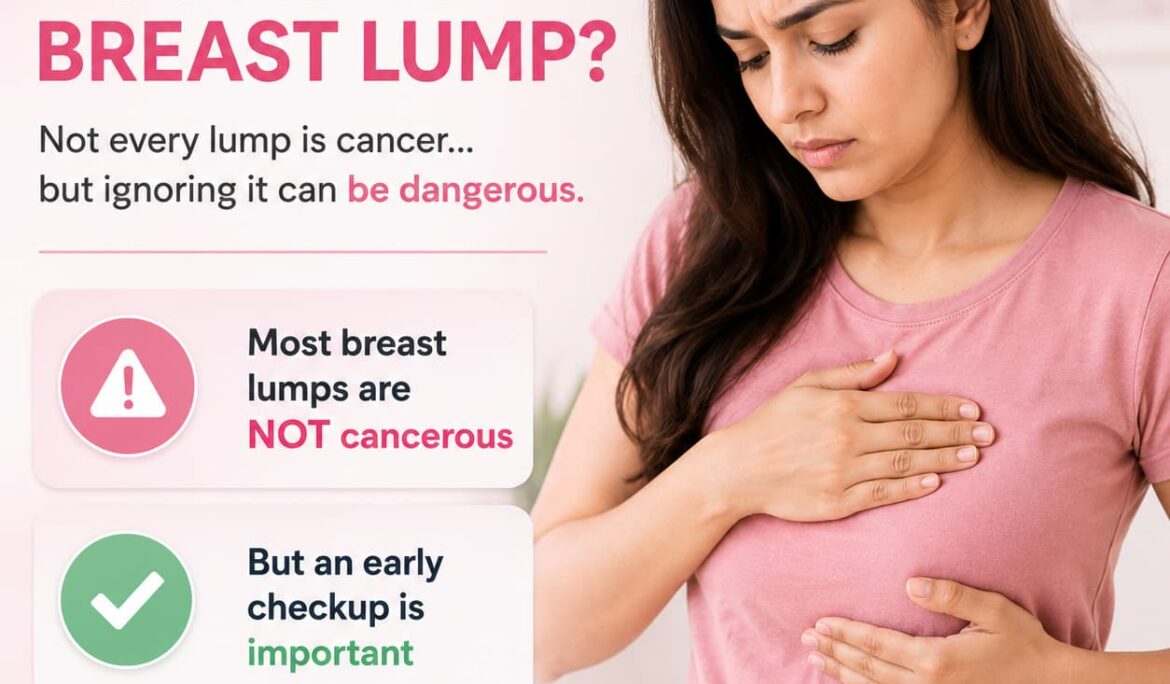
Most breast lumps are not cancerous. In fact, many are caused by benign conditions such as cysts or fibroadenomas. Nevertheless, it is impossible to confirm the cause without proper testing.
| Benign Lump | Malignant Lump |
|---|---|
| Smooth edges | Irregular shape |
| Movable | Fixed |
| Often painful | Usually painless |
| Slow growth | Faster growth |
Although these characteristics may provide clues, only a biopsy can confirm whether a lump is cancerous.
Prevention Tips for Breast Health
Regular Self-Exams
Monthly self-examinations help women recognize normal breast tissue changes. As a result, unusual lumps can be detected earlier.
Healthy Lifestyle
Maintaining a healthy weight, avoiding smoking, and limiting alcohol intake support better breast health. Additionally, stress management also contributes to overall wellness.
Routine Mammograms
Routine mammograms improve early detection of breast cancer. Therefore, women above forty should follow recommended screening schedules.
Balanced Diet and Exercise
Eating fruits, vegetables, whole grains, and lean proteins supports long-term health. At the same time, regular exercise may help lower breast cancer risk.
Breast Self-Examination Steps
Regularly performing a self-exam helps women identify changes quickly.
- Stand before a mirror and inspect your breasts.
- Raise your arms and look for any changes in shape.
- Feel the breasts using circular finger movements.
- Check the underarm area for lumps.
- Gently examine the nipples for discharge.
Best Time for Self-Exam
The best time for self-examination is a few days after menstruation ends. During this period, breasts are usually less tender and easier to examine.
Expert Opinion: General Surgeon in PCMC
When choosing a surgical method, expert advice is crucial. In this regard, Dr Dhananjay Patil, a trusted general surgeon near me, offers advanced solutions.
Chetna Hospital, Sambhaji Nagar, Chinchwad
📞 8390861787 / 9158681123
🌐 https://chetnahospital.co.in/
📍 https://maps.app.goo.gl/
Serving a 5–15 km radius, Dr Dhananjay Patil specializes in minimally invasive surgery, surgical precision, and faster recovery techniques.
Located in Chinchwad, Chetna Hospital provides easy access for patients from Sambhajinagar, Akurdi, Nigdi, and Ravet looking for a General Surgeon.
Frequently Asked Questions (FAQs)
A: No. Most breast lumps are non-cancerous and related to cysts, hormonal changes, or fibroadenomas.
A: Yes. Hormonal lumps and small cysts may disappear without treatment.
A: Usually, painful breast lumps are non-cancerous. However, a medical evaluation is still necessary.
A: A cancerous lump often feels hard, irregular, and fixed in place.
A: Yes. Men can develop breast lumps because of infections, hormonal imbalance, or cancer.
A: Doctors confirm breast lumps using physical examination, mammogram, ultrasound, MRI, or biopsy.
A: Dr. Dhananjay Patil at Chetna Hospital is a highly experienced General Surgeon specializing in breast health and surgical oncology in the Chinchwad and PCMC area.
A: Chetna Hospital, located on Sambhaji Nagar Road, Chinchwad, is centrally located within 3-4 km of Nigdi, Akurdi, and Pradhikaran, providing easy access for surgical consultations.
FAQ Answers
| Question | SEO Answer |
|---|---|
| How to confirm a breast lump? | Breast lump symptoms include swelling, pain, nipple discharge, redness, and breast shape changes. |
| What does a lump in your breast feel like? | A breast lump may feel soft, hard, movable, or firm depending on the cause. |
| What kind of breast lumps are normal? | Benign breast lumps such as cysts and fibroadenomas are common and usually harmless. |
| What are the symptoms of stage 1 breast cancer? | Early breast cancer symptoms may include a painless lump, mild swelling, and skin changes. |
| How to confirm breast lump? | Doctors confirm breast lumps using mammogram, ultrasound, physical exam, and biopsy. |
| How to know if a lump is cancerous? | Cancerous lumps are often hard and irregular, but a biopsy confirms the diagnosis accurately. |
Why Patients Trust Dr. Dhananjay Patil in PCMC
Patients in PCMC and Chinchwad trust Dr. Dhananjay Patil for breast lump diagnosis and surgical care because of:
- Personalized consultation
- Advanced diagnostic support
- Compassionate patient care
- Minimal waiting time
- Modern surgical techniques
Example Patient Experience
“I was worried after finding a lump in my breast. Dr. Dhananjay Patil explained everything clearly and guided me through diagnosis and treatment calmly.” — Patient from Chinchwad
Conclusion
Finding a breast lump can feel stressful and emotional. Nevertheless, not all breast lumps are cancerous. Early detection, regular screening, and timely consultation with a trusted general surgeon near me can ensure proper diagnosis and effective treatment. By staying informed, patients can make confident healthcare decisions and protect their long-term well-being.
For expert breast lump diagnosis and treatment, consult Dr. Dhananjay Patil at Chetna Hospital, Chinchwad. Above all, quick medical attention can improve treatment success and provide valuable peace of mind.
चिंचवडमधील सर्वोत्तम ब्रेस्ट लंप (स्तनातील गाठ) उपचार
डॉ. धनंजय पाटील (चेतना हॉस्पिटल, चिंचवड) हे स्तनाच्या गाठींच्या उपचारांसाठी तज्ञ सर्जन आहेत. आम्ही निगडी, आकुर्डी, रावेत आणि भोसरी भागातील रुग्णांना आधुनिक शस्त्रक्रिया आणि उपचार सेवा देतो.
Book Your Consultation Today Don’t delay your health. Consult Dr. Dhananjay Patil at Chetna Superspeciality Hospital, Sambhaji Nagar, Chinchwad, Pune.
Contact: 8390861787 / 9158681123
Direction: https://maps.app.goo.gl/
📞 Book your consultation today with Dr. Dhananjay Patil, General Surgeon, for expert evaluation and personalized Robotic vs. Traditional Surgery recommendations.
Location – Sahakari Bank, Chetna Hospital, OPD 1, Ground Floor, Sambhaji Nagar Rd, next to Pimpri Chinchwad, Sambhajinagar, Chinchwad, Pune, Maharashtra 411019