Introduction: Why Teeth Alignment Is More Than Just a Cosmetic Fix
A straight smile is often associated with confidence; however, teeth alignment treatment goes far beyond appearance. In fact, misaligned teeth can lead to difficulty chewing, speech issues, jaw pain, and, over time, even serious dental problems like gum disease.
Moreover, these issues don’t just affect oral health—they can gradually impact overall well-being and daily comfort. As a result, more people are beginning to understand the importance of timely orthodontic care.
In cities like Pune, where awareness about dental aesthetics is steadily increasing, there has been a noticeable shift. Not only teenagers but also adults are now actively seeking orthodontic treatment. In particular, individuals between the ages of 25–40 are exploring modern solutions that fit their lifestyle.
At NextGen Dental and Cosmetic Clinic, specialists have observed this trend closely. Consequently, there is a growing preference for discreet options like clear aligners, along with advanced braces that offer both effectiveness and convenience.
So, what is the best teeth alignment treatment, and how do you choose the right one? Let’s break it down.
What Is Teeth Alignment Treatment?
Teeth alignment treatment (also known as orthodontic treatment) involves correcting irregular tooth positioning using devices such as braces or clear aligners. In simple terms, it helps bring teeth into the correct position for better function and appearance.
Moreover, this treatment is not just about aesthetics. It also plays a key role in improving oral health and preventing future dental complications. As a result, many patients today are opting for early diagnosis and treatment.
Common Problems It Treats:
- Crooked teeth
- Crowding (overlapping teeth)
- Gaps between teeth
- Overbite or underbite
- Jaw misalignment
What Causes Bad Teeth Alignment?
Before choosing the right treatment, it is important to understand the underlying cause. In many cases, teeth misalignment develops due to a combination of genetic and environmental factors.
Common Causes:
- Genetics (most common in India; often inherited jaw structure issues)
- Childhood habits, such as thumb sucking or tongue thrusting
- Early loss of milk teeth, which can affect spacing
- Jaw size mismatch, where teeth don’t fit properly
- Poor oral habits, including prolonged pacifier use
Additionally, lifestyle and delayed dental care can worsen alignment issues over time. Therefore, early consultation with an orthodontist can help prevent more complex problems later.
👉 Expert Insight:
Orthodontists at NextGen Dental Clinic note that over 60% of alignment cases in Pune are due to genetic jaw structure issues, not just habits.
Braces and Aligners: Understanding Core Treatment Pathways
Orthodontic correction typically follows two dominant modalities: conventional fixed braces and removable clear aligners. While both aim to reposition teeth into optimal alignment, their mechanisms and patient experiences differ significantly.
Braces employ controlled mechanical tension through wires and brackets affixed to teeth. This system is highly effective for complex misalignments, including severe crowding and bite irregularities.
Clear aligners, on the other hand, utilize a sequential set of transparent trays that gradually reposition teeth. Their appeal lies in discretion and removability, making them particularly suitable for professionals and image-conscious individuals.
Signs You May Need Teeth Alignment Treatment
Many people delay treatment because symptoms are subtle.
Watch for:
- Difficulty chewing food
- Frequent biting of cheeks
- Speech issues
- Visible crowding or gaps
- Jaw pain or a clicking sound
Digital Smile Design (DSD): The Blueprint of Predictable Orthodontics
Modern orthodontics increasingly relies on Digital Smile Design, a sophisticated visualization protocol that maps facial proportions and dental alignment into a simulated outcome. Rather than beginning treatment with uncertainty, DSD constructs a pre-visualized smile trajectory.
In practical terms, clinicians capture digital scans and facial photographs, which are then integrated into specialized software. This allows the orthodontist to calibrate tooth movement in harmony with lip curvature, jaw alignment, and facial symmetry.
In Pune-based dental clinics, DSD is often used during the consultation phase. It assists patients in understanding how braces or aligners will transform their appearance even before the first bracket or tray is placed. The result is not guesswork—it is engineered predictability.
Which Is the Best Teeth Alignment Treatment?
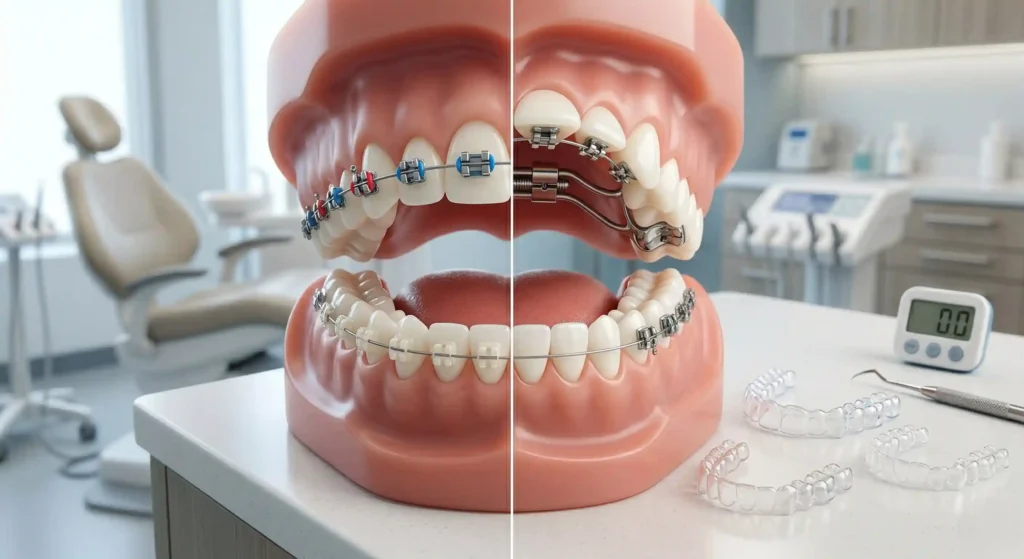
There is no one-size-fits-all answer. The best teeth alignment treatment depends on severity, lifestyle, and budget.
1. Metal Braces (Traditional)
- Best for severe cases
- Highly effective
- Most affordable
2. Ceramic Braces
- Tooth-colored, less visible
- Suitable for moderate cases
3. Lingual Braces
- Placed behind teeth
- Completely hidden
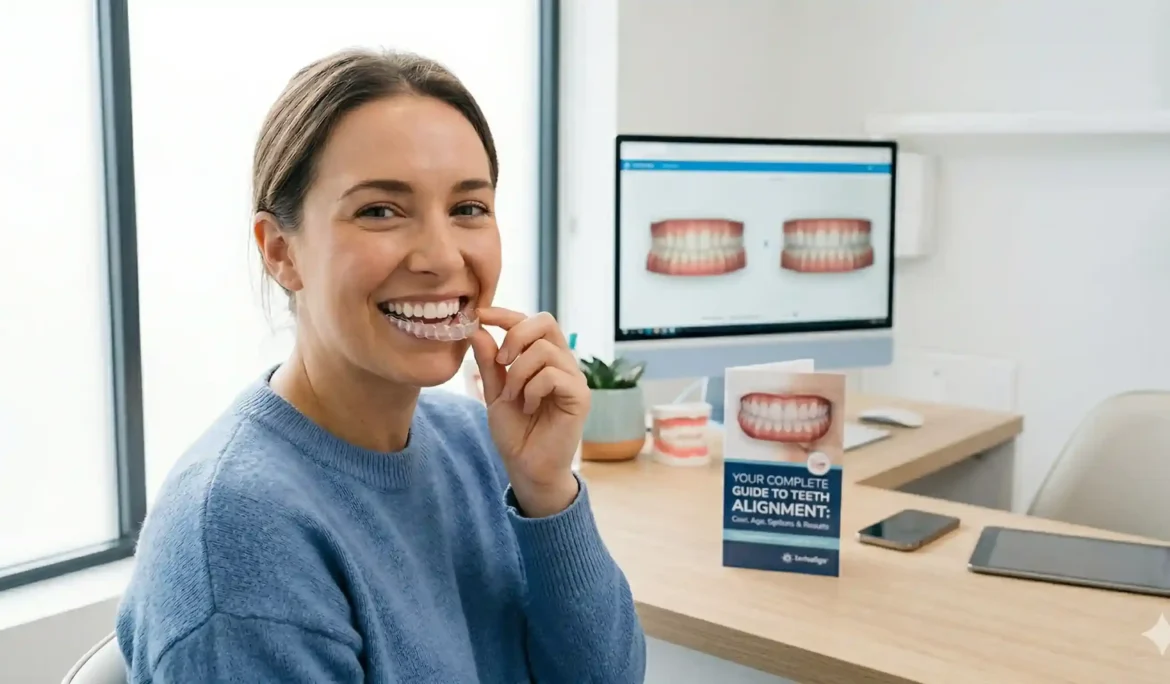
4. Clear Aligners (Invisalign)
Teeth Alignment Treatment Without Braces
Clear aligners are now the most popular option.
Why Patients Prefer Them:
- Nearly invisible
- Removable while eating
- Comfortable (no wires)
- Fewer clinic visits
👉 Real Patient Scenario:
A 32-year-old IT professional in Pune chose aligners at NextGen Clinic because frequent meetings made visible braces uncomfortable. Within 6 months, noticeable improvement boosted both confidence and presentation skills.
Teeth Alignment Treatment Before and After: What to Expect
Before:
- Crooked or uneven teeth
- Bite issues
After:
- Straight smile
- Improved facial symmetry
- Better oral hygiene
⏳ Timeline:
- Mild cases: 3–6 months
- Moderate: 6–18 months
- Severe: Up to 2–3 years
Teeth Alignment Treatment Can Start at What Age?
Ideal Age:
- 10–14 years (jaw still developing)
But Here’s the Truth:
- Is 20 too late for braces? → No
- Can I align my teeth at 35? → Yes
- Is 40 too old for braces? → Absolutely not
👉 Adults now make up 40% of orthodontic patients in urban India.
Teeth Alignment Treatment Cost in Pune (2026)
Cost depends on complexity and technology used.
Cost Considerations for Braces and Aligners in Pune
The financial aspect of orthodontic treatment in Pune varies depending on complexity, material selection, and treatment duration.
- Conventional metal braces: Generally, the most economical option
- Ceramic braces: Higher aesthetic value with moderate cost increase
- Clear aligners: Premium pricing, influenced by brand selection and case difficulty
Digital planning systems such as DSD may also influence consultation and treatment structuring, adding value through precision rather than mere cost escalation.
| Treatment Type | Cost Range |
|---|---|
| Metal Braces | ₹30,000 – ₹60,000 |
| Ceramic Braces | ₹50,000 – ₹90,000 |
| Clear Aligners | ₹80,000 – ₹2,50,000 |
Invisalign Cost Example:
3 months Invisalign: ₹60,000–₹1,00,000
👉 Expert Tip: Clinics like NextGen offer EMI plans, making treatment more affordable.
Clear Aligners vs Braces: What Should You Choose?
| Feature | Braces | Aligners |
|---|---|---|
| Visibility | Visible | Invisible |
| Comfort | Moderate | High |
| Maintenance | Difficult | Easy |
| Cost | Lower | Higher |
What Are the 5 Stages of Braces?
The process of getting braces typically follows a structured approach. Understanding each stage can help you feel more prepared and confident throughout the treatment.
1. Consultation & Diagnosis
First, your orthodontist evaluates your teeth using scans, X-rays, and a clinical examination. Based on this, a personalized treatment plan is created.
2. Braces Placement
Next, the braces are carefully attached to your teeth. At this stage, you may experience mild discomfort as your mouth adjusts.
Pain Management During the First Week of Braces
The initial phase of braces treatment is often characterized by transient discomfort. This sensation is not pathological but rather an indication of biological adaptation as periodontal ligaments respond to orthodontic force.
During the first three to seven days, patients may experience:
- A tightening pressure across the teeth
- Mild soreness during chewing
- Soft tissue irritation from brackets
Effective management strategies include transitioning to a soft diet—soups, mashed foods, and non-abrasive meals. Orthodontic wax is frequently used to buffer bracket edges against the inner cheeks. In some cases, dentists may recommend mild analgesics for short-term relief.
Importantly, this discomfort diminishes as the oral cavity acclimatizes, typically stabilizing within one week.
3. Alignment Phase
After that, gradual pressure is applied to move your teeth into proper alignment. Over time, you will start noticing visible improvements.
4. Bite Correction
Once alignment improves, the focus shifts to correcting your bite. This step is essential for proper chewing and long-term stability.
5. Retention (Retainers)
Finally, after removing the braces, retainers are provided. This ensures that your teeth stay in their new position.
Invisalign vs Local Aligner Brands (e.g., Flash): A Clinical Comparison
The clear aligner segment in India now includes both global systems like Invisalign and emerging domestic alternatives such as Flash and other regional brands.
Invisalign is globally recognized for its advanced biomaterial engineering, predictive software algorithms, and highly refined staging of tooth movement. It generally occupies the premium pricing tier and offers extensive case versatility.
Local aligner systems, including Flash, present a more economically accessible model. While improving rapidly in precision and digital planning capability, their treatment customization depth and global clinical validation may vary.
Key distinctions include:
- Material engineering: Invisalign uses proprietary SmartTrack-like polymers; local brands vary in composition
- Cost structure: Local systems are typically more budget-friendly
- Monitoring systems: Invisalign offers more established digital tracking ecosystems
- Case complexity suitability: Invisalign is often preferred for intricate orthodontic corrections
The choice ultimately depends on clinical requirements, budget constraints, and orthodontic evaluation.
Can I Eat Normally With Teeth Alignment Treatment?
Yes, you can eat normally; however, certain precautions are necessary. In the beginning, your teeth may feel sensitive, so adjusting your diet is important.
Avoid:
- Sticky foods (such as gum and caramel) can damage braces
- Hard foods (like nuts or ice), since they may break brackets or wires
Recommended:
- Soft foods initially, especially during the first few weeks
- Regular brushing and flossing are necessary to maintain oral hygiene throughout treatment
Will Teeth Move After Braces?
Yes, teeth can shift over time, especially if proper care is not taken. Even after successful treatment, natural changes in the jaw and aging can affect alignment.
👉 Therefore, wearing retainers is essential to maintain long-term results. Without them, teeth may gradually return to their original position.
What Is the 3-3-3 Rule for Teeth?
The 3-3-3 rule is a simple guideline for maintaining oral hygiene. Essentially, it promotes consistency and effectiveness in brushing habits.
- Brush 3 times daily
- For 3 minutes each time
- Within 3 minutes after meals
By following this rule, you can significantly reduce the risk of cavities and gum problems.
How to Clean Clear Aligners Properly: Maintenance Protocol
Clear aligners demand disciplined hygiene practices to maintain transparency and prevent microbial accumulation. Neglecting maintenance can result in discoloration, odor retention, and compromised oral health.
Recommended care protocol includes:
- Cleaning aligners twice daily using lukewarm water
- Using a mild, non-abrasive cleanser instead of toothpaste
- Avoiding hot water, which may distort the aligner structure
- Gently brushing with a soft toothbrush
- Storing aligners in a ventilated protective case when not in use
Periodic use of aligner cleaning tablets may further enhance clarity and sanitation. Proper maintenance ensures both aesthetic integrity and treatment efficiency.
Impact of Smoking and Coffee on Orthodontic Progress
Lifestyle habits exert a subtle yet significant influence on orthodontic outcomes. Smoking introduces nicotine and tar residues that can stain aligners and teeth, while also impairing gum vascularity, thereby slowing healing responses.
Coffee and other pigmented beverages contribute to discoloration, particularly when consumed with removable aligners still in place. These substances may also increase plaque adherence, complicating oral hygiene maintenance.
Patients undergoing aligner therapy are strongly advised to remove trays before consuming any colored beverages and to rinse thoroughly afterward. Smoking, ideally, should be minimized or discontinued during treatment to preserve both clinical outcomes and periodontal health.
How to Choose the Right Dental Braces for Teeth Alignment
Choosing the right braces depends on multiple factors. Therefore, it is important to evaluate your needs carefully before making a decision.
Consider:
- The severity of your case, as complex issues may require traditional braces
- Budget, since costs vary between options
- Aesthetic preference, especially if visibility is a concern
- Lifestyle (professional/social needs), which may influence comfort and convenience
👉 Ultimately, consulting a certified orthodontist is crucial, as they can guide you toward the most effective and suitable treatment option.
Treatment Duration and Clinical Expectations
Orthodontic timelines are not uniform. Mild misalignments may resolve within months, whereas complex skeletal corrections can extend beyond a year or more.
Patient compliance plays a decisive role, particularly in aligner therapy, where consistent wear time directly impacts progress velocity. Braces, being fixed systems, eliminate compliance variability but require stricter hygiene discipline.
Best Teeth Alignment Treatment Near Me in Pune
If you’re searching for affordable invisible aligner treatment clinics near me, consider:
NextGen Dental and Cosmetic Clinic
📍 Chetna Hospital, Pimpri Chinchwad, Pune
“Why Visit NextGen Dental?”
- Experienced orthodontists
- Advanced clear aligner systems
- Customized treatment plans
- Affordable EMI options
- “Conveniently located for residents in Akurdi, Nigdi, and Ravet (3–5 km drive).”
- “Serving patients from Wakad, Hinjewadi, and Pimple Saudagar looking for specialist orthodontic care in PCMC.”
- “Easy access from Telco Road and Old Mumbai-Pune Highway.”
Conclusion: What Should You Do Next?
Teeth alignment is no longer just for teenagers or celebrities. With modern options like clear aligners, treatment is faster, more comfortable, and accessible to everyone.
👉 If you’re unsure where to start:
- Book a consultation
- Get a digital scan
- Understand your options
A small step today can completely transform your smile—and your confidence.
Conclusion
Teeth alignment in PCMC has transitioned into a technologically refined discipline where digital visualization, biomechanical precision, and aesthetic demand intersect. Whether choosing traditional braces or advanced aligners, patients benefit from a structured pathway that merges clinical science with cosmetic refinement.
Understanding ancillary factors—such as pain adaptation, hygiene protocols, lifestyle impacts, and digital smile planning—enables more informed decisions and significantly improved treatment experiences.
FAQs
Clear aligners are best for mild to moderate cases, while braces are better for severe alignment issues.
It ranges from ₹80,000 to ₹2,50,000 depending on complexity.
Yes, teeth alignment can be done at any age.
No, many adults successfully undergo orthodontic treatment.
There is no upper age limit.
⚠️ Medical Disclaimer
This content is for informational purposes only and should not replace a professional dental consultation. Always consult a qualified orthodontist for diagnosis and treatment.